how to differentiate your business

How to Differentiate Your Business: A Practical Strategy | EVUNN

PROBLEM: I understand the problem, but I don't fully understand what it's like to experience it.

To find a profitable problem to solve, you must understand what it is like to experience the problem

STEP 3: DEVELOPING EMPATHY


I would write Step 5 this way, using the actual Blue Ocean Strategy TOC and keeping the EVUNN structure consistent with the previous steps. I would also use the Four Actions Framework as the central execution mechanism, rather than turning the page into a generic lesson on Blue Ocean Strategy.

Step 5 — Define Your Differentiation

The Problem We’re Solving

“I know how I want my offer to be positioned, but I don’t know what would make the right customer choose it over the alternatives.”

You now have:

  • A Best-Fit Customer Profile

  • A defined Buying Situation

  • A Customer Alternative & Decision Landscape

  • A Positioning Blueprint

But your customer can still ask:

“Why should I choose this offer instead of the other options available to me?”

That is the question differentiation must answer.

Differentiation is not about proving that you are better at everything.

It is not:

“I have more experience.”

“I provide excellent service.”

“I have a unique framework.”

“I care more about my clients.”

Those statements may be true.

But the important question is:

“What is meaningfully different about this offer that this particular customer actually values?”

Your objective is to identify the differences that can make your offer meaningfully preferable to the alternatives.


The EVUNN Mindset Shift

From “How am I different?” → “What difference matters to the customer?”

Experts naturally look at differentiation from their own perspective.

They ask:

“What makes me special?”

But the customer is asking:

“Why should I care?”

Your credentials, experience and expertise may be impressive.

But they only become commercially useful when they create something the customer values.

So don’t ask:

“How can I make myself look different?”

Ask:

“What can I change, improve or create that makes this offer more valuable to my best-fit customer?”

This is the difference between being different and being meaningfully different.


📖 Recommended Book

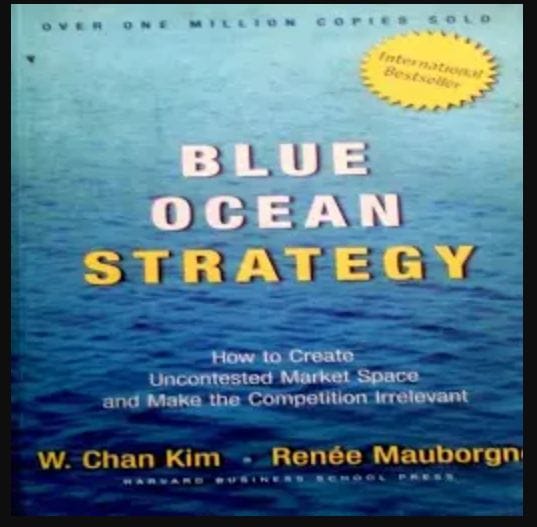
Blue Ocean Strategy

Authors: W. Chan Kim & Renée Mauborgne

The Big Idea

Instead of competing only on the factors everyone in the market already competes on, you can rethink the value you provide by eliminating, reducing, raising or creating factors that change the customer’s experience.

This is particularly useful for expert-based businesses because many coaches, consultants, freelancers and professional service providers compete on the same things:

  • Experience

  • Expertise

  • Credentials

  • Personal attention

  • Quality

  • Price

  • Number of services

  • Years in business

The result is often a crowded market where everyone says:

“I’m better.”

Blue Ocean Strategy gives you another question:

“What could we change about the value we provide so the customer has a more compelling reason to choose us?”


What Business Problem Does This Book Solve?

“My market is crowded, and I don’t know how to create meaningful differentiation without simply claiming that I’m better.”

The book helps you examine the factors on which customers currently compare competing offers.

Then you can ask four powerful questions:

Eliminate

What can we remove because customers don’t really need it?

Reduce

What can we provide at a lower level because the market is over-serving customers?

Raise

What should we increase because customers genuinely value it?

Create

What could we introduce that customers would value but existing alternatives don’t provide?

For EVUNN, these questions become a practical way to discover customer-relevant differentiation.


Should I Read It Now?

YES — but selectively.

You do not need to read the entire book before completing this step.

Your objective is:

Use the book to identify meaningful ways your offer could create and communicate distinctive customer value.

You are not trying to create an entirely new industry.

You are trying to find a stronger value position within the market you have chosen.


Which Parts Matter Most?

Part One — Blue Ocean Strategy

Chapter 1 — Creating Blue Oceans

READ

Focus on the central idea of creating a different value proposition rather than competing only within existing market rules.

The important question for EVUNN is:

“Are we simply competing on the same factors as everyone else?”


Chapter 2 — Analytical Tools and Frameworks

READ — MOST IMPORTANT

This is the most useful chapter for the EVUNN exercise.

Pay particular attention to:

Strategy Canvas

Use this to understand the factors customers currently compare across competing alternatives.

Four Actions Framework

This gives you the core questions:

Eliminate

Reduce

Raise

Create

These will become the foundation of your EVUNN Differentiation & Value Innovation Map.


Chapter 3 — Reconstruct Market Boundaries

SKIM

This is useful for learning how businesses can look beyond obvious competitors and rethink the boundaries of a market.

You don’t need to master the entire framework at this stage.


Chapter 4 — Focus on the Big Picture, Not the Numbers

SKIP FOR NOW

Useful for broader strategic planning, but not necessary for deciding how your expert-based offer should differentiate itself.


Chapter 5 — Reach Beyond Existing Demand

SKIM

Useful for thinking about customers outside your current target market.

But your immediate objective is to strengthen the offer for your Best-Fit Customer.


Chapter 6 — Get the Strategic Sequence Right

SKIM

Useful background for thinking about whether your proposed changes make sense strategically.

Not essential to the immediate execution exercise.


Part Three — Executing Blue Ocean Strategy

SKIP FOR NOW

Chapters 7–10 deal primarily with organizational execution, alignment and renewal.

Those issues become more relevant as a business grows.

You don’t need them to complete your initial differentiation strategy.


What Should I Ignore For Now?

Don’t turn this into a competition to invent something nobody else has.

You don’t need:

  • A bizarre business model

  • A complicated proprietary framework

  • A new industry category

  • A strange pricing model

  • A long list of artificial differentiators

Differentiation does not mean being different for the sake of being different.

Your difference must matter to the customer.


Your EVUNN Action

Build Your Differentiation & Value Innovation Map

Bring forward:

Step 3

Customer Alternative & Decision Landscape

and:

Step 4

Positioning Blueprint

You are now going to identify where your offer can create meaningful customer value that the alternatives do not provide in the same way.


1. Identify What Customers Currently Compare

Start with the alternatives your customer considers.

List the factors they appear to use when deciding between those alternatives.

For example:

  • Price

  • Speed

  • Expertise

  • Personalisation

  • Convenience

  • Support

  • Implementation

  • Access

  • Flexibility

  • Depth

  • Results

  • Risk

  • Reputation

Use the evidence from your earlier research where possible.

Don’t simply guess what customers care about.


2. Map The Current Market

Look at the alternatives side by side.

Ask:

“What does the market currently over-emphasise?”

For example, perhaps most competitors compete heavily on:

  • More content

  • More features

  • More hours

  • More certifications

  • Lower price

  • More services

This creates an important question:

“Are customers actually getting more value from all of this?”


3. ELIMINATE

Ask:

“What could we eliminate without reducing the customer’s desired outcome?”

For an expert-based business, this might include:

  • Unnecessary complexity

  • Excessive content

  • Unused features

  • Unnecessary meetings

  • Generic material

  • Long processes

  • Steps customers don’t actually need

Eliminating something can make your offer:

Simpler.

Faster.

Clearer.

Easier to buy.

Easier to deliver.


4. REDUCE

Ask:

“What could we reduce because the market is providing more of it than the customer actually needs?”

For example:

Instead of:

20 hours of generic training

you might provide:

5 hours of targeted learning plus implementation support.

The goal isn’t to reduce value.

It is to remove unnecessary delivery.


5. RAISE

Ask:

“What does our best-fit customer care deeply about that existing alternatives don’t adequately provide?”

This could be:

  • Personalisation

  • Speed to outcome

  • Implementation

  • Specialisation

  • Accessibility

  • Accountability

  • Convenience

  • Clarity

  • Support

  • Risk reduction

This is where you may discover an opportunity to compete on something that matters more to your customer than the factors the market currently emphasises.


6. CREATE

Now ask:

“What could we create that would provide meaningful value but isn’t adequately offered by the alternatives?”

It doesn’t need to be revolutionary.

For example:

Instead of simply providing:

Leadership training

you might create:

A 90-day leadership transition system that combines targeted learning, practical implementation and structured decision support for newly promoted managers.

The additional structure changes the customer’s experience.


7. Identify Potential Differentiators

You should now have several possible differences.

But do not use all of them.

For each potential differentiator ask:

Does the customer care?

Would this affect their decision?

Does it create value?

Does it improve their desired outcome or experience?

Is it distinctive?

Is it meaningfully different from the alternatives?

Is it credible?

Can you actually deliver it?

Is it sustainable?

Can you continue delivering it as the business grows?


8. Connect The Difference to Customer Value

For each serious differentiator, complete:

Because we [difference], the customer can [benefit], which matters because [desired outcome].

For example:

Because we provide implementation support rather than information alone, customers can apply the system to their real business, which matters because they need measurable progress rather than more knowledge.

This prevents you from confusing features with differentiation.


9. Choose Your Core Differentiators

You do not need ten reasons for customers to choose you.

Choose the one to three differences that matter most.

Ask:

“If my customer remembered only one reason to choose this offer, what should it be?”

Then ask:

“Does this strengthen the position I chose in Step 4?”

Your differentiation should reinforce your positioning.

It should not create a completely different story.


10. Create Your Differentiation Statement

Now turn your strongest difference into a simple statement:

“Unlike [alternative], we [meaningful difference], so [best-fit customer] can [valuable outcome].”

For example:

“Unlike generic leadership courses, this programme is designed specifically for newly promoted managers and focuses on applying the skills during their first 90 days.”

The customer should immediately understand:

What is different?

Why does it matter?

Why should I care?


11. Stress-Test Your Differentiation

Before you finalise it, ask:

Relevant

Does the customer actually care?

Meaningful

Could it influence their buying decision?

Distinctive

Does it separate you from the alternatives?

Credible

Can you prove or demonstrate it?

Aligned

Does it reinforce your chosen position?

Sustainable

Can you continue delivering it?

If the answer is no, refine it.


🧠 EVUNN Mindset Checkpoint

Are you trying too hard to be different?

When experts hear the word differentiation, they sometimes feel they must invent something nobody else has.

You may start thinking:

“I need a proprietary framework.”

“I need a completely new methodology.”

“I need something nobody else does.”

You don’t.

Your goal is not to be unique.

Your goal is to be meaningfully preferable to the right customer.

Sometimes your strongest differentiation is simply:

  • A narrower customer

  • A better process

  • A faster path

  • Greater personalisation

  • Better implementation

  • A more convenient experience

  • Lower risk

  • A more relevant specialisation

Ask:

“What can I do differently that this customer genuinely values?”

Optional reading: The War of Art — Steven Pressfield

Use this only if you find yourself stuck because you believe you need a completely original idea before you can move forward.

This is a mindset checkpoint, not a required reading assignment.


🔓 EVUNN Execution Toolkit

Differentiation & Value Innovation Map

Don’t compete by simply claiming that you’re better.

Use the EVUNN Differentiation & Value Innovation Map to examine what customers currently compare, identify what to eliminate, reduce, raise and create, connect those changes to customer value and select the few differences that should make your offer meaningfully preferable.

→ Unlock The Toolkit


One Payment. All Stage 1 Toolkits. Yours For Life.

No monthly subscription. No recurring fees. Just the tools you need to execute.

→ Unlock All Stage 1 Execution Toolkits


Your Step 5 Output

By the end of this step, you should have a:

DIFFERENTIATION STRATEGY

Containing:

Competitive Alternatives

Customer Decision Factors

Current Market Value Factors

Eliminate

Reduce

Raise

Create

Potential Differentiators

Customer Value Created

Core Differentiators

Differentiation Statement


What You Should Now Know

You entered Step 5 knowing:

“I have chosen the position I want my offer to own.”

You leave knowing:

“Here is why my best-fit customer should prefer my offer over the alternatives.”

You now have:

A Best-Fit Customer

A Buying Situation

An Alternative Landscape

A Market Position

A Meaningful Differentiation Strategy

But your differentiation is still a strategic decision.

The next challenge is communication.

Your customer may not automatically understand your positioning or differentiation simply because you’ve defined them internally.

So the next question becomes:

“How do I communicate this clearly enough that the right customer immediately understands why this offer matters to them?”

NEXT: STEP 6 — BUILD THE CORE MESSAGE

How do I explain my offer so the right customer understands its value and wants to know more?

To understand their experience, use Book 3. Title: Practical Empathy

Practical empathy


Author: Indi Young

Time Investment: 5+ hours (Audiobook) 

Listen to Audiobook with Audible free trial |Buy at the Bookshop


The Big Idea from Practical Empathy 

Empathy helps you move beyond assumptions and develop a deeper understanding of how people experience problems, situations, what they do, and what matters to them.

For an expert, this is a critical shift. Your expertise tells you what you think the problem is. Empathy helps you understand the problem from their perspective.


What Does this Book Help you Achieve?

Practical Empathy helps you:

  • Listen without immediately interpreting

  • Understand people’s experiences more deeply

  • Separate what people actually say from your assumptions

  • Make sense of what you hear

  • Identify patterns across people’s experiences

  • Use those insights to improve what you create

The goal isn’t to become better at selling.

It’s to become better at understanding.


Should I Read it Now?

YES.

You’ve already explored:

Step 1: What problems might exist?

Step 2: Why might people want to solve them?

Now you need to understand: What is this experience actually like for the person living through it?


Which Chapters Matter Most for me Now?

Chapter 2: Empathy Brings Balance (Essential)

Understand what empathy actually means and why it matters when making decisions about customers.

Chapter 3: Put Empathy to Work (Essential)

Learn how empathy can become part of how you investigate and understand problems.

Chapter 4: A New Way to Listen (Essential)

This is one of the most important chapters for this stage.

Learn to listen to someone’s experience without immediately jumping to solutions, advice or conclusions.

Chapter 5: Make Sense of What You Heard (Essential)

Find out how to process and deepen your understanding of what people tell you.

Chapter 6: Apply Empathy to What You Create (Essential)

Understand how patterns in people’s experiences can influence what you eventually create.

Chapter 1: Business Is Out of Balance (Read this chapter for context only)

It explains why relying only on numbers and analytical thinking can leave important parts of the customer experience invisible.

Skip Chapters 7–9 for now

They focus more heavily on applying empathy within workplaces and organizations.

Listen to Audiobook with Audible free trial | Buy at the Bookshop


Your Step 3 Outcome

By the end of this step, you should have:

  • A deeper understanding of the experience behind each problem  of  the 3 problems generated in step 1

  • A clearer distinction between what you know and what you’re assuming

  • Initial insight into what people think, feel and do

  • A better understanding of their frustrations and desired outcomes

  • A list of questions you still need to investigate with real people

Notice what hasn’t happened yet:

You haven’t validated the problems yet. That’s intentional.

You’ve developed empathy, but empathy based on your own reflection is still not enough.

The next step takes you deeper.


🔒 Ready to Put Empathy into Practice?

Reading about empathy is not the same as practising it.

The EVUNN Customer Empathy Toolkit gives you a structured way to examine the problem from the customer’s perspective and separate evidence from assumptions.


One Payment. For All EVUNN Stage 1 toolkits.

What Should I Learn Next?

You now have a better understanding of the customer’s experience.

But there’s another question:

What are they actually trying to accomplish?

A customer may describe a problem, but the problem itself isn’t always the real objective.

They may be trying to make progress toward something bigger.

Step 4: Jobs-to-Be-Done

You’ll move from: Understanding their experience to understanding the progress they’re actually trying to make.

define the position you want your offer to own in the customer's mind

How to Position a Product or Service: A Practical Framework | EVUNN

PROBLEM: I understand the problem, but I don't fully understand what it's like to experience it.

To find a profitable problem to solve, you must understand what it is like to experience the problem

STEP 3: DEVELOPING EMPATHY

Yes. Now that we have the actual TOC for Obviously Awesome, I would rewrite Step 4 so the book content and the EVUNN execution flow are properly aligned.

Step 4 — Define Your Position

The Problem We’re Solving

“I understand my best-fit customer, what triggers them to act and what alternatives they consider, but I don’t know what position my offer should own in their mind.”

You now know:

Who your customer is.

When they become ready to act.

What alternatives they consider.

But there is still a critical question:

“Given everything I know, how should my offer be understood in the market?”

This is where positioning begins.

Positioning is not simply choosing a tagline.

It is not writing:

“I am a business coach who helps entrepreneurs grow.”

And it is not listing everything you can do.

Positioning is deciding the context in which your offer should be understood, and the specific value it should be associated with.

Your goal is to make it easier for the right customer to think:

“This is specifically for someone like me, and this is why it is different from the alternatives I could choose.”


The EVUNN Mindset Shift

From “How do I describe what I do?” → “What should I be known for?”

Experts naturally position themselves around their credentials.

You might say:

“I’m a lawyer with 15 years’ experience.”

“I’m a certified leadership coach.”

“I’m a marketing consultant.”

“I’ve worked with major companies.”

These may establish credibility.

But they don’t necessarily establish a market position.

Your position is about the meaning the customer attaches to your offer.

So instead of asking:

“How do I describe my expertise?”

ask:

“What should this particular customer immediately associate with my offer?”


📖 Recommended Book

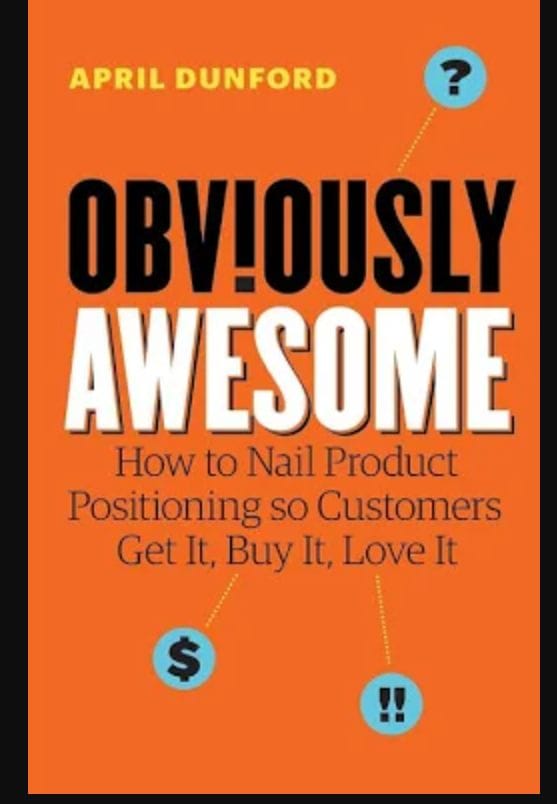
Obviously Awesome

Author: April Dunford

The Big Idea

Positioning is about creating the right context for customers to understand the value of your offer.

The same offer can appear ordinary in one context and highly valuable in another.

The book’s positioning process helps you move through:

Customers

Competitive Alternatives

Unique Attributes

Customer Value

Customers Who Care Most

Market Frame of Reference

Position

This is exactly the sequence EVUNN needs at this point.


What Business Problem Does This Book Solve?

“My offer is valuable, but I haven’t figured out the context that makes its value obvious to the right customer.”

An expert may have many capabilities.

But putting all of them into the market creates a vague offer.

For example:

“I help businesses with strategy, leadership, marketing and operations.”

The customer has to figure out:

“Which problem is this person particularly good at solving?”

Positioning gives the customer a clearer answer.


Should I Read It Now?

YES.

This is the primary book for Step 4.

You should now read it after completing Steps 1–3 because you already have the raw material the positioning process requires.

Don’t read it as a branding book.

Read it as a market decision-making framework.

Your question while reading should be:

“How do I determine the context in which my offer becomes most valuable and relevant?”


Which Parts Matter Most?

You do not need to read the entire book equally.

Part I — What Is Positioning?

ESSENTIAL

Positioning as Context

This is foundational.

Understand why positioning isn’t simply a statement about what you sell.

The context in which the customer evaluates your offer changes how they perceive its value.

The Five (plus One) Components of Effective Positioning

ESSENTIAL

Understand the components that make positioning effective.

These will become the foundation of your EVUNN Positioning Canvas.


Part II — The 10-Step Positioning Process

Step 1 — Understand the Customers Who Love Your Product

ESSENTIAL

This connects directly to the Best-Fit Customer Profile you created in Step 1.

The goal isn’t to appeal to everyone.

It’s to understand who is most likely to see the value in what you’ve created.


Step 2 — Form a Positioning Team

SKIP FOR NOW

Most EVUNN users are positioning their own expertise-based businesses.

You don’t need to build a positioning team to complete this exercise.


Step 3 — Align Your Positioning Vocabulary and Let Go of Your Positioning Baggage

SKIM

Useful for understanding positioning language and avoiding assumptions.

But it isn’t central to the EVUNN execution task.


Step 4 — List Your True Competitive Alternatives

ESSENTIAL

This directly connects to Step 3.

Your positioning must be understood relative to the alternatives your customer actually considers.


Step 5 — Isolate Your Unique Attributes or Features

ESSENTIAL

Identify what genuinely makes your offer different.

Don’t simply list your credentials.

Look at the actual attributes of your offer.


Step 6 — Map the Attributes to Value “Themes”

ESSENTIAL

This is where you move from:

“What’s different about us?”

to:

“Why does that difference matter to the customer?”

A difference without customer value isn’t useful positioning.


Step 7 — Determine Who Cares a Lot

ESSENTIAL

This is particularly important for expert businesses.

You don’t need everyone to care equally.

You need to identify:

Who cares enough about this particular value to choose your offer?


Step 8 — Find a Market Frame of Reference

ESSENTIAL

This is one of the most important sections for Step 4.

Ask:

“What context or category should the customer use to understand this offer?”

The frame of reference influences what customers compare you against and how they interpret your value.


Step 9 — Layer On a Trend

SKIM / OPTIONAL

A trend can strengthen positioning in some businesses.

But don’t force this.

An expert-based business doesn’t need a trend to have strong positioning.


Step 10 — Capture Your Positioning

ESSENTIAL

This is where you document the positioning decision so you can use it consistently.

This is the point at which EVUNN converts the strategy into its Positioning Blueprint.


What Should I Ignore For Now?

Don’t spend time perfecting:

  • Website headlines

  • Taglines

  • Social media bios

  • Sales copy

  • Advertisements

  • Content hooks

Those come later.

At this stage, you’re making a strategic positioning decision.


Your EVUNN Action

Build Your Positioning Blueprint

Bring forward your three previous outputs:

Step 1

Best-Fit Customer Profile

Step 2

Buying Situation Profile

Step 3

Customer Alternative & Decision Landscape

Now use them to determine your position.


1. Define the Customer You Want to Position For

Ask:

“Who is most likely to care deeply about the value my offer creates?”

Don’t simply use your broad target market.

Identify the customer for whom your offer has the strongest relevance.


2. Identify the Competitive Context

Bring forward the alternatives from Step 3.

Ask:

“What would this customer compare my offer against?”

Your position needs to make sense within this competitive context.


3. Identify Your Unique Attributes

Ask:

“What does my offer genuinely do differently?”

Look at:

  • Approach

  • Method

  • Process

  • Specialisation

  • Expertise

  • Delivery

  • Experience

  • Speed

  • Convenience

  • Personalisation

  • Risk reduction

Don’t manufacture differences.

Identify genuine attributes.


4. Translate Attributes Into Customer Value

For every meaningful difference ask:

“So what does this do for the customer?”

For example:

Attribute:

Personalised implementation.

Customer value:

The customer gets help applying the solution to their specific situation rather than simply receiving information.

Continue until you can explain why the difference matters.


5. Identify Who Cares Most

Now ask:

“Which customers care most about this particular value?”

This is where your positioning becomes sharper.

For example:

A generic:

“Personalised business support”

may matter to many people.

But:

“Personalised support for first-time consultants who don’t know how to turn their expertise into a sellable offer”

is much more specific.


6. Choose the Market Frame of Reference

Ask:

“What should customers compare this offer to?”

This is a strategic decision.

For example, an offer could potentially be understood as:

  • Coaching

  • Consulting

  • Training

  • Advisory

  • Implementation service

  • Done-for-you service

  • Digital product

  • Education programme

The choice affects how the customer interprets your offer.

Choose the context that makes your strengths most relevant.


7. Identify the Value You Want to Own

Complete:

“For this customer, in this situation, our most valuable difference is ______ because it helps them ______.”

This becomes the central value theme of your position.


8. Build Your Position

Now combine everything.

Use:

For [best-fit customer] who [situation/problem], [offer] is a [market frame of reference] that [key value] because [reason to believe].

For example:

For newly promoted managers who need to lead former peers effectively, our programme is a 90-day leadership transition system that helps them build authority and confidence through structured implementation support.

This is not necessarily your final marketing copy.

It is your strategic positioning statement.


9. Create Your “Known For” Statement

Now simplify the position.

Complete:

“We want to be known for helping [customer] achieve [progress] in [situation].”

For example:

“We want to be known for helping newly promoted managers successfully transition from peer to leader during their first 90 days.”

This becomes a useful internal compass.


10. Stress-Test the Position

Before accepting it, ask:

Is it relevant?

Does this customer actually care?

Is it differentiated?

Does it create a meaningful distinction?

Is it valuable?

Does the difference produce an outcome customers care about?

Is it credible?

Can you deliver what you’re claiming?

Is it specific?

Could dozens of competitors use exactly the same position?

Is the frame of reference helping you?

Does the chosen context make your strengths more obvious?

If not, refine it.


🧠 EVUNN Mindset Checkpoint

Are you afraid to narrow your position?

You may think:

“But I can help many different people.”

“I don’t want to exclude anyone.”

“I have so much expertise; I want to show all of it.”

This is where experts often make positioning weaker.

You don’t have to stop being capable of serving other customers.

You are simply deciding:

“Who should immediately recognise that this offer is particularly relevant to them?”

Optional reading: Essentialism — Greg McKeown

Use this only if you find yourself unable to choose because you want to include everything.

This is optional.

Do not interrupt the execution flow unless you actually encounter this resistance.


🔓 EVUNN Execution Toolkit

Positioning Canvas

Turn your customer and market research into a clear market position.

The EVUNN Positioning Canvas helps you connect your best-fit customer, competitive alternatives, unique attributes, customer value and market context to determine what your offer should be known for.

→ Unlock The Toolkit


One Payment. All Stage 1 Toolkits. Yours For Life.

No monthly subscription. No recurring fees. Just the tools you need to execute.

→ Unlock All Stage 1 Execution Toolkits


Your Step 4 Output

By the end of this step, you should have a:

POSITIONING BLUEPRINT

Containing:

Best-Fit Customer

Competitive Context

Unique Attributes

Customer Value Themes

Customers Who Care Most

Market Frame of Reference

Chosen Position

Positioning Statement

“Known For” Statement


What You Should Now Know

You started Phase 3 with:

“I have an offer.”

You now know:

WHO → Best-Fit Customer

WHEN → Buying Situation

HOW THEY CHOOSE → Alternatives & Decision Landscape

WHAT YOU SHOULD BE KNOWN FOR → Position

That is a major shift.

You are no longer simply describing your expertise.

You have chosen how your offer should be understood by the market.

But there is still one question your customer will ask:

“Why should I choose you instead of the alternatives?”

That is different from positioning.

And that is the job of the next step.

NEXT: STEP 5 — DEFINE YOUR DIFFERENTIATION

Why should my best-fit customer choose my offer over the alternatives?

To understand their experience, use Book 3. Title: Practical Empathy

Practical empathy


Author: Indi Young

Time Investment: 5+ hours (Audiobook) 

Listen to Audiobook with Audible free trial |Buy at the Bookshop


The Big Idea from Practical Empathy 

Empathy helps you move beyond assumptions and develop a deeper understanding of how people experience problems, situations, what they do, and what matters to them.

For an expert, this is a critical shift. Your expertise tells you what you think the problem is. Empathy helps you understand the problem from their perspective.


What Does this Book Help you Achieve?

Practical Empathy helps you:

  • Listen without immediately interpreting

  • Understand people’s experiences more deeply

  • Separate what people actually say from your assumptions

  • Make sense of what you hear

  • Identify patterns across people’s experiences

  • Use those insights to improve what you create

The goal isn’t to become better at selling.

It’s to become better at understanding.


Should I Read it Now?

YES.

You’ve already explored:

Step 1: What problems might exist?

Step 2: Why might people want to solve them?

Now you need to understand: What is this experience actually like for the person living through it?


Which Chapters Matter Most for me Now?

Chapter 2: Empathy Brings Balance (Essential)

Understand what empathy actually means and why it matters when making decisions about customers.

Chapter 3: Put Empathy to Work (Essential)

Learn how empathy can become part of how you investigate and understand problems.

Chapter 4: A New Way to Listen (Essential)

This is one of the most important chapters for this stage.

Learn to listen to someone’s experience without immediately jumping to solutions, advice or conclusions.

Chapter 5: Make Sense of What You Heard (Essential)

Find out how to process and deepen your understanding of what people tell you.

Chapter 6: Apply Empathy to What You Create (Essential)

Understand how patterns in people’s experiences can influence what you eventually create.

Chapter 1: Business Is Out of Balance (Read this chapter for context only)

It explains why relying only on numbers and analytical thinking can leave important parts of the customer experience invisible.

Skip Chapters 7–9 for now

They focus more heavily on applying empathy within workplaces and organizations.

Listen to Audiobook with Audible free trial | Buy at the Bookshop


Your Step 3 Outcome

By the end of this step, you should have:

  • A deeper understanding of the experience behind each problem  of  the 3 problems generated in step 1

  • A clearer distinction between what you know and what you’re assuming

  • Initial insight into what people think, feel and do

  • A better understanding of their frustrations and desired outcomes

  • A list of questions you still need to investigate with real people

Notice what hasn’t happened yet:

You haven’t validated the problems yet. That’s intentional.

You’ve developed empathy, but empathy based on your own reflection is still not enough.

The next step takes you deeper.


🔒 Ready to Put Empathy into Practice?

Reading about empathy is not the same as practising it.

The EVUNN Customer Empathy Toolkit gives you a structured way to examine the problem from the customer’s perspective and separate evidence from assumptions.


One Payment. For All EVUNN Stage 1 toolkits.

What Should I Learn Next?

You now have a better understanding of the customer’s experience.

But there’s another question:

What are they actually trying to accomplish?

A customer may describe a problem, but the problem itself isn’t always the real objective.

They may be trying to make progress toward something bigger.

Step 4: Jobs-to-Be-Done

You’ll move from: Understanding their experience to understanding the progress they’re actually trying to make.

customer buying decision

Customer Buying Decisions: Understand Why Customers Choose | EVUNN

PROBLEM: I understand the problem, but I don't fully understand what it's like to experience it.

To find a profitable problem to solve, you must understand what it is like to experience the problem

STEP 3: DEVELOPING EMPATHY

Yes. I would now write Step 3 differently from the earlier version. It should not be a competitor-research exercise. It should help the user understand how the customer evaluates alternatives and why one option wins over another.

Step 3 — Understand the Customer’s Alternatives

The Problem We’re Solving

“I know who my best-fit customer is and what makes them ready to act, but I don’t know how they evaluate their options or why they choose one solution over another.”

Your customer doesn’t simply wake up and decide:

“I’m going to buy this particular offer.”

They usually have options.

They may:

  • Do nothing

  • Continue with their current approach

  • Try to solve it themselves

  • Ask someone they trust

  • Use an internal resource

  • Buy a book

  • Take a course

  • Use a tool or software

  • Hire a freelancer

  • Hire a consultant

  • Choose another provider

But simply listing these alternatives isn’t enough.

You need to understand:

Why does the customer consider each option?

What matters when they compare them?

Who influences the decision?

What makes one option feel safer, easier, more valuable or more appropriate than another?

This is what will eventually allow you to position your offer against the alternatives that actually matter.


The EVUNN Mindset Shift

From “Who are my competitors?” → “How does my customer make the choice?”

Experts often look at competition from the supplier’s perspective.

They search for businesses that offer something similar.

They compare:

  • Services

  • Prices

  • Websites

  • Features

  • Credentials

  • Marketing messages

But your customer may be making a completely different comparison.

They may be thinking:

“Should I pay someone or do this myself?”

“Should I solve this now or later?”

“Should I use this consultant or ask someone I already trust?”

“Is this worth the money?”

“Can I actually trust this person to deliver?”

The customer’s decision criteria matter more than your competitor spreadsheet.

So don’t ask only:

“Who else does what I do?”

Ask:

“What choices does my customer see, and what determines which choice they make?”


📖 Recommended Book

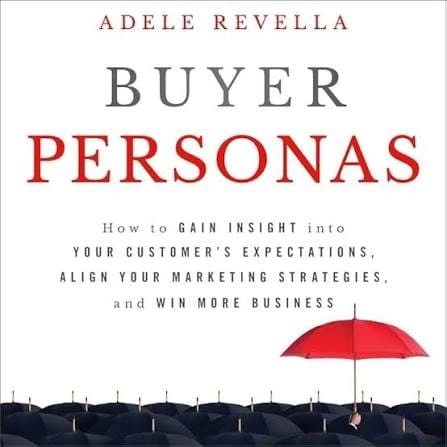
Buyer Persona

Author: Adele Revella

The Big Idea

Understanding buyers requires discovering the insights behind their actual buying decisions, not inventing a profile based on assumptions about who they are.

The book is particularly valuable for EVUNN because it moves beyond basic demographics and asks you to understand the buying insights that influence real decisions.

For this step, we are especially interested in:

What alternatives did the buyer consider?

What did they expect from each option?

What influenced their decision?

What made one option more valuable than another?

This gives you much stronger information for positioning than simply researching competitors.


What Business Problem Does This Book Solve?

“I know who my customer is, but I don’t know what actually drives their buying decision.”

A typical persona might tell you:

Age: 35–45
Job: Consultant
Income: ₦X
Location: Lagos

That information may be useful.

But it doesn’t tell you:

Why did they choose this solution?

What alternatives did they consider?

What made them reject those alternatives?

What did they value most?

Who influenced their decision?

What made them trust one option over another?

Those are the insights EVUNN needs.


Should I Read It Now?

YES.

Read this book specifically to understand buying decisions and buyer insights.

You don’t need to turn this into a full buyer-persona research project.

Your objective is narrower:

Understand how your customer evaluates alternatives when deciding how to solve the problem.


Which Parts Matter Most?

You don’t need to read the entire book.

Chapter 1 — Understand Buying Decisions and the People Who Make Them

ESSENTIAL

This establishes the difference between simply knowing who a buyer is and understanding how they make decisions.

Pay particular attention to:

Buying Insights

and why demographic and psychographic information alone isn’t enough.


Chapter 2 — Focus on the Insights That Guide Marketing Decisions

ESSENTIAL

Focus on:

The 5 Rings of Buying Insight

This is particularly useful because it helps you uncover the information behind the customer’s decision rather than simply describing the customer.


Chapter 3 — Decide How You Will Discover Buyer Persona Insights

IMPORTANT

Focus on how interviews and other research methods can uncover genuine buying insights.

The goal is to learn from actual buyers rather than inventing assumptions.


Chapter 4 — Gain Permission and Schedule Buyer Interviews

SELECTIVE

Pay particular attention to:

Which Buyer Should You Interview?

and especially:

Interview Buyers Who Chose You as Well as Those Who Did Not

This is extremely valuable for EVUNN.

Someone who chose another solution can reveal:

What your offer was competing against in the real world.


Chapter 5 — Conduct Probing Buyer Interviews

SELECTIVE

Focus particularly on:

  • “Take Me Back to the Day…”

  • Questions that keep the conversation flowing

  • Who influences the decision

  • The perceived value of differentiators

  • What actually affected the decision

You are looking for decision evidence, not compliments.


Chapter 6 — Mine Your Interviews for Buying Insights

IMPORTANT

Learn how to turn raw conversations into actual buying insights.

This prevents the toolkit from becoming a collection of interesting customer quotes.


Chapter 7 — Determine How Many Buyer Personas You Need

SELECTIVE

Focus on:

Segment Buyers Based on Insights, Not Profiles

This is useful if your research reveals that different groups make the buying decision differently.

Don’t create multiple personas simply because customers have different demographics.


Chapter 8 — Decide What to Say to Buyers

SELECTIVE

For this step, focus particularly on:

  • Evaluate Your Competitive Ranking

  • Assess Relative Value to Buyers

These concepts become important bridges into Step 4 — Define Your Position.


What Should I Skip For Now?

You don’t need to study the entire marketing implementation side of the book.

For now, skip or skim the sections dealing primarily with:

  • Marketing activities

  • Sales enablement

  • Sales playbooks

  • Long-term organizational implementation

  • Strategic planning

Those become more relevant later.

Your immediate objective is:

Understand the customer’s decision.


Your EVUNN Action

Build Your Customer Alternative & Decision Map
Take the:

Best-Fit Customer Profile

from Step 1

and the:

Buying Situation Profile

from Step 2.

Now investigate what happens after the customer decides they want to make a change.


1. Identify the Alternatives

Ask:

“What could this customer do instead of buying my offer?”

Include:

Do Nothing

What happens if they decide not to act?

DIY

How could they solve it themselves?

Existing Resources

Who or what could they use internally?

Other Providers

Who else could they hire?

Substitute Solutions

Could they solve the underlying problem through a completely different approach?


2. Identify Why Each Alternative Is Attractive

For every major alternative ask:

“Why would my customer consider this option?”

For example:

DIY

→ Cheaper
→ More control
→ No external commitment

Course

→ Affordable
→ Convenient
→ Self-paced

Consultant

→ Expertise
→ Personalisation
→ Faster progress

Do Nothing

→ No immediate cost
→ No disruption

Don’t assume the answer.

Where possible, get it from actual customers.


3. Identify the Customer’s Decision Criteria

Ask:

“What does this customer care about when deciding between these options?”

Possible criteria include:

  • Price

  • Expertise

  • Trust

  • Speed

  • Convenience

  • Personalisation

  • Reputation

  • Proof

  • Risk

  • Ease of implementation

  • Expected outcome

  • Specialisation

But don’t simply tick boxes.

Identify the criteria that actually influence this customer’s decision.


4. Identify What Matters Most

Not every decision criterion has equal importance.

Ask:

“Which factors can actually change the customer’s choice?”

For example:

A customer may say price matters.

But if they choose a provider charging twice as much because they trust their expertise, trust and expertise may matter more than price.

You are looking for the real decision drivers.


5. Identify Who Influences the Decision

Ask:

“Who else affects this customer’s decision?”

Depending on the business, it could be:

  • A spouse

  • Business partner

  • Manager

  • CEO

  • Procurement

  • Colleague

  • Friend

  • Existing advisor

  • Professional network

For a B2B expert business, this can be particularly important because the person experiencing the problem may not be the person approving the purchase.


6. Identify Why Customers Reject Alternatives

Ask:

“Why would this customer decide against each alternative?”

For example:

“They tried solving it themselves but couldn’t get consistent results.”

or:

“They considered hiring a consultant but felt the approach was too generic.”

or:

“They wanted to take a course but knew they wouldn’t have time to implement it.”

This is valuable because it reveals gaps in the alternatives.


7. Identify Why They Would Choose Your Offer

Now ask:

“Given everything we’ve learned, what could make our offer the preferred choice?”

Don’t write:

“Because we’re better.”

Instead identify a specific reason.

For example:

“Because the offer provides personalised implementation rather than just information.”

or:

“Because it is designed specifically for newly promoted managers during their first 90 days.”

At this point, treat the answer as a positioning hypothesis, not your final positioning.


8. Identify Your Primary Alternative

You may discover that your offer isn’t primarily competing with another business.

Your biggest alternative may be:

Do nothing.

Or:

DIY.

Or:

An internal solution.

Or:

A different type of professional.

Identify the alternative that your customer is most likely to choose instead.

This becomes your:

Primary Competitive Alternative


9. Capture Evidence

If you already have customer interviews or research from earlier phases, use them.

If you don’t have enough evidence, mark the assumption as:

UNCONFIRMED

Don’t manufacture certainty.

The purpose of this exercise is to separate:

What we know

from

What we believe

and:

What we still need to discover.


Create Your Customer Decision Map

Your finished map should connect:

Buying Situation

Alternatives Considered

Why Each Alternative Is Attractive

Decision Criteria

Most Important Decision Drivers

Influencers

Reasons Alternatives Are Rejected

Why Your Offer Could Win

Primary Competitive Alternative

This is much more valuable than a simple competitor list.


🧠 EVUNN Mindset Checkpoint

Are you trying to prove that your offer is better?

This is a common resistance at this stage.

You may discover that customers value an alternative more than you expected.

Don’t immediately defend your offer.

Don’t explain why they are wrong.

Don’t manipulate the evidence to make your offer look superior.

Instead ask:

“What can I learn from why they prefer that alternative?”

The goal is not to win the research.

The goal is to understand the market.

Optional reading: The Confidence Gap — Russ Harris

If you find yourself avoiding customer conversations because you’re afraid of hearing that customers don’t want your offer, use this as a mindset checkpoint.

Optional. Do not read it unless this resistance is actually present.


🔓 EVUNN Execution Toolkit

Customer Alternative & Decision Map
Don’t guess what customers compare when deciding whether to buy.

Use the EVUNN Customer Alternative & Decision Map to identify the alternatives they consider, why those alternatives are attractive, what criteria influence the decision, who affects the choice and why customers ultimately choose one option over another.

→ Unlock The Toolkit


One Payment. All Stage 1 Toolkits. Yours For Life.

No monthly subscription. No recurring fees. Just the tools you need to execute.

→ Unlock All Stage 1 Execution Toolkits


Your Step 3 Output

By the end of this step, you should have a:

CUSTOMER ALTERNATIVE & DECISION LANDSCAPE

Containing:

Alternatives Considered

Why Customers Consider Them

Decision Criteria

Primary Decision Drivers

Decision Influencers

Reasons Alternatives Are Rejected

Potential Reason to Choose Your Offer

Primary Competitive Alternative


What You Should Now Know

You started Phase 3 knowing:

WHO

Your best-fit customer.

WHEN

Their buying situation.

You now understand:

HOW THEY CHOOSE

You know what alternatives they consider and what influences their decision.

That gives you the information needed for the next strategic move.

You are no longer asking:

“How can I make my offer look different?”

You can now ask the much more important question:

“What position should my offer occupy in this customer’s mind, given what I now know about their needs, situation and alternatives?”

NEXT: STEP 4 — DEFINE YOUR POSITION

What should my offer be known for by the customer who is most likely to buy it?

To understand their experience, use Book 3. Title: Practical Empathy

Practical empathy


Author: Indi Young

Time Investment: 5+ hours (Audiobook) 

Listen to Audiobook with Audible free trial |Buy at the Bookshop


The Big Idea from Practical Empathy 

Empathy helps you move beyond assumptions and develop a deeper understanding of how people experience problems, situations, what they do, and what matters to them.

For an expert, this is a critical shift. Your expertise tells you what you think the problem is. Empathy helps you understand the problem from their perspective.


What Does this Book Help you Achieve?

Practical Empathy helps you:

  • Listen without immediately interpreting

  • Understand people’s experiences more deeply

  • Separate what people actually say from your assumptions

  • Make sense of what you hear

  • Identify patterns across people’s experiences

  • Use those insights to improve what you create

The goal isn’t to become better at selling.

It’s to become better at understanding.


Should I Read it Now?

YES.

You’ve already explored:

Step 1: What problems might exist?

Step 2: Why might people want to solve them?

Now you need to understand: What is this experience actually like for the person living through it?


Which Chapters Matter Most for me Now?

Chapter 2: Empathy Brings Balance (Essential)

Understand what empathy actually means and why it matters when making decisions about customers.

Chapter 3: Put Empathy to Work (Essential)

Learn how empathy can become part of how you investigate and understand problems.

Chapter 4: A New Way to Listen (Essential)

This is one of the most important chapters for this stage.

Learn to listen to someone’s experience without immediately jumping to solutions, advice or conclusions.

Chapter 5: Make Sense of What You Heard (Essential)

Find out how to process and deepen your understanding of what people tell you.

Chapter 6: Apply Empathy to What You Create (Essential)

Understand how patterns in people’s experiences can influence what you eventually create.

Chapter 1: Business Is Out of Balance (Read this chapter for context only)

It explains why relying only on numbers and analytical thinking can leave important parts of the customer experience invisible.

Skip Chapters 7–9 for now

They focus more heavily on applying empathy within workplaces and organizations.

Listen to Audiobook with Audible free trial | Buy at the Bookshop


Your Step 3 Outcome

By the end of this step, you should have:

  • A deeper understanding of the experience behind each problem  of  the 3 problems generated in step 1

  • A clearer distinction between what you know and what you’re assuming

  • Initial insight into what people think, feel and do

  • A better understanding of their frustrations and desired outcomes

  • A list of questions you still need to investigate with real people

Notice what hasn’t happened yet:

You haven’t validated the problems yet. That’s intentional.

You’ve developed empathy, but empathy based on your own reflection is still not enough.

The next step takes you deeper.


🔒 Ready to Put Empathy into Practice?

Reading about empathy is not the same as practising it.

The EVUNN Customer Empathy Toolkit gives you a structured way to examine the problem from the customer’s perspective and separate evidence from assumptions.


One Payment. For All EVUNN Stage 1 toolkits.

What Should I Learn Next?

You now have a better understanding of the customer’s experience.

But there’s another question:

What are they actually trying to accomplish?

A customer may describe a problem, but the problem itself isn’t always the real objective.

They may be trying to make progress toward something bigger.

Step 4: Jobs-to-Be-Done

You’ll move from: Understanding their experience to understanding the progress they’re actually trying to make.

Customer Buying Journey

Customer Buying Journey: Identify What Triggers Customers to Buy | EVUNN

PROBLEM: I understand the problem, but I don't fully understand what it's like to experience it.

To find a profitable problem to solve, you must understand what it is like to experience the problem

STEP 3: DEVELOPING EMPATHY

Absolutely. With the actual Demand-Side Sales contents, I would rewrite Step 2 so the book teaches the perspective, while the EVUNN toolkit turns that perspective into an executable Buying Situation Profile.

Step 2 — Define the Customer’s Buying Situation

The Problem We’re Solving

“I know who my best-fit customer is, but I don’t understand what makes them decide it’s time to solve their problem.”

A person can have a problem for months or even years without buying anything to solve it.

Something has to change.

They may experience a new responsibility, a failed attempt, an unexpected consequence, a deadline, a growing frustration or a new opportunity.

At some point, their current situation becomes difficult enough that they begin looking for a different way forward.

That moment is important.

Because your customer doesn’t simply buy because a problem exists.

They buy when they become motivated to make progress.

So your job in this step is to understand:

What is happening in the customer’s world that creates a reason to seek a solution?


The EVUNN Mindset Shift

From “My customer has a problem” → “My customer is trying to make progress.”

As an expert, it is easy to look at your customer through the lens of your expertise.

You see:

“They need consulting.”

“They need training.”

“They need a better system.”

“They need coaching.”

But your customer doesn’t experience their world as a service category.

They experience a situation.

They are trying to accomplish something.

They are struggling with something.

They are trying different ways of dealing with it.

And eventually, they may decide:

“I need to do something differently.”

That is the perspective you need to understand.


📖 Recommended Book

Demand-Side Sales

Authors: Bob Moesta & Greg Engle

The Big Idea

Customers are trying to make progress from their current situation to a better one.

Demand-side thinking asks you to understand the customer’s world from their perspective, rather than beginning with what you want to sell.

Instead of asking:

“What service do I provide?”

ask:

“What progress is this customer trying to make, and what is happening that makes change important now?”

This is particularly valuable for an expertise-based business because your expertise can easily make you focus on your solution before understanding the customer’s motivation to change.


What Business Problem Does This Book Solve?

“I know my customer has a problem, but I don’t understand why they decide to do something about it.”

This book helps you understand the difference between:

A problem existing

and

Demand for a solution emerging.

That distinction is critical.

Someone can know they have a problem and still do nothing.

Your objective is to understand what happens between:

“I have this problem.”

and:

“I need to find a solution.”


Should I Read It Now?

YES.

This is the primary book for Step 2.

But don’t read it as a conventional sales book.

You are reading it to develop the ability to see the customer’s situation from the demand side.

As you read, keep asking:

“What makes this customer move from tolerating their current situation to actively seeking change?”


Which Chapters Matter Most?

You do not need to read the entire book before completing this step.

Chapter 1 — Two Perspectives on the World: Supply and Demand

ESSENTIAL

This establishes the fundamental shift between the supplier’s perspective and the customer’s perspective.

Pay particular attention to how demand looks different when you stop asking:

“What am I selling?”

and start asking:

“What is the customer trying to accomplish?”


Chapter 3 — Solving the Customer’s Struggle

ESSENTIAL

This is directly relevant to the EVUNN framework.

Focus on understanding:

  • The customer’s current situation

  • What they are struggling with

  • Why their current approach isn’t sufficient

  • What they are trying to change

Your goal is to understand the struggle behind the purchase.


Chapter 4 — Seeing the World Through the Customer’s Eyes

ESSENTIAL

This chapter reinforces the perspective you need throughout the EVUNN roadmap:

Don’t interpret the customer’s problem entirely through your own expertise.

Try to understand what the situation looks and feels like from the customer’s side.


Chapter 7 — Moving from Pushing Products to Creating Pull for Progress

ESSENTIAL

This helps connect customer motivation to demand.

The important lesson for EVUNN is:

Don’t push your solution onto a customer who isn’t ready for change. Understand the progress they are already trying to make.


Read Selectively

Chapter 2 — The Frameworks for Demand-Side Selling

Read this for the author’s broader framework.

You don’t need to master the entire sales methodology at this stage.

Take what helps you understand customer demand and move on.


Chapter 5 — Mapping Demand-Side Buying to Supply-Side Sales, Marketing, and Customer Success

Read selectively.

It provides useful context for how customer demand connects with the business’s response.

However, the marketing and sales applications become more relevant later in the EVUNN roadmap.


What Should I Skip For Now?

Chapter 6 — Connecting the Dots Between Sales, Marketing, and Customer Support

Skip for now.

It is more concerned with connecting demand-side thinking across organizational functions.

That isn’t the immediate problem you’re solving.

You can return to it later.

Conclusion / Appendix

Optional.

Don’t let them slow down execution.


Your EVUNN Action

Build Your Customer’s Buying Situation

Return to the Best-Fit Customer Profile you created in Step 1.

Now move from:

“Who is this customer?”

to:

“What is happening when this customer becomes ready to act?”


1. Describe the Current Situation

Ask:

What is happening in this customer’s world before they start looking for a solution?

Describe their actual circumstances.

What are they doing?

How are they currently dealing with the problem?

What are they tolerating?

What isn’t working?


2. Identify What Changes

Ask:

What changes or happens that makes their current situation harder to accept?

Look for events such as:

  • A new responsibility

  • Business growth

  • A failed attempt

  • A deadline

  • A performance problem

  • A financial consequence

  • A major transition

  • A new opportunity

  • Increasing customer complaints

  • Increasing workload

  • A change in circumstances

You are looking for the event or change that increases the pressure to act.


3. Identify the Customer’s Struggle

Ask:

What becomes difficult for the customer?

Describe the struggle from their perspective, not yours.

Instead of:

“They need strategic consulting.”

write:

“They don’t know which growth opportunity to pursue and are worried about wasting limited resources.”

The second statement describes their experience.


4. Identify the Progress They Want

Ask:

What are they trying to accomplish?

What would they like to be different?

What are they trying to achieve, avoid, change or become?

Remember:

Your service is not the customer’s desired outcome.

The customer may buy consulting.

But they may actually want:

“Confidence that they’re making the right strategic decision.”


5. Identify What They Try Before Buying

Ask:

“What do they do before they seek a solution like mine?”

They might:

  • Search online

  • Ask colleagues

  • Watch videos

  • Read books

  • Use AI

  • Try to solve it themselves

  • Hire internally

  • Use an existing tool

  • Ask a friend

  • Ignore the problem

Don’t judge these behaviours.

You are trying to understand the customer’s path toward change.


6. Identify the Trigger

Now ask:

“What happens that makes them start looking for a solution?”

Be specific.

Avoid:

“When they want to improve.”

Instead:

“When their business grows to the point where they can no longer manage client delivery manually and customer complaints begin increasing.”

The more specific the situation, the more useful the insight.


7. Identify the Reason to Change

Ask:

“Why can’t they simply continue doing what they’ve been doing?”

This is different from the trigger.

The trigger may create awareness.

The struggle creates pressure.

The desired progress creates motivation.

But the customer eventually reaches a point where they think:

“The way I’m doing this isn’t working anymore.”

Capture that moment.


Build Your Buying Situation Story

Now connect the pieces:

Current Situation

Change / Trigger

Customer Struggle

Desired Progress

Existing Attempts

Reason to Change

Buying Situation

You are creating a story of how demand emerges.


🧠 EVUNN Mindset Checkpoint

Are you trying to convince instead of understand?

At this stage, you may feel tempted to prove that your offer is needed.

Watch for thoughts such as:

“I already know what they need.”

“I just need to explain my solution better.”

“They should understand the value.”

Stop.

Your job at this stage is not to convince.

It is to understand.

Optional reading

The Mom Test — Rob Fitzpatrick

Use this checkpoint if you notice that you are:

  • Leading customers toward answers you want

  • Asking hypothetical questions

  • Looking for validation instead of truth

  • Treating compliments as evidence

  • Avoiding difficult customer conversations

This is optional.

Do not interrupt your execution flow unless you actually encounter this resistance.


🔓 EVUNN Execution Toolkit

Buyer Situation Mapper

Don’t guess why customers become ready to buy.

Use the EVUNN Buyer Situation Mapper to map the customer’s current situation, trigger, struggle, desired progress, existing attempts and reason for change so you can identify when and why demand for your solution emerges.

→ Unlock The Toolkit


One Payment. All Stage 1 Toolkits. Yours For Life.

No monthly subscription. No recurring fees. Just the tools you need to execute.

→ Unlock All Stage 1 Execution Toolkits


Your Step 2 Output

By the end of this step, you should have a:

BUYING SITUATION PROFILE

Containing:

Current Situation

Trigger / Change

Customer Struggle

Desired Progress

Existing Attempts

Reason to Change

Buying Situation

This becomes the input for Step 3.


What You Should Now Know

You started Phase 3 knowing:

Who your best-fit customer is.

You now understand:

What causes that customer to become motivated to seek a solution.

That gives you two critical pieces of the market picture:

WHO

Your Best-Fit Customer

WHEN

Their Buying Situation

But there is still another question.

When they decide:

“I need to solve this.”

they have choices.

They can do nothing.

They can do it themselves.

They can use an existing solution.

They can hire someone else.

They can choose your offer.

So the next question is:

“What would my customer choose instead of my offer?”

NEXT: STEP 3 — IDENTIFY THE ALTERNATIVES

What is my customer comparing my offer against?

To understand their experience, use Book 3. Title: Practical Empathy

Practical empathy


Author: Indi Young

Time Investment: 5+ hours (Audiobook) 

Listen to Audiobook with Audible free trial |Buy at the Bookshop


The Big Idea from Practical Empathy 

Empathy helps you move beyond assumptions and develop a deeper understanding of how people experience problems, situations, what they do, and what matters to them.

For an expert, this is a critical shift. Your expertise tells you what you think the problem is. Empathy helps you understand the problem from their perspective.


What Does this Book Help you Achieve?

Practical Empathy helps you:

  • Listen without immediately interpreting

  • Understand people’s experiences more deeply

  • Separate what people actually say from your assumptions

  • Make sense of what you hear

  • Identify patterns across people’s experiences

  • Use those insights to improve what you create

The goal isn’t to become better at selling.

It’s to become better at understanding.


Should I Read it Now?

YES.

You’ve already explored:

Step 1: What problems might exist?

Step 2: Why might people want to solve them?

Now you need to understand: What is this experience actually like for the person living through it?


Which Chapters Matter Most for me Now?

Chapter 2: Empathy Brings Balance (Essential)

Understand what empathy actually means and why it matters when making decisions about customers.

Chapter 3: Put Empathy to Work (Essential)

Learn how empathy can become part of how you investigate and understand problems.

Chapter 4: A New Way to Listen (Essential)

This is one of the most important chapters for this stage.

Learn to listen to someone’s experience without immediately jumping to solutions, advice or conclusions.

Chapter 5: Make Sense of What You Heard (Essential)

Find out how to process and deepen your understanding of what people tell you.

Chapter 6: Apply Empathy to What You Create (Essential)

Understand how patterns in people’s experiences can influence what you eventually create.

Chapter 1: Business Is Out of Balance (Read this chapter for context only)

It explains why relying only on numbers and analytical thinking can leave important parts of the customer experience invisible.

Skip Chapters 7–9 for now

They focus more heavily on applying empathy within workplaces and organizations.

Listen to Audiobook with Audible free trial | Buy at the Bookshop


Your Step 3 Outcome

By the end of this step, you should have:

  • A deeper understanding of the experience behind each problem  of  the 3 problems generated in step 1

  • A clearer distinction between what you know and what you’re assuming

  • Initial insight into what people think, feel and do

  • A better understanding of their frustrations and desired outcomes

  • A list of questions you still need to investigate with real people

Notice what hasn’t happened yet:

You haven’t validated the problems yet. That’s intentional.

You’ve developed empathy, but empathy based on your own reflection is still not enough.

The next step takes you deeper.


🔒 Ready to Put Empathy into Practice?

Reading about empathy is not the same as practising it.

The EVUNN Customer Empathy Toolkit gives you a structured way to examine the problem from the customer’s perspective and separate evidence from assumptions.


One Payment. For All EVUNN Stage 1 toolkits.

What Should I Learn Next?

You now have a better understanding of the customer’s experience.

But there’s another question:

What are they actually trying to accomplish?

A customer may describe a problem, but the problem itself isn’t always the real objective.

They may be trying to make progress toward something bigger.

Step 4: Jobs-to-Be-Done

You’ll move from: Understanding their experience to understanding the progress they’re actually trying to make.

ideal customer profile

How to Define Your Ideal Customer Profile | EVUNN

PROBLEM: I understand the problem, but I don't fully understand what it's like to experience it.

To find a profitable problem to solve, you must understand what it is like to experience the problem

STEP 3: DEVELOPING EMPATHY

Yes. I understand the structure you want now. Step 1 of Phase 3 should follow the same architecture as the Phase 2 pages, with only the agreed addition of the optional EVUNN Mindset Checkpoint.

So I would rewrite Step 1 like this:

Step 1 — Define Your Best-Fit Customer

The Problem We’re Solving

“I have an offer that can solve a real problem, but I don’t know exactly who I should build and market it for.”

You have already validated the problem and built an offer around it.

But your offer may be useful to several different groups.

You may be thinking:

“My offer is for professionals.”

“My offer is for entrepreneurs.”

“My offer is for coaches.”

“My offer is for small business owners.”

These descriptions are too broad to guide your positioning.

Your job now is to identify the customer who has the strongest combination of need, motivation, value, buying ability and fit with your offer.

You are not trying to decide who you can help.

You are deciding:

“Who is most likely to need, value and buy this particular offer?”


The EVUNN Mindset Shift

From “Who could use my offer?” → “Who is most likely to buy it?”

Experts often resist narrowing their audience.

They think:

“But I can help many different people.”

That’s true.

You aren’t permanently excluding everyone else.

You’re deciding who gets your primary attention for this offer.

A clear customer makes it easier to:

  • Position your offer

  • Explain its value

  • Create relevant messaging

  • Identify alternatives

  • Choose marketing channels

  • Recognize good prospects

  • Build a repeatable acquisition system

Clarity creates relevance.


📖 Book — Buyer Persona

Buyer Persona

Author: Adele Revella

The Big Idea

Don’t invent a customer profile. Understand the buying decisions real customers make and the insights that drive those decisions.

Traditional customer personas often focus on demographics, interests and personality.

Revella’s approach focuses much more on understanding how buyers actually make decisions.

For EVUNN, this means you’re not creating a fictional customer avatar.

You’re trying to understand:

Who is most likely to buy this offer, what drives their decision, and what makes them choose one solution over another?


What Business Problem Does This Book Solve?

This book helps solve:

“I know who could benefit from my offer, but I don’t know which customers are most likely to actually buy it.”

This matters because the person who experiences the problem isn’t automatically the person who will buy the solution.

You need to understand:

  • Who experiences the problem most strongly

  • Who wants the outcome most

  • Who has a reason to act

  • Who can realistically buy

  • What they value in a solution

  • What influences their decision


Should I Read It Now?

YES — but read selectively.

Don’t read this book simply to learn how to create a traditional customer avatar.

Read it to learn how to identify buying insights that help you determine your best-fit customer.

As you read, keep asking:

“What does this teach me about identifying the people most likely to buy my offer?”


Which Chapters Matter Most?

You don’t need to read the entire book for this step.

READ FIRST

Chapter 1 — Understand Buying Decisions and the People Who Make Them

Learn why traditional demographics and psychographics aren’t enough to understand buyers.

Focus on the difference between describing a customer and understanding their buying decision.

Chapter 2 — Focus on the Insights That Guide Marketing Decisions

High priority.

Pay particular attention to the 5 Rings of Buying Insight.

These give you a stronger way to think about the information that actually matters when identifying a buyer.

Chapter 3 — Decide How You Will Discover Buyer Persona Insights

Learn how interviews and other research methods can uncover useful buying evidence.


READ SELECTIVELY

Chapter 5 — Conduct Probing Buyer Interviews

Use this if you need additional customer conversations.

Chapter 6 — Mine Your Interviews for Buying Insights

Use this if you have interviews that need to be analysed.

Chapter 7 — Determine How Many Buyer Personas You Need

Use this when you need to determine whether your offer should focus on one customer group or several.


What Should I Skip For Now?

You don’t need to read the entire book before completing this step.

Skip Chapter 4 for now

Unless you need help recruiting people for buyer interviews.

Skip most of Chapters 8–11 for now

These chapters move into:

  • What to say to buyers

  • Marketing activities

  • Buyer’s journey

  • Sales and marketing alignment

  • Strategic implementation

Those concepts become more useful later.

Your current question is simply:

Who is the best-fit customer for this offer?

Don’t let later marketing questions distract you from answering it.


📖 Supporting Book — This Is Marketing

Author: Seth Godin

The Big Idea

Don’t try to serve everyone. Identify a specific group of people you can serve exceptionally well, understand what they want, and build your offer and message around them.

This book complements Buyer Persona by helping you move from understanding your potential customers to deliberately choosing the audience you want to focus on.

Why This Book Is Here

Buyer Persona helps you understand the people who experience the problem.

This Is Marketing helps you answer the next strategic question:

“Of all the people I could serve, who should I deliberately choose to serve first?”

This is where you begin to narrow your market and identify your smallest viable market.


What To Read

Chapter Four — The Smallest Viable Market

ESSENTIAL

This is the most important chapter for Step 1.

Learn why starting with a specific, focused group can be more powerful than trying to appeal to everyone.

Ask:

Who is the smallest group of people I could serve exceptionally well with this offer?


Chapter Eight — More of the Who: Seeking the Smallest Viable Market

ESSENTIAL

Go deeper into identifying the people you are choosing to serve.

Use this chapter to refine the audience you identified through your Buyer Persona work.

Ask:

Who specifically is most likely to value the transformation my offer provides?


Chapter Nine — People Like Us Do Things Like This

READ

Use this chapter to understand the importance of shared identity, beliefs and behaviour within a market.

Ask:

What does my chosen audience believe, value or identify with?

This can help you move beyond demographic descriptions and understand the worldview of the people you want to serve.


Chapter Fourteen — Treat Different People Differently

READ

This reinforces the importance of not treating an entire market as though everyone has identical needs, motivations or expectations.

Use it to think about whether your current audience definition is still too broad.


Chapter Fifteen — Reaching the Right People

SKIM

This will become more useful later when you work on customer acquisition and distribution.

For Step 1, focus only on the principle of reaching the right audience rather than trying to reach everyone.


What You Can Skip For Now

You do not need to read the entire book for this step.

For now, you can skip or save these sections for later:

  • Chapters 1–3

  • Chapters 5–7

  • Chapters 10–13

  • Chapters 16–23

They contain valuable marketing ideas, but they are not necessary for completing the Best-Fit Customer and Smallest Viable Audience work in Step 1.

You can return to them when you reach the marketing and customer-acquisition stages.


Your EVUNN Takeaway

After reading the relevant chapters, you should be able to answer:

“Who specifically am I choosing to build this offer for?”

Not:

“Who could possibly use it?”

But:

“Who is most likely to need it, value it and act on it?”

Your goal:

Move from:

Potential Market

Best-Fit Customer

Smallest Viable Audience

Focused Market

This gives you a deliberate audience to carry forward into Step 2: Define the Customer’s Buying Situation.


Your EVUNN Action

Build Your Best-Fit Customer Profile

Return to your Validated Offer Blueprint from Phase 2.

You already know:

The problem

Who experienced it

The situation

The desired outcome

The solution they valued

What you learned during validation

Now use that evidence to identify the strongest customer group.


1. Identify Your Potential Customer Groups

List the different groups that could reasonably benefit from your offer.

Don’t choose yet.

First identify the realistic possibilities.


2. Compare Problem Intensity

Ask:

Who experiences this problem most strongly?

Look for customers for whom the problem is:

  • Frequent

  • Costly

  • Frustrating

  • Urgent

  • Consequential


3. Compare Outcome Value

Ask:

Who values the outcome of my offer most?

Identify the group for whom achieving the desired outcome would make the greatest meaningful difference.


4. Compare Buying Motivation

Ask:

Who has the strongest reason to act?

Look for triggers such as:

  • A new responsibility

  • A deadline

  • A major change

  • A performance problem

  • Increasing consequences

  • A new opportunity

Remember:

Having a problem doesn’t automatically make someone a buyer.


5. Compare Buying Ability

Ask:

Who can realistically buy this offer?

Consider:

  • Who controls the purchasing decision?

  • Who controls the budget?

  • Are they already paying for alternatives?

  • Does solving the problem create enough value to justify the price?

  • Are there barriers that could prevent them from buying?


6. Compare Solution Fit

Ask:

For whom is my particular offer especially well suited?

Consider:

  • Their situation

  • Their needs

  • Their desired outcome

  • Their level of expertise

  • Their resources

  • Their constraints


7. Compare Reachability

Ask:

Can I realistically reach this customer?

Consider whether they are accessible through:

  • Professional networks

  • LinkedIn

  • Industry associations

  • Communities

  • Events

  • Referrals

  • Partnerships

  • Online platforms

You’re not choosing your acquisition channel yet.

You’re simply checking whether this customer is realistically accessible.


Identify Your Buying Insights

Now go beyond simply describing the customer.

Use your existing customer discovery and validation evidence to answer:

What situation were they in?

What triggered their search for a solution?

What outcome were they trying to achieve?

What did they value when evaluating solutions?

What alternatives did they consider?

What concerns could prevent them from buying?

What made your solution attractive to them?

What evidence supports your conclusions?

If you don’t know the answer to an important question:

Don’t invent it.

A gap in evidence is a signal that you may need additional customer research.


Choose Your Best-Fit Customer

Compare your potential customer groups across:

FactorQuestion
Problem IntensityWho needs the problem solved most urgently?
Outcome ValueWho values the desired outcome most?
Buying MotivationWho has the strongest reason to act?
Buying AbilityWho can realistically buy?
Solution FitWho fits the offer best?
ReachabilityWho can I realistically reach?

You’re looking for the strongest overall fit, not a mathematically perfect customer.


Write Your Best-Fit Customer Statement

Complete:

My offer is primarily designed for [specific customer] who [specific situation/problem] and want [specific outcome].

Then complete:

They are a strong fit because [evidence/reason].

Your statement should be specific enough that you can recognize whether someone is a strong potential customer or not.


🧠 EVUNN MINDSET CHECKPOINT

Are you resisting narrowing your audience?

You may be thinking:

“But I can help many different people.”

If this is preventing you from making a decision, you may want to read:

Essentialism — Greg McKeown

Focus on the parts that help you understand the value of choosing what matters most and eliminating unnecessary options.

This is optional.

If you are comfortable narrowing your audience, skip this checkpoint and continue.

The mindset checkpoint should never interrupt your execution.


🔓 EVUNN Execution Toolkit

Ideal Customer Profile Builder

Don’t guess who your offer is for.

Use the EVUNN Ideal Customer Profile Builder to compare potential customer groups, capture your existing buying insights, identify your strongest customer fit and create your Best-Fit Customer & Buying Insight Profile.

→ Unlock The Toolkit


One Payment. All Stage 1 Toolkits. Yours For Life.

No monthly subscription. No recurring fees. Just the tools you need to execute.

→ Unlock All Stage 1 Execution Toolkits


Your Step 1 Output

By the end of this step, you should have:

BEST-FIT CUSTOMER & BUYING INSIGHT PROFILE

Containing:

Best-fit customer

Situation

Problem

Desired outcome

Buying motivation

Buying considerations

Solution fit

Supporting evidence

This becomes your customer anchor for the rest of Phase 3.

You’ll use it when you:

  • Define the customer’s buying situation

  • Identify alternatives

  • Position the offer

  • Develop differentiation

  • Create your core message

  • Build marketing hooks

  • Choose where to reach them


What Should I Learn Next?

You now know who your best-fit customer is.

But knowing who they are doesn’t tell you when they become ready to buy.

A person can experience the same problem for years without taking action.

Something usually changes first:

A new responsibility.

A deadline.

A growing consequence.

A major opportunity.

A change in circumstances.

Something makes them think:

“I need to solve this now.”

That moment is the buying situation.

NEXT: STEP 2 — DEFINE THE CUSTOMER’S BUYING SITUATION

What happens that makes my best-fit customer decide it’s time to solve this problem?

To understand their experience, use Book 3. Title: Practical Empathy

Practical empathy


Author: Indi Young

Time Investment: 5+ hours (Audiobook) 

Listen to Audiobook with Audible free trial |Buy at the Bookshop


The Big Idea from Practical Empathy 

Empathy helps you move beyond assumptions and develop a deeper understanding of how people experience problems, situations, what they do, and what matters to them.

For an expert, this is a critical shift. Your expertise tells you what you think the problem is. Empathy helps you understand the problem from their perspective.


What Does this Book Help you Achieve?

Practical Empathy helps you:

  • Listen without immediately interpreting

  • Understand people’s experiences more deeply

  • Separate what people actually say from your assumptions

  • Make sense of what you hear

  • Identify patterns across people’s experiences

  • Use those insights to improve what you create

The goal isn’t to become better at selling.

It’s to become better at understanding.


Should I Read it Now?

YES.

You’ve already explored:

Step 1: What problems might exist?

Step 2: Why might people want to solve them?

Now you need to understand: What is this experience actually like for the person living through it?


Which Chapters Matter Most for me Now?

Chapter 2: Empathy Brings Balance (Essential)

Understand what empathy actually means and why it matters when making decisions about customers.

Chapter 3: Put Empathy to Work (Essential)

Learn how empathy can become part of how you investigate and understand problems.

Chapter 4: A New Way to Listen (Essential)

This is one of the most important chapters for this stage.

Learn to listen to someone’s experience without immediately jumping to solutions, advice or conclusions.

Chapter 5: Make Sense of What You Heard (Essential)

Find out how to process and deepen your understanding of what people tell you.

Chapter 6: Apply Empathy to What You Create (Essential)

Understand how patterns in people’s experiences can influence what you eventually create.

Chapter 1: Business Is Out of Balance (Read this chapter for context only)

It explains why relying only on numbers and analytical thinking can leave important parts of the customer experience invisible.

Skip Chapters 7–9 for now

They focus more heavily on applying empathy within workplaces and organizations.

Listen to Audiobook with Audible free trial | Buy at the Bookshop


Your Step 3 Outcome

By the end of this step, you should have:

  • A deeper understanding of the experience behind each problem  of  the 3 problems generated in step 1

  • A clearer distinction between what you know and what you’re assuming

  • Initial insight into what people think, feel and do

  • A better understanding of their frustrations and desired outcomes

  • A list of questions you still need to investigate with real people

Notice what hasn’t happened yet:

You haven’t validated the problems yet. That’s intentional.

You’ve developed empathy, but empathy based on your own reflection is still not enough.

The next step takes you deeper.


🔒 Ready to Put Empathy into Practice?

Reading about empathy is not the same as practising it.

The EVUNN Customer Empathy Toolkit gives you a structured way to examine the problem from the customer’s perspective and separate evidence from assumptions.


One Payment. For All EVUNN Stage 1 toolkits.

What Should I Learn Next?

You now have a better understanding of the customer’s experience.

But there’s another question:

What are they actually trying to accomplish?

A customer may describe a problem, but the problem itself isn’t always the real objective.

They may be trying to make progress toward something bigger.

Step 4: Jobs-to-Be-Done

You’ll move from: Understanding their experience to understanding the progress they’re actually trying to make.

how to validate an offer

How to Validate an Offer: Test If Customers Will Buy | EVUNN

PROBLEM: I understand the problem, but I don't fully understand what it's like to experience it.

To find a profitable problem to solve, you must understand what it is like to experience the problem

STEP 3: DEVELOPING EMPATHY

Yes. For Step 10, I would make this the final decision point of Phase 2. It should not simply teach people how to “test an offer.” It should take everything they built in Steps 1–9 and turn it into evidence-based decisions.

The most important thing is that Step 10 should not restart the process. It should test the offer that already exists.

Step 10 — Validate Your Offer

The Problem We’re Solving

“I’ve built an offer, but I don’t know whether real customers actually want it and will pay for it.”

You have now built the pieces of your offer:

  • A validated problem

  • A promising solution

  • Problem–Solution Fit

  • A defined customer outcome

  • A transformation roadmap

  • A designed offer

  • A packaged offer

  • A value proposition

  • A strengthened offer

  • A pricing strategy

But all of this is still a hypothesis until real customers respond to it.

You may believe:

“Customers will want this.”

You may believe:

“They will see the value.”

You may believe:

“They will pay this price.”

But belief isn’t validation.

Validation is about getting evidence.

Your job now is to put the offer in front of real people and learn what actually happens.


The EVUNN Mindset Shift

From “I Think They Will Buy” → “Let Me Find Out”

Experts often become emotionally attached to an offer they’ve spent time creating.

That’s dangerous.

You don’t need to prove that your offer is good.

You need to discover whether the market responds to it.

So don’t ask:

“How do I convince people to buy my offer?”

Ask:

“What evidence would tell me whether this offer is worth pursuing?”

This changes the exercise from selling your idea to learning from the market.


📖 Book — Testing Business Ideas

Testing Business Ideas

Authors: David J. Bland & Alexander Osterwalder

This is the primary book for Step 10.

Unlike earlier steps, you don’t need to read this book from beginning to end.

Your objective is to learn how to turn your offer assumptions into testable hypotheses and choose appropriate experiments.


What To Read

Section 2 — Test

Hypothesize

Essential

Learn how to turn assumptions into explicit hypotheses.

For example:

Weak:

“People will like my consulting offer.”

Better:

“Independent consultants with fewer than 10 active clients will pay ₦X for a structured client acquisition programme because inconsistent lead generation is preventing them from reaching their revenue goals.”

Now you have something you can actually test.


Experiment

Essential

Learn how to design experiments that generate evidence.

The question becomes:

“What is the smallest, fastest and most credible way I can test this assumption?”


Learn

Essential

Testing isn’t useful unless you know what the evidence means.

You need to distinguish between:

What happened

and

What you learned from what happened.


Decide

Essential

This is particularly important for EVUNN.

The result of validation should not always be:

YES — launch it.

It could be:

Proceed

Modify

Retest

Abandon

Return to an earlier assumption

Good validation gives you permission to change direction.


Section 3 — Experiments

You don’t need to study every experiment in the book.

Focus on the experiments that make sense for an expertise-based business.

Especially look at:

Discovery experiments

Useful when you still need to understand customer reactions.

Validation experiments

Useful when you want stronger evidence that customers will actually engage, commit or pay.

The exact experiment should depend on what assumption you are testing.


Your EVUNN Action

Build Your Offer Validation Plan

Don’t immediately start asking:

“How many people will buy?”

First identify what you actually need to learn.


1. Bring Forward Your Offer

Take the final offer from Step 8 and the pricing decision from Step 9.

Write:

Our Offer


For


To solve


Helping them achieve


At an initial price of


This becomes your Offer Validation Hypothesis.


2. Identify Your Biggest Assumptions

Your offer contains assumptions.

For example:

Customer assumption

“This is the right customer.”

Problem assumption

“This problem is important enough to solve.”

Solution assumption

“This solution can solve the problem.”

Outcome assumption

“This is the outcome the customer actually wants.”

Value assumption

“Customers see sufficient value in this solution.”

Pricing assumption

“Customers will accept this price.”

Behaviour assumption

“Customers will take action to buy this.”

List the assumptions behind your offer.


3. Rank Your Assumptions

Not every assumption deserves equal attention.

For each assumption ask:

How important is this assumption?

If it is wrong, does the offer fail?

How uncertain are we?

Do we already have strong evidence?

How easy is it to test?

Can we learn something quickly?

Prioritize the assumptions that are:

High importance + high uncertainty

These are your critical assumptions.


4. Choose Your Riskiest Assumption

Don’t test everything at once.

Ask:

“If this assumption is wrong, what could seriously undermine the offer?”

For example:

If your entire business depends on customers paying ₦500,000, but you have no evidence anyone will pay more than ₦100,000, price may be the critical assumption.

If you aren’t sure the customer even considers the problem important, problem importance may be the critical assumption.

Test the assumption that could cause the biggest failure.


5. Turn It Into A Testable Hypothesis

Use:

We believe [specific customer] will [specific behaviour] because [reason].

For example:

We believe Nigerian mid-level professionals who want to start consulting businesses will pay ₦150,000 for a structured six-week programme because they struggle to turn their expertise into a marketable offer.

Now define what evidence would support that belief.


6. Define What Counts As Evidence

This is extremely important.

Don’t run an experiment and then decide afterward that the result “looks positive.”

Before testing, establish your success criteria.

For example:

“If 5 out of 10 qualified prospects agree to a sales conversation, we will consider the interest signal strong enough to continue testing.”

Or:

“If at least three qualified prospects make a financial commitment, we will treat willingness to pay as a positive signal.”

The exact threshold will depend on:

  • Your customer

  • Your offer

  • Your price

  • Your experiment

  • Your sample size

  • The strength of evidence required

The important principle is:

Define the evidence before you see the result.


7. Choose The Smallest Useful Experiment

Don’t build a complete website, course, brand or automation system just to test an assumption.

Ask:

“What is the simplest experiment that could give me meaningful evidence?”

For an expertise-based business, possible experiments might include:

Customer conversations

Useful for understanding reactions and objections.

Offer concept test

Present the offer and observe responses.

Landing page test

Measure whether qualified prospects take meaningful action.

Call-to-action test

See whether prospects move to the next step.

Pre-sale

Ask customers to commit before fully building the offer.

Paid pilot

Deliver the offer to a small group and observe whether customers receive the promised value.

Deposit or reservation

Test whether interest is strong enough for financial commitment.

Concierge delivery

Manually deliver the solution before investing in systems or automation.

The experiment should match the assumption.


8. Test Behaviour, Not Just Opinions

This is one of the most important lessons for EVUNN.

Someone saying:

“That’s a great idea.”

is not the same as:

“I’d like to buy it.”

And:

“I’d buy it.”

is not the same as:

actually paying.

Whenever possible, move from:

Opinion → Intent → Action → Commitment → Payment

The closer you get to actual customer behaviour, the stronger your evidence becomes.


9. Run The Experiment

Now test the offer with real people who fit your target customer.

Record:

  • Who participated

  • What they were shown

  • What they were asked to do

  • What they actually did

  • What they said

  • Objections

  • Questions

  • Drop-offs

  • Commitments

  • Payments

  • Unexpected reactions

Don’t rely on memory.

Capture the evidence.


10. Separate Signals From Noise

Not every response means something.

For example:

“I don’t like the colour of the page.”

may not tell you anything important about the offer.

But:

“I have this problem, but I wouldn’t pay ₦200,000 to solve it.”

could be an important pricing signal.

Ask:

“Does this observation change one of our critical assumptions?”

Focus on evidence that affects the business.


11. Analyse What You Learned

After the experiment, compare:

What we expected

vs.

What actually happened

Then ask:

What does this tell us about the assumption?

For example:

Expected:
10 qualified prospects would request a sales call.

Actual:
2 requested a call.

Possible learning:

The offer may not be sufficiently compelling, the audience may be wrong, the message may be unclear, or the problem may not be urgent enough.

Don’t immediately conclude:

“The offer failed.”

Investigate why.


12. Decide What To Do Next

Every experiment should lead to a decision.

Use four possible outcomes:

PROCEED

Evidence supports the assumption.

Continue developing the offer.

MODIFY

The idea has potential, but something needs to change.

Modify the relevant part and retest.

RETEST

The experiment wasn’t strong enough to provide reliable evidence.

Run a better test.

ABANDON

Evidence strongly suggests the assumption is wrong and continuing would not be sensible.

Move on.


13. Update Your Offer

Validation is not simply:

“Pass or fail.”

It is a learning loop.

Your process becomes:

Hypothesis

Experiment

Evidence

Learning

Decision

Offer Improvement

New Hypothesis

New Experiment

This is how the offer becomes progressively stronger.


Your Phase 2 Validation Gate

Before you declare the offer ready, ask:

Problem

Do we have evidence that the customer cares about the problem?

Solution

Do we have evidence that our solution addresses it?

Outcome

Does the customer actually want the promised outcome?

Offer

Does the structure make sense to the customer?

Value

Does the customer perceive meaningful value?

Price

Is there evidence that the proposed price is acceptable?

Behaviour

Are customers taking meaningful action?

Payment

Where possible, have we obtained actual financial commitment?

Delivery

Can we actually deliver the promised transformation?


Your Step 10 Deliverable

By the end of this step, you should have an:

Offer Validation Report

Containing:

Final Offer

Critical Assumptions

Riskiest Assumption

Testable Hypothesis

Success Criteria

Experiment Selected

Customer Evidence

What We Learned

Decision

Offer Changes

Validated Offer Direction

This becomes the final output of Phase 2.


🎯 Your Phase 2 Outcome

You have now moved from:

“I think I have a good offer.”

to:

“I have an offer built around a validated problem, a defined customer and a desired outcome—and I have tested the key assumptions behind the offer with real-world evidence.”

Your Phase 2 journey is therefore:

Problem

Solution

Fit

Outcome

Transformation

Offer

Packaging

Value Proposition

Offer Strengthening

Pricing

Validation

And the entrepreneur leaves Phase 2 with a validated offer direction, not merely an attractive offer sitting on paper.


🔓 EVUNN Execution Toolkit

Offer Validation Toolkit

Don’t guess whether your offer will work.

Use the EVUNN Offer Validation Toolkit to turn the assumptions behind your offer into testable hypotheses, select the right experiments, capture customer evidence, evaluate what you learned and decide whether to proceed, modify, retest or abandon.

→ Unlock The Toolkit

One Payment. All Stage 1 Toolkits. Yours For Life.

No monthly subscription. No recurring fees. Just the tools you need to execute.

→ Unlock All Stage 1 Execution Toolkits


🎯 You Have Completed Phase 2

You started this phase with:

“I have a validated problem. What should I create to solve it?”

You finish with:

A validated offer direction.

You now have:

A promising solution
Problem–Solution Fit
A defined customer outcome
A transformation journey
A structured offer
A clear value proposition
A strengthened offer
A pricing strategy
Real-world validation evidence

But there is an important distinction:

You have not yet built a market position.

You now know what you’re offering and why it matters.

The next question is:

“Who exactly should this offer be positioned for, and why should they choose it over the alternatives?”

Phase 3 — Position & Get Attention

That’s where you move from building the offer to positioning it in the market and creating a system for getting the right people to notice it.

To understand their experience, use Book 3. Title: Practical Empathy

Practical empathy


Author: Indi Young

Time Investment: 5+ hours (Audiobook) 

Listen to Audiobook with Audible free trial |Buy at the Bookshop


The Big Idea from Practical Empathy 

Empathy helps you move beyond assumptions and develop a deeper understanding of how people experience problems, situations, what they do, and what matters to them.

For an expert, this is a critical shift. Your expertise tells you what you think the problem is. Empathy helps you understand the problem from their perspective.


What Does this Book Help you Achieve?

Practical Empathy helps you:

  • Listen without immediately interpreting

  • Understand people’s experiences more deeply

  • Separate what people actually say from your assumptions

  • Make sense of what you hear

  • Identify patterns across people’s experiences

  • Use those insights to improve what you create

The goal isn’t to become better at selling.

It’s to become better at understanding.


Should I Read it Now?

YES.

You’ve already explored:

Step 1: What problems might exist?

Step 2: Why might people want to solve them?

Now you need to understand: What is this experience actually like for the person living through it?


Which Chapters Matter Most for me Now?

Chapter 2: Empathy Brings Balance (Essential)

Understand what empathy actually means and why it matters when making decisions about customers.

Chapter 3: Put Empathy to Work (Essential)

Learn how empathy can become part of how you investigate and understand problems.

Chapter 4: A New Way to Listen (Essential)

This is one of the most important chapters for this stage.

Learn to listen to someone’s experience without immediately jumping to solutions, advice or conclusions.

Chapter 5: Make Sense of What You Heard (Essential)

Find out how to process and deepen your understanding of what people tell you.

Chapter 6: Apply Empathy to What You Create (Essential)

Understand how patterns in people’s experiences can influence what you eventually create.

Chapter 1: Business Is Out of Balance (Read this chapter for context only)

It explains why relying only on numbers and analytical thinking can leave important parts of the customer experience invisible.

Skip Chapters 7–9 for now

They focus more heavily on applying empathy within workplaces and organizations.

Listen to Audiobook with Audible free trial | Buy at the Bookshop


Your Step 3 Outcome

By the end of this step, you should have:

  • A deeper understanding of the experience behind each problem  of  the 3 problems generated in step 1

  • A clearer distinction between what you know and what you’re assuming

  • Initial insight into what people think, feel and do

  • A better understanding of their frustrations and desired outcomes

  • A list of questions you still need to investigate with real people

Notice what hasn’t happened yet:

You haven’t validated the problems yet. That’s intentional.

You’ve developed empathy, but empathy based on your own reflection is still not enough.

The next step takes you deeper.


🔒 Ready to Put Empathy into Practice?

Reading about empathy is not the same as practising it.

The EVUNN Customer Empathy Toolkit gives you a structured way to examine the problem from the customer’s perspective and separate evidence from assumptions.


One Payment. For All EVUNN Stage 1 toolkits.

What Should I Learn Next?

You now have a better understanding of the customer’s experience.

But there’s another question:

What are they actually trying to accomplish?

A customer may describe a problem, but the problem itself isn’t always the real objective.

They may be trying to make progress toward something bigger.

Step 4: Jobs-to-Be-Done

You’ll move from: Understanding their experience to understanding the progress they’re actually trying to make.

how to price a service

How to Price Your Service: Build a Pricing Strategy | EVUNN

PROBLEM: I understand the problem, but I don't fully understand what it's like to experience it.

To find a profitable problem to solve, you must understand what it is like to experience the problem

STEP 3: DEVELOPING EMPATHY

I would make Step 9 — Develop the Pricing Strategy the point where the user turns the strengthened offer into a defensible price, rather than simply picking a number.

The key distinction is:

  • Step 7: Why is the offer valuable?

  • Step 8: How do we strengthen that value and customer confidence?

  • Step 9: What should we charge, and why?

  • Step 10: Will customers actually pay it?

For EVUNN’s audience—coaches, consultants, freelancers, trainers and other expertise-based businesses—I would write it like this:

Step 9 — Develop Your Pricing Strategy

The Problem We’re Solving

“I have an offer people may value, but I don’t know what to charge for it.”

You have now:

  • Designed the solution

  • Established problem–solution fit

  • Defined the customer outcome

  • Mapped the transformation

  • Designed the offer

  • Packaged the offer

  • Defined the value proposition

  • Strengthened the offer

But one major decision remains:

What should I charge?

This is where many experts get stuck.

They look at competitors.

They calculate how many hours the work will take.

They multiply their hourly rate by the number of hours.

Or they simply choose a price that feels comfortable.

But pricing is not just about what you need to earn.

It is a decision about the relationship between:

Customer → Problem → Outcome → Value → Offer → Price

Your goal is not to find a magical “correct” price.

Your goal is to develop a pricing strategy that makes commercial sense and can be tested in the market.


The EVUNN Mindset Shift

From “What Can I Charge?” → “What Makes This Price Make Sense?”

An expert may think:

“I have 15 years of experience, so I should charge ₦X.”

But customers don’t necessarily value your experience simply because you have it.

They value what that experience helps them achieve.

So instead of asking:

“How much should I charge for my time?”

ask:

“What is the economic and practical value of solving this problem for this customer?”

Your expertise influences your ability to create value.

It does not automatically determine the price.


📖 Book — $100M Offers

$100M Offers

Author: Alex Hormozi

This is the primary book for Step 9.

You have already used the book for offer creation and enhancement. For pricing, return specifically to its pricing section.

What To Read

Chapter 3 — Pricing: The Commodity Problem

Essential

Understand why customers can treat an offer like a commodity when its value isn’t clearly differentiated.


Chapter 4 — Pricing: Finding The Right Market — A Starving Crowd

Essential

Pricing doesn’t exist independently of the market.

A strong offer presented to the wrong market can still struggle.

Use this chapter to think about:

  • Demand

  • Problem importance

  • Customer ability to pay

  • Market attractiveness


Chapter 5 — Pricing: Charge What It’s Worth

Essential

This is the core reading for this step.

Focus on the relationship between:

Price ↔ Value ↔ Outcome

Don’t interpret this as:

“Charge as much as possible.”

The EVUNN lesson is:

Price should be grounded in the value and economics of the problem you’re solving, while remaining credible for the customer and market.


Your EVUNN Action

Build Your Pricing Strategy

Don’t start by asking:

“What number should I put on the offer?”

Start with the economics and value.


1. Define What The Customer Is Paying For

Return to your Customer Value Proposition.

Complete:

The customer is paying for __________.

Don’t answer:

“My time.”

Instead identify the value they’re purchasing.

For example:

“A structured process that helps an independent consultant generate qualified leads consistently.”

That becomes the foundation for your pricing thinking.


2. Define The Desired Outcome

Bring forward the outcome from Step 3.

Ask:

“What is this outcome worth to the customer?”

Consider:

  • Revenue gained

  • Costs avoided

  • Time saved

  • Risk reduced

  • Opportunities created

  • Capability gained

  • Important goals achieved

You don’t need to invent a huge monetary value.

Be realistic.


3. Understand The Cost Of The Problem

Ask:

“What does this problem currently cost the customer?”

This could be:

Financial cost

Lost revenue, wasted spending or missed opportunities.

Time cost

Hours or months spent dealing with the problem.

Opportunity cost

What they could have achieved instead.

Risk cost

Potential consequences of leaving the problem unresolved.

Emotional or operational cost

Stress, uncertainty, frustration or complexity.

This helps you understand the economic significance of the problem.


4. Understand The Customer’s Ability To Pay

Value alone doesn’t determine whether someone can buy.

Consider:

  • Individual vs business buyer

  • Personal vs company budget

  • Customer income/revenue

  • Existing spending on alternatives

  • Cost of doing nothing

  • Buying authority

  • Budget cycles

  • Payment preferences

A highly valuable solution can still be commercially difficult if you’re selling it to a customer who cannot realistically afford it.


5. Identify The Alternatives

Your customer isn’t comparing your price only with another expert.

They may compare you with:

  • Doing nothing

  • Doing it themselves

  • Hiring an employee

  • Hiring a freelancer

  • Hiring a consultant

  • Buying software

  • Taking a course

  • Using another service

  • Continuing with their existing solution

Ask:

“What would this customer do instead of buying my offer?”

This is your competitive alternative set.


6. Identify Your Delivery Economics

Now look at your side.

Determine:

  • Delivery time

  • Preparation time

  • Tools/software

  • Contractors

  • Support

  • Customer acquisition cost

  • Overheads

  • Capacity

  • Number of customers you can realistically serve

This tells you whether the proposed price can support a sustainable business.


7. Choose Your Pricing Model

Don’t assume every expertise-based business should charge hourly.

Consider whether the offer should be:

Fixed-fee

One defined price for a defined outcome/service.

Project-based

Price based on completing a defined project.

Retainer

Recurring payment for ongoing access or service.

Package-based

Different levels of service or support.

Productized service

A standardized service with a clearly defined scope and price.

Programme-based

A structured transformation delivered over a defined period.

Subscription

Recurring access to an ongoing product or service.

Choose the model that fits how the customer receives value and how you deliver it.


8. Develop Your Initial Price Range

Instead of immediately choosing one number, establish:

Floor

The lowest commercially sensible price.

Target

The price you believe best reflects the offer’s value and market.

Ceiling

The highest price that could plausibly be supported by the customer, value and alternatives.

You are creating a pricing hypothesis, not declaring a permanent price.


9. Decide What Is Included At The Price

Bring forward your packaged offer.

Ask:

“What level of service or support does this price actually represent?”

Clarify:

  • Scope

  • Deliverables

  • Access

  • Support

  • Duration

  • Limits

  • Exclusions

This prevents scope creep and makes the price easier to defend.


10. Check Your Price Against The Value

Now perform the most important check.

Ask:

“Does the customer understand why this price makes sense relative to the value of the outcome?”

If the answer is no, you may have:

  • A value communication problem

  • An offer problem

  • A customer selection problem

  • A pricing problem

Don’t automatically lower the price.

First diagnose the problem.


11. Check Your Price Against Your Business

Now ask:

“Can this price support the business I am trying to build?”

Calculate whether the price can realistically support:

  • Your required revenue

  • Delivery capacity

  • Costs

  • Profit

  • Customer acquisition

  • Future growth

A price can be attractive to customers but unsustainable for you.

That’s not a good pricing strategy.


12. Create Your Pricing Hypothesis

Now document:

We believe [customer] will pay approximately [price/range] for [offer] because it helps them achieve [outcome] and provides greater value than [alternative].

This is important.

You’re not saying:

“This is definitely the right price.”

You’re saying:

“This is our current pricing hypothesis.”

Step 10 will help you test that hypothesis.


Your Pricing Decision

At the end of this exercise, select:

Pricing Model

How will the customer pay?

Initial Price

What will you charge?

Price Range

What flexibility exists?

Offer Scope

What exactly does that price include?

Pricing Rationale

Why does this price make sense?

Pricing Hypothesis

What do you still need to learn from the market?


What Not To Do

❌ Don’t price solely by hours

Your customer is buying an outcome, not your stopwatch.

❌ Don’t blindly copy competitors

Their customer, positioning, economics and offer may be completely different.

❌ Don’t automatically charge the highest possible price

High price without sufficient value and credibility creates resistance.

❌ Don’t automatically underprice because you’re new

Being new to selling an offer doesn’t mean the customer’s problem has little value.

❌ Don’t treat the first price as permanent

Your first price is a hypothesis that the market can teach you to improve.


Your Step 9 Deliverable

By the end of this step, you should have a:

Pricing Strategy Blueprint

Containing:

Customer & Desired Outcome

Problem Cost / Economic Significance

Customer Ability To Pay

Alternative Solutions

Delivery Economics

Pricing Model

Price Floor

Target Price

Price Ceiling

Offer Scope At That Price

Initial Pricing Hypothesis

This is the pricing decision you will carry into Step 10.


Your Phase 2 Master Offer Blueprint

You should now have:

Validated Problem

Most Promising Solution

Problem–Solution Fit

Customer Outcome

Transformation Roadmap

Designed Offer

Packaged Offer

Value Proposition

Strengthened Offer

Pricing Strategy

There is now only one major question left:

“Will the market actually support what we’ve created?”

That’s Step 10.


🔓 EVUNN Execution Toolkit

Pricing Strategy Toolkit

Turn your offer and value proposition into a defensible pricing decision.

The EVUNN Pricing Strategy Toolkit helps you evaluate customer value, the economics of the problem, alternatives, delivery costs, pricing models and price ranges—and finish with an initial pricing hypothesis you can take into validation.

→ Unlock The Toolkit

One Payment. All Stage 1 Toolkits. Yours For Life.

No monthly subscription. No recurring fees. Just the tools you need to execute.

→ Unlock All Stage 1 Execution Toolkits


What Should I Learn Next?

You have now designed, packaged, strengthened and priced the offer.

But you’ve made several assumptions along the way.

You assume:

The customer wants the offer.

You assume:

The customer sees the value.

You assume:

The customer will accept the price.

Those assumptions now need evidence.

Step 10 — Validate The Offer

The question we’re now trying to answer:

“Will real customers actually want this offer and pay for it?”

This is where your offer moves from designed to tested.

To understand their experience, use Book 3. Title: Practical Empathy

Practical empathy


Author: Indi Young

Time Investment: 5+ hours (Audiobook) 

Listen to Audiobook with Audible free trial |Buy at the Bookshop


The Big Idea from Practical Empathy 

Empathy helps you move beyond assumptions and develop a deeper understanding of how people experience problems, situations, what they do, and what matters to them.

For an expert, this is a critical shift. Your expertise tells you what you think the problem is. Empathy helps you understand the problem from their perspective.


What Does this Book Help you Achieve?

Practical Empathy helps you:

  • Listen without immediately interpreting

  • Understand people’s experiences more deeply

  • Separate what people actually say from your assumptions

  • Make sense of what you hear

  • Identify patterns across people’s experiences

  • Use those insights to improve what you create

The goal isn’t to become better at selling.

It’s to become better at understanding.


Should I Read it Now?

YES.

You’ve already explored:

Step 1: What problems might exist?

Step 2: Why might people want to solve them?

Now you need to understand: What is this experience actually like for the person living through it?


Which Chapters Matter Most for me Now?

Chapter 2: Empathy Brings Balance (Essential)

Understand what empathy actually means and why it matters when making decisions about customers.

Chapter 3: Put Empathy to Work (Essential)

Learn how empathy can become part of how you investigate and understand problems.

Chapter 4: A New Way to Listen (Essential)

This is one of the most important chapters for this stage.

Learn to listen to someone’s experience without immediately jumping to solutions, advice or conclusions.

Chapter 5: Make Sense of What You Heard (Essential)

Find out how to process and deepen your understanding of what people tell you.

Chapter 6: Apply Empathy to What You Create (Essential)

Understand how patterns in people’s experiences can influence what you eventually create.

Chapter 1: Business Is Out of Balance (Read this chapter for context only)

It explains why relying only on numbers and analytical thinking can leave important parts of the customer experience invisible.

Skip Chapters 7–9 for now

They focus more heavily on applying empathy within workplaces and organizations.

Listen to Audiobook with Audible free trial | Buy at the Bookshop


Your Step 3 Outcome

By the end of this step, you should have:

  • A deeper understanding of the experience behind each problem  of  the 3 problems generated in step 1

  • A clearer distinction between what you know and what you’re assuming

  • Initial insight into what people think, feel and do

  • A better understanding of their frustrations and desired outcomes

  • A list of questions you still need to investigate with real people

Notice what hasn’t happened yet:

You haven’t validated the problems yet. That’s intentional.

You’ve developed empathy, but empathy based on your own reflection is still not enough.

The next step takes you deeper.


🔒 Ready to Put Empathy into Practice?

Reading about empathy is not the same as practising it.

The EVUNN Customer Empathy Toolkit gives you a structured way to examine the problem from the customer’s perspective and separate evidence from assumptions.


One Payment. For All EVUNN Stage 1 toolkits.

What Should I Learn Next?

You now have a better understanding of the customer’s experience.

But there’s another question:

What are they actually trying to accomplish?

A customer may describe a problem, but the problem itself isn’t always the real objective.

They may be trying to make progress toward something bigger.

Step 4: Jobs-to-Be-Done

You’ll move from: Understanding their experience to understanding the progress they’re actually trying to make.

how to increase offer value

How to Increase Offer Value: Make Your Offer More Compelling | EVUNN

PROBLEM: I understand the problem, but I don't fully understand what it's like to experience it.

To find a profitable problem to solve, you must understand what it is like to experience the problem

STEP 3: DEVELOPING EMPATHY

I would make Step 8 the offer-strengthening step, not another offer-design exercise.

The distinction is important:

  • Step 5: What is the offer?

  • Step 6: How is it packaged?

  • Step 7: Why is it valuable to this customer?

  • Step 8: How do we make the offer more compelling and increase confidence in buying it?

  • Step 9: What should we charge?

  • Step 10: Will people actually buy it?

So I would write it this way.

Step 8 — Increase Offer Value & Customer Confidence

The Problem We’re Solving

“My offer solves a real problem, but customers may still hesitate because they don’t see enough value or feel confident enough to buy.”

You now have a complete offer.

You know:

  • Who it’s for

  • The problem it solves

  • The solution

  • The desired outcome

  • The transformation

  • What the customer receives

  • How it is packaged

  • Why it is valuable

But a valuable offer can still be difficult to buy.

A customer may think:

“This sounds useful, but will it actually work for me?”

“Is it worth the money?”

“What if I don’t get the result?”

“Why should I choose this instead of another option?”

Step 8 is about improving the offer itself so that the customer sees greater value and has greater confidence in achieving the desired outcome.


The EVUNN Mindset Shift

From “Add More Stuff” → “Increase The Value And Reduce The Risk”

When experts hear that an offer needs more value, they often respond by adding:

  • More sessions

  • More PDFs

  • More videos

  • More bonuses

  • More support

  • More features

But more isn’t necessarily more valuable.

The goal isn’t to make your offer bigger.

The goal is to make the customer’s desired outcome:

More valuable → more believable → faster to achieve → easier to achieve → less risky.

This is where $100M Offers becomes especially useful.


📖 Book — $100M Offers

$100M Offers

Author: Alex Hormozi

For Step 8, this is the primary book.

You’ve already used Chapters 6, 8, 9 and 10 when designing the offer.

Now focus on the offer-enhancement section.

What To Read

Chapter 11 — Enhancing The Offer: Scarcity, Urgency, Bonuses, Guarantees, and Naming

Essential

This gives you the overall framework for strengthening an offer.

But don’t automatically apply every tactic.

Use only what genuinely improves the customer experience or reduces uncertainty.


Chapter 12 — Enhancing The Offer: Scarcity

Recommended

Learn when genuine scarcity can help a customer make a decision.

Do not manufacture fake scarcity.


Chapter 13 — Enhancing The Offer: Urgency

Recommended

Understand legitimate reasons why a customer may need to act now rather than later.


Chapter 14 — Enhancing The Offer: Bonuses

Recommended

Learn how additional components can increase value.

But ask:

Does this bonus help the customer achieve the outcome?

If not, leave it out.


Chapter 15 — Enhancing The Offer: Guarantees

Essential

This is particularly useful for thinking about risk reduction.

The question isn’t:

“What guarantee can I copy?”

It’s:

“What legitimate risk is preventing this customer from feeling confident enough to buy?”

Then determine whether there is an appropriate way to reduce that risk.


Chapter 16 — Enhancing The Offer: Naming

Skim

A clear name can make an offer easier to understand and remember.

But naming is not the main objective of Step 8.


Your EVUNN Action

Strengthen The Offer

Bring forward the Customer Value Proposition and Packaged Offer you completed in Steps 6 and 7.

Now look for opportunities to make the offer stronger.


1. Identify The Customer’s Buying Uncertainty

Start with the customer.

Ask:

“What might make this customer hesitate before buying?”

Possible reasons include:

  • They don’t trust the solution yet.

  • They’re unsure it will work for them.

  • The outcome feels too far away.

  • The process looks difficult.

  • They don’t understand what’s included.

  • They don’t know whether the investment is justified.

  • They have tried similar solutions before.

  • They are worried about wasting money.

  • They aren’t sure they can implement the solution.

Don’t guess if you already have customer evidence.

Use what you learned during customer discovery and validation.


2. Identify The Biggest Value Gap

Now ask:

“What is preventing the customer from seeing the full value of this offer?”

You may discover that the problem isn’t that your offer needs more features.

Perhaps:

  • The outcome isn’t clear enough.

  • The transformation takes too long.

  • The process requires too much effort.

  • The customer needs more support.

  • The proof is weak.

  • The offer feels risky.

  • The delivery is complicated.

Identify the one or two biggest gaps.


3. Increase The Desired Outcome

Return to your Customer Outcome.

Ask:

“Can the offer create a more meaningful version of this outcome?”

For example, instead of merely:

“Learn how to generate leads.”

Perhaps the meaningful outcome is:

“Build a repeatable process for generating qualified leads.”

The goal is not to exaggerate the promise.

It is to make the real value of the transformation visible.


4. Increase The Likelihood Of Success

This is one of the most important areas for expertise-based businesses.

Ask:

“What could make the customer more confident that they can actually achieve the outcome?”

Potential mechanisms include:

  • Proven process

  • Clear methodology

  • Demonstrations

  • Case studies

  • Examples

  • Templates

  • Feedback

  • Expert guidance

  • Implementation support

  • Checkpoints

  • Progress tracking

Use only mechanisms that are appropriate and credible.


5. Reduce The Time To Value

Ask:

“How quickly can the customer experience meaningful progress?”

You don’t necessarily need to shorten the entire transformation.

Instead, identify an early meaningful win.

For example:

Long-term outcome:
Build a repeatable client acquisition system.

Early win:
Identify and contact the first 20 qualified prospects using the new system.

That early progress can increase confidence.


6. Reduce Customer Effort

Ask:

“What unnecessary effort can we remove?”

You might:

  • Simplify the process

  • Provide templates

  • Provide examples

  • Pre-structure decisions

  • Create checklists

  • Automate repetitive tasks

  • Provide implementation guidance

The objective isn’t to remove all customer effort.

Some transformations require the customer to do the work.

The objective is to remove unnecessary friction.


7. Add Value-Enhancing Components

Now consider whether the offer genuinely needs additional components.

Possible additions include:

Tools

Templates, checklists, calculators or frameworks.

Support

Reviews, feedback or implementation assistance.

Resources

Relevant examples, guides or reference materials.

Access

Appropriate access to you, your team or a community.

But use this rule:

If removing it would not reduce the customer’s ability to achieve the outcome, question whether it belongs.


8. Consider Bonuses Carefully

A bonus should not simply be:

“Here’s another PDF.”

Ask:

“What related obstacle could this bonus help the customer overcome?”

A useful bonus might:

  • Save time

  • Remove an obstacle

  • Make implementation easier

  • Increase confidence

  • Help the customer avoid a common mistake

The bonus should support the core transformation.


9. Reduce Legitimate Risk

Identify the customer’s biggest perceived risk.

Then ask:

“What can I legitimately do to reduce that risk?”

Possible mechanisms might include:

  • A clear scope

  • Trial or introductory experience

  • Demonstration

  • Case studies

  • Proof

  • Milestone-based delivery

  • Appropriate guarantee

  • Clear expectations

  • Transparent limitations

Don’t promise outcomes you cannot control.

A guarantee should increase confidence without creating an irresponsible promise.


10. Use Scarcity And Urgency Only When They Are Real

Scarcity can be appropriate when there is genuinely limited capacity.

For example:

“Only five consulting clients can be accepted this month.”

That’s real if you genuinely have five available places.

Urgency can be appropriate when there is a genuine reason for acting now.

For example:

A workshop begins on a fixed date.

Avoid:

“Only 3 spots left!!!”

when there are actually unlimited places.

EVUNN should teach ethical offer design, not manipulation.


11. Give The Offer A Clear Identity

Now consider the name.

A good offer name should help the customer understand:

What is this?

and potentially:

What does it help me achieve?

Don’t spend hours trying to create a clever name.

Clarity beats cleverness.


12. Recalculate The Offer

Now compare the original offer with the strengthened version.

Ask:

Did we increase value?

Did we increase confidence?

Did we reduce unnecessary effort?

Did we reduce legitimate buying risk?

Did we improve the customer’s experience?

Did we avoid unnecessary complexity?

If you simply added more components without improving these things, you’ve probably made the offer bigger rather than better.


Your Offer Value Test

Before moving on, ask:

Outcome Test

Is the desired outcome genuinely valuable?

Confidence Test

Does the customer have good reasons to believe the offer can help?

Speed Test

Can the customer experience meaningful progress quickly enough?

Effort Test

Have we removed unnecessary effort?

Risk Test

Have we addressed the biggest legitimate buying risk?

Value Test

Does the offer now feel more valuable than it did before?

Integrity Test

Are all our claims, guarantees, scarcity and urgency genuine?

That last test is important.

EVUNN should help experts build credible offers, not artificially inflated ones.


Your Step 8 Deliverable

By the end of this step, you should have an:

Offer Value & Confidence Blueprint

Containing:

Customer Buying Concerns

Value Gaps

Desired Outcome Strengthened

Success Mechanisms

Early Value / Quick Win

Effort Reduction

Value-Enhancing Components

Risk-Reduction Mechanisms

Relevant Bonuses / Support

Ethical Scarcity/Urgency — Where Appropriate

Strengthened Offer

This is important because you now have two versions of the offer in your thinking:

Original Offer → Strengthened Offer

You can clearly see what changed and why.


Your Phase 2 Master Offer Blueprint

Your work now flows:

Validated Problem

Most Promising Solution

Problem–Solution Fit

Customer Outcome

Transformation Roadmap

Designed Offer

Packaged Offer

Value Proposition

Strengthened Offer

Now the offer is ready for one of the most sensitive decisions:

“What should I charge for this?”

That’s Step 9.


🔓 EVUNN Execution Toolkit

Offer Value & Confidence Builder

Your offer is already designed. Don’t redesign it.

Use the EVUNN Offer Value & Confidence Builder to identify the biggest sources of customer hesitation and strengthen the offer through better value, clearer progress, reduced effort, appropriate support and legitimate risk reduction.

→ Unlock The Toolkit

One Payment. All Stage 1 Toolkits. Yours For Life.

No monthly subscription. No recurring fees. Just the tools you need to execute.

→ Unlock All Stage 1 Execution Toolkits


What Should I Learn Next?

You now have a designed, packaged and strengthened offer.

But one major decision remains:

“What should I charge for it?”

Pricing shouldn’t be pulled out of thin air or based solely on what competitors charge.

You need to determine a price that makes sense for:

  • The value of the outcome

  • The customer’s willingness and ability to pay

  • The nature of the problem

  • Your delivery model

  • Your economics

  • The position of the offer

Step 9 — Develop The Pricing Strategy

The question we’re now trying to answer:

“What should I charge for this offer, and why?”

To understand their experience, use Book 3. Title: Practical Empathy

Practical empathy


Author: Indi Young

Time Investment: 5+ hours (Audiobook) 

Listen to Audiobook with Audible free trial |Buy at the Bookshop


The Big Idea from Practical Empathy 

Empathy helps you move beyond assumptions and develop a deeper understanding of how people experience problems, situations, what they do, and what matters to them.

For an expert, this is a critical shift. Your expertise tells you what you think the problem is. Empathy helps you understand the problem from their perspective.


What Does this Book Help you Achieve?

Practical Empathy helps you:

  • Listen without immediately interpreting

  • Understand people’s experiences more deeply

  • Separate what people actually say from your assumptions

  • Make sense of what you hear

  • Identify patterns across people’s experiences

  • Use those insights to improve what you create

The goal isn’t to become better at selling.

It’s to become better at understanding.


Should I Read it Now?

YES.

You’ve already explored:

Step 1: What problems might exist?

Step 2: Why might people want to solve them?

Now you need to understand: What is this experience actually like for the person living through it?


Which Chapters Matter Most for me Now?

Chapter 2: Empathy Brings Balance (Essential)

Understand what empathy actually means and why it matters when making decisions about customers.

Chapter 3: Put Empathy to Work (Essential)

Learn how empathy can become part of how you investigate and understand problems.

Chapter 4: A New Way to Listen (Essential)

This is one of the most important chapters for this stage.

Learn to listen to someone’s experience without immediately jumping to solutions, advice or conclusions.

Chapter 5: Make Sense of What You Heard (Essential)

Find out how to process and deepen your understanding of what people tell you.

Chapter 6: Apply Empathy to What You Create (Essential)

Understand how patterns in people’s experiences can influence what you eventually create.

Chapter 1: Business Is Out of Balance (Read this chapter for context only)

It explains why relying only on numbers and analytical thinking can leave important parts of the customer experience invisible.

Skip Chapters 7–9 for now

They focus more heavily on applying empathy within workplaces and organizations.

Listen to Audiobook with Audible free trial | Buy at the Bookshop


Your Step 3 Outcome

By the end of this step, you should have:

  • A deeper understanding of the experience behind each problem  of  the 3 problems generated in step 1

  • A clearer distinction between what you know and what you’re assuming

  • Initial insight into what people think, feel and do

  • A better understanding of their frustrations and desired outcomes

  • A list of questions you still need to investigate with real people

Notice what hasn’t happened yet:

You haven’t validated the problems yet. That’s intentional.

You’ve developed empathy, but empathy based on your own reflection is still not enough.

The next step takes you deeper.


🔒 Ready to Put Empathy into Practice?

Reading about empathy is not the same as practising it.

The EVUNN Customer Empathy Toolkit gives you a structured way to examine the problem from the customer’s perspective and separate evidence from assumptions.


One Payment. For All EVUNN Stage 1 toolkits.

What Should I Learn Next?

You now have a better understanding of the customer’s experience.

But there’s another question:

What are they actually trying to accomplish?

A customer may describe a problem, but the problem itself isn’t always the real objective.

They may be trying to make progress toward something bigger.

Step 4: Jobs-to-Be-Done

You’ll move from: Understanding their experience to understanding the progress they’re actually trying to make.

value proposition

Value Proposition: How to Show Customers Why Your Offer Is Valuable | EVUNN

PROBLEM: I understand the problem, but I don't fully understand what it's like to experience it.

To find a profitable problem to solve, you must understand what it is like to experience the problem

STEP 3: DEVELOPING EMPATHY

Yes. If I were building EVUNN, I would write Step 7 so that it uses the work already completed in Steps 1–6, rather than making the user start another discovery exercise.

The key output should be a Customer Value Proposition that becomes an input for Step 8 and eventually Phase 3.

Step 7 — Define The Value Proposition

The Problem We’re Solving

“I have an offer, but I can’t clearly explain why this particular customer should see it as valuable.”

You now have:

  • A validated problem

  • A promising solution

  • Problem–Solution Fit

  • A defined customer outcome

  • A transformation roadmap

  • A designed offer

  • A packaged offer

But there’s still a gap.

You know what you’re offering.

Your customer needs to understand why it matters to them.

That’s the job of your value proposition.

A value proposition connects:

Customer Need → Your Offer → Desired Outcome → Value

It answers:

“Why should this customer care about this particular offer?”


The EVUNN Mindset Shift

From “Here’s What I Do” → “Here’s The Value You Get”

Experts often describe their expertise:

“I provide business consulting.”

“I offer executive coaching.”

“I provide marketing services.”

“I train professionals.”

But your customer isn’t buying your expertise.

They’re buying what your expertise helps them accomplish.

So instead of starting with:

“What do I want to tell people about my offer?”

start with:

“What does this customer value, and how does my offer create that value?”


📖 Book — Value Proposition Design

Value Proposition Design

Authors: Alexander Osterwalder, Yves Pigneur, Greg Bernarda & Alan Smith

This is the primary book for Step 7.

You don’t need to read the entire book.

Your goal is to use its Value Proposition Canvas to connect your customer’s needs with your offer.


What To Read

1.1 Customer Profile — Essential

Focus on:

  • Customer Jobs

  • Pains

  • Gains

You have already done much of this work in Phase 1.

Do not start from scratch.

Bring forward the strongest evidence from your:

  • Problem Opportunity Finder

  • Buyer Motivation Mapper

  • Jobs-to-be-Done Canvas

  • Customer Discovery Interview Kit

  • Problem Validation Toolkit

Your job now is to select and prioritize, not rediscover.


1.2 Value Map — Essential

Focus on:

  • Products & Services

  • Pain Relievers

  • Gain Creators

This connects the offer you created in Steps 5–6 with the customer’s actual needs.


1.3 Fit — Essential

This is the most important section for this step.

Ask:

Does our offer actually create meaningful value for this customer?


2.3 Understanding Customers — Recommended

Use this only where your existing customer evidence isn’t strong enough.

Don’t turn Step 7 back into customer discovery.


2.4 Making Choices — Recommended

This helps you decide which pains and gains deserve priority.

Your value proposition should not try to solve everything.


Your EVUNN Action

Build Your Customer Value Proposition

Don’t begin by writing a sentence.

First establish the value logic.


1. Bring Forward Your Customer

Start with the customer you selected during your earlier work.

Complete:

This offer is designed for: __________

Don’t broaden the customer definition at this stage.

Use the customer group connected to the validated problem.


2. Identify The Customer’s Most Important Job

Ask:

“What is this customer ultimately trying to accomplish?”

Use the Jobs-to-be-Done work you already completed.

Prioritize the job most directly connected to your offer.


3. Select The Most Important Pain

You may have identified many pains during Phase 1.

Don’t bring all of them forward.

Select the pain that:

  • Is important

  • Is connected to the validated problem

  • Your offer can genuinely address

  • Matters enough to influence behaviour

Complete:

The most important pain this offer addresses is: __________


4. Select The Most Important Gain

Now ask:

“What does this customer most want to achieve or experience instead?”

Use the Customer Outcome from Step 3.

Complete:

The most important gain/outcome this customer wants is: __________

This keeps Step 7 connected to the work you’ve already done.


5. Map Your Offer

Now bring forward the Packaged Offer from Step 6.

List:

Products & Services

What does the customer actually receive?


Pain Relievers

For each major pain, ask:

“How does my offer reduce or remove this pain?”


Gain Creators

For the desired gain/outcome, ask:

“How does my offer help create this result?”


6. Find The Strongest Fit

Now put the two sides together:

CUSTOMER

Job

Pain

Gain

OFFER

Product/Service

Pain Reliever

Gain Creator

Now ask:

“Where is the strongest connection between what this customer needs and what my offer provides?”

That is your customer–offer fit.

You don’t need to claim that your offer solves every customer problem.

Find the most important value connection.


7. Identify Your Core Value

Complete:

Our offer creates value for [customer] by helping them [solve important problem] so they can [achieve desired outcome].

Then make it more specific.

Ask:

“Why is this valuable enough for the customer to care about?”

Think about consequences such as:

  • Time saved

  • Money gained or protected

  • Risk reduced

  • Frustration removed

  • Capability gained

  • Progress accelerated

  • Confidence increased

  • A meaningful goal achieved

Don’t automatically use all of these.

Use what is actually relevant to your customer.


8. Write Your Customer Value Proposition

Now—and only now—write the proposition.

Use this structure:

For [specific customer] who [important problem/need], [offer] helps them [desired outcome] by [how the offer creates that result].

Your first version doesn’t need to be perfect.

It needs to be true, specific and grounded in your previous research.


9. Run The Value Proposition Test

Before moving forward, test it.

Relevance

Does it address something the customer actually cares about?

Specificity

Could a competitor say exactly the same thing?

If almost anyone could say it, make it more specific.

Outcome

Does it communicate a meaningful result?

Evidence

Do you have customer evidence supporting the problem and desired outcome?

Credibility

Can your offer realistically produce the promised result?

Value

Would achieving the outcome actually matter enough to influence a buying decision?


Important: Don’t Confuse These Three Things

This distinction is important for the rest of EVUNN.

Value Proposition

Why is this offer valuable to this customer?

Positioning

How should this offer be perceived relative to alternatives?

Messaging

How do we communicate that value and position to the market?

You are doing Value Proposition here.

Positioning and messaging belong later in Phase 3.


Your Step 7 Deliverable

By the end of this step, you should have a:

Customer Value Proposition Map

Containing:

Target Customer

Customer Job

Important Pain

Desired Gain/Outcome

Your Offer

Pain Reliever

Gain Creator

Strongest Customer–Offer Fit

Customer Value Proposition

This becomes a reusable business asset.

You should be able to return to it whenever you:

  • Change your offer

  • Review your customer

  • Create marketing

  • Write a sales page

  • Create content

  • Talk to prospects

  • Test your offer


Your Phase 2 Master Offer Blueprint

At this point, the work you’ve created should flow together:

Validated Problem

Most Promising Solution

Problem–Solution Fit

Customer Outcome

Transformation Roadmap

Designed Offer

Packaged Offer

Customer Value Proposition

This is the point where you can clearly explain:

Who you’re helping → what matters to them → what you’re offering → what value it creates.

But there is one more question.

“Is there anything we can change about the offer itself to make the value stronger and reduce the customer’s hesitation to buy?”

That’s Step 8.


🔓 EVUNN Execution Toolkit

Customer Value Proposition Canvas

Don’t leave this step with scattered notes.

Use the EVUNN Customer Value Proposition Canvas to bring your customer and offer work together in one place.

You’ll map:

Customer Jobs → Pains → Gains

against:

Your Offer → Pain Relievers → Gain Creators

and finish with your Core Customer Value Proposition.

→ Unlock The Toolkit

One Payment. All Stage 1 Toolkits. Yours For Life.

No monthly subscription. No recurring fees. Just the tools you need to execute.

→ Unlock All Stage 1 Execution Toolkits


What Should I Learn Next?

You now know why your offer is valuable.

But knowing the value isn’t the same as making the offer as compelling and low-risk as possible.

The next question is:

“How can I strengthen the value of this offer and increase the customer’s confidence in buying it?”

Step 8 — Increase Offer Value & Customer Confidence

That’s where we’ll work on value enhancement, proof, risk reduction, bonuses, guarantees, delivery confidence and other mechanisms that can make the offer easier to say yes to.

To understand their experience, use Book 3. Title: Practical Empathy

Practical empathy


Author: Indi Young

Time Investment: 5+ hours (Audiobook) 

Listen to Audiobook with Audible free trial |Buy at the Bookshop


The Big Idea from Practical Empathy 

Empathy helps you move beyond assumptions and develop a deeper understanding of how people experience problems, situations, what they do, and what matters to them.

For an expert, this is a critical shift. Your expertise tells you what you think the problem is. Empathy helps you understand the problem from their perspective.


What Does this Book Help you Achieve?

Practical Empathy helps you:

  • Listen without immediately interpreting

  • Understand people’s experiences more deeply

  • Separate what people actually say from your assumptions

  • Make sense of what you hear

  • Identify patterns across people’s experiences

  • Use those insights to improve what you create

The goal isn’t to become better at selling.

It’s to become better at understanding.


Should I Read it Now?

YES.

You’ve already explored:

Step 1: What problems might exist?

Step 2: Why might people want to solve them?

Now you need to understand: What is this experience actually like for the person living through it?


Which Chapters Matter Most for me Now?

Chapter 2: Empathy Brings Balance (Essential)

Understand what empathy actually means and why it matters when making decisions about customers.

Chapter 3: Put Empathy to Work (Essential)

Learn how empathy can become part of how you investigate and understand problems.

Chapter 4: A New Way to Listen (Essential)

This is one of the most important chapters for this stage.

Learn to listen to someone’s experience without immediately jumping to solutions, advice or conclusions.

Chapter 5: Make Sense of What You Heard (Essential)

Find out how to process and deepen your understanding of what people tell you.

Chapter 6: Apply Empathy to What You Create (Essential)

Understand how patterns in people’s experiences can influence what you eventually create.

Chapter 1: Business Is Out of Balance (Read this chapter for context only)

It explains why relying only on numbers and analytical thinking can leave important parts of the customer experience invisible.

Skip Chapters 7–9 for now

They focus more heavily on applying empathy within workplaces and organizations.

Listen to Audiobook with Audible free trial | Buy at the Bookshop


Your Step 3 Outcome

By the end of this step, you should have:

  • A deeper understanding of the experience behind each problem  of  the 3 problems generated in step 1

  • A clearer distinction between what you know and what you’re assuming

  • Initial insight into what people think, feel and do

  • A better understanding of their frustrations and desired outcomes

  • A list of questions you still need to investigate with real people

Notice what hasn’t happened yet:

You haven’t validated the problems yet. That’s intentional.

You’ve developed empathy, but empathy based on your own reflection is still not enough.

The next step takes you deeper.


🔒 Ready to Put Empathy into Practice?

Reading about empathy is not the same as practising it.

The EVUNN Customer Empathy Toolkit gives you a structured way to examine the problem from the customer’s perspective and separate evidence from assumptions.


One Payment. For All EVUNN Stage 1 toolkits.

What Should I Learn Next?

You now have a better understanding of the customer’s experience.

But there’s another question:

What are they actually trying to accomplish?

A customer may describe a problem, but the problem itself isn’t always the real objective.

They may be trying to make progress toward something bigger.

Step 4: Jobs-to-Be-Done

You’ll move from: Understanding their experience to understanding the progress they’re actually trying to make.

offer packaging

Offer Packaging: How to Package Your Product or Service for Customers | EVUNN

PROBLEM: I understand the problem, but I don't fully understand what it's like to experience it.

To find a profitable problem to solve, you must understand what it is like to experience the problem

STEP 3: DEVELOPING EMPATHY

I would make Step 6 clearly different from Step 5.

Step 5 answers:

What is the offer?

Step 6 answers:

How should I package and structure that offer so the customer knows exactly what they are buying and can experience the transformation?

For your audience—coaches, consultants, trainers, freelancers and professionals—I would make this especially important because many experts have a good service but have packaged it around their own time rather than the customer’s desired result.

Step 6 — Package The Offer

The Problem We’re Solving

“I have a clear offer, but I don’t know how to package it into something customers can easily understand, buy and experience.”

In Step 5, you designed your offer.

You defined:

  • Who it is for

  • The problem it addresses

  • The desired customer outcome

  • The transformation

  • What you will provide

  • The value the offer creates

But you still have important decisions to make.

For example:

Should you sell:

10 hours of consulting?

or:

A 6-week business transformation programme?

Should your offer include:

Weekly calls + templates + implementation support?

Or:

A done-for-you service?

These aren’t merely delivery decisions.

The way you package your expertise changes how the customer understands, evaluates and experiences the offer.


The EVUNN Mindset Shift

From “How Much Of My Time Am I Selling?” → “What Is The Best Way To Deliver The Transformation?”

Experts often package their expertise around what is easiest for themselves:

“I charge ₦X per hour.”

“I offer four coaching sessions.”

“I provide consulting on a monthly retainer.”

But the customer isn’t buying your hours.

They’re buying progress toward an outcome.

So instead of asking:

“How should I package my services?”

ask:

“What structure will make it easiest for this customer to experience the transformation I’ve designed?”

That might lead to:

  • A productized service

  • A fixed-scope consulting engagement

  • A coaching programme

  • A group programme

  • A workshop

  • A digital product

  • A toolkit

  • A done-for-you service

  • A hybrid offer

  • A retainer

The right format depends on the customer, problem and transformation.


📖 Book — $100M Offers

$100M Offers

Author: Alex Hormozi

You already used this book in Step 5 to design the core offer.

For Step 6, don’t reread the entire book.

Use the sections that help you think about how the components of the offer are assembled and presented.

Recommended:

Chapter 9 — Creating Your Grand Slam Offer Part I: Problems & Solutions

Review how problems and solutions can be translated into offer components.

Chapter 10 — Creating Your Grand Slam Offer Part II: Trim & Stack

This is particularly useful here.

Use it to decide:

  • What belongs in the package

  • What should be removed

  • What should be combined

  • What should be presented as the core offer

  • What genuinely improves the customer’s experience

Chapter 11 — Enhancing The Offer

Skim this chapter as preparation for Step 8, but don’t make scarcity, urgency, bonuses or guarantees the focus of Step 6.

What you don’t need yet

Don’t make pricing the focus here.

That’s Step 9.

And don’t make offer validation the focus.

That’s Step 10.


Your EVUNN Action

Package The Offer Around The Transformation

Bring forward your Offer Blueprint from Step 5.

Now determine how the customer will actually experience it.


1. Define The Core Offer

Start with one question:

What is the primary thing the customer is buying?

Complete:

My core offer is ____________________.

Avoid creating a collection of unrelated services.

There should be one clear core offer.


2. Map The Customer Experience

Take your Transformation Roadmap from Step 4.

Ask:

“How should the customer experience this transformation?”

For each major milestone, determine what the customer needs.

For example:

Transformation Milestone

Customer Action

What I Provide

Expected Progress

This ensures your package is built around the journey rather than your preferred delivery method.


3. Decide What Is Included

Separate your offer into:

Core

What is essential to achieving the outcome?

Support

What helps the customer successfully implement?

Resources

What tools, templates, frameworks or materials make the work easier?

Access

What access to you, your team or your platform is actually necessary?

Don’t add something simply because you can.

Ask:

“Does this help the customer move through the transformation?”


4. Define The Delivery Format

Now decide how the offer should be delivered.

Consider:

One-to-One

Best when the customer’s situation requires significant customization.

Group

Best when customers share a similar problem and transformation.

Productized Service

Best when the problem and solution can be delivered through a repeatable process.

Digital Product

Best when customers can achieve meaningful progress primarily through self-directed implementation.

Done-For-You

Best when the customer wants the result but doesn’t need—or doesn’t want—to perform the work themselves.

Hybrid

Combine the formats where necessary.

The key question is:

Which delivery model best supports the transformation?


5. Define The Customer’s Commitment

A transformation requires participation.

Be explicit about:

What must the customer do?

What must they provide?

How much time will they need?

What decisions must they make?

What implementation is required?

This protects you from designing an offer that promises a transformation the customer isn’t positioned to achieve.


6. Define The Scope

Your package needs boundaries.

Specify:

Included

What the customer receives.

Not Included

What falls outside the offer.

Duration

How long the experience lasts.

Access

How and when the customer interacts with you or the product.

Support

What happens between major delivery points.

A clear scope makes the offer easier to understand and easier for you to deliver repeatedly.


7. Choose The Packaging Model

Now compare possible structures.

For example:

Option A — Fixed Project

One defined problem → one defined outcome → one defined project

Option B — Transformation Programme

Current state → milestones → desired outcome

Option C — Productized Service

Standardized process → repeatable delivery → defined result

Option D — Retainer

Ongoing problem → continuing support

Option E — Product

Defined problem → self-directed solution

Then ask:

Which structure best fits the customer’s problem and transformation?

Don’t choose a model simply because everyone in your industry uses it.


8. Build The Customer-Facing Package

Now turn your decisions into a simple package.

Your customer should be able to see:

What You Get

Core Offer:


Key Components:


Tools/Resources:


Support:


Delivery:


Duration:


Customer Commitment:


Expected Outcome:


What’s Not Included:


At this point, someone should be able to understand what they are actually buying.


9. Apply The Trim & Stack Test

Now use the principle from $100M Offers.

Look at every component.

Ask:

Does this belong?

If it doesn’t contribute meaningfully to the outcome, remove it.

Can two components be combined?

Simplify where possible.

Is something important missing?

Add it only if it improves the customer’s ability to achieve the outcome.

The goal is not:

More stuff.

The goal is:

A better customer experience and a clearer path to the outcome.


10. Create Your Package Statement

Bring everything together.

Use:

[Offer Name] includes [core solution] delivered through [format] over [duration], helping [specific customer] move from [current state] to [desired outcome].

For example:

Client Acquisition Sprint includes a six-week implementation process, weekly strategy sessions and practical acquisition tools, helping independent consultants move from inconsistent referrals to a repeatable client acquisition system.

This is your package definition, not necessarily your final sales-page copy.


Your Packaging Test

Before moving on, ask:

Clarity Test

Can the customer immediately understand what they’re buying?

Transformation Test

Does the package support the transformation roadmap?

Necessity Test

Does every major component have a reason to exist?

Delivery Test

Can I realistically deliver this consistently?

Customer Effort Test

Is the customer’s required effort reasonable?

Scope Test

Are the boundaries clear?

Repeatability Test

Could I deliver this to another customer without reinventing everything?

That last question is especially important for expertise-based businesses.

You don’t want to create a package that can only work when you personally reinvent the process for every client.


Your Step 6 Deliverable

By the end of this step, you should have a:

Customer-Ready Offer Package

Containing:

Core Offer

Offer Components

Delivery Model

Customer Journey

Customer Responsibilities

Duration

Scope

Support & Resources

Customer-Ready Package


Your Phase 2 Master Offer Blueprint

You now have:

Validated Problem

Most Promising Solution

Problem–Solution Fit

Customer Outcome

Transformation Roadmap

Designed Offer

Packaged Offer

Now we’re ready to answer a different question:

“Why should this particular customer see this offer as valuable?”

That’s Step 7.


🔓 EVUNN Execution Toolkit

Offer Packaging Worksheet

You’ve designed your offer. Now turn it into a clear, structured customer experience.

The EVUNN Offer Packaging Worksheet helps you decide what belongs in the package, how it should be delivered, what the customer receives, what they need to do, and where the boundaries of the offer sit.

→ Unlock The Toolkit

One Payment. All Stage 1 Toolkits. Yours For Life.

No monthly subscription. No recurring fees. Just the tools you need to execute.

→ Unlock All Stage 1 Execution Toolkits


What Should I Learn Next?

Your offer is now designed and packaged.

But a customer doesn’t automatically see the value simply because you’ve created something useful.

The next question is:

“Why should this particular customer believe this offer is valuable to them?”

That takes us to:

Step 7 — Define The Value Proposition

The question we’re now trying to answer:

“Why is this offer valuable to this particular customer?”

This is where you connect the customer, problem, solution and desired outcome into a clear statement of value.

To understand their experience, use Book 3. Title: Practical Empathy

Practical empathy


Author: Indi Young

Time Investment: 5+ hours (Audiobook) 

Listen to Audiobook with Audible free trial |Buy at the Bookshop


The Big Idea from Practical Empathy 

Empathy helps you move beyond assumptions and develop a deeper understanding of how people experience problems, situations, what they do, and what matters to them.

For an expert, this is a critical shift. Your expertise tells you what you think the problem is. Empathy helps you understand the problem from their perspective.


What Does this Book Help you Achieve?

Practical Empathy helps you:

  • Listen without immediately interpreting

  • Understand people’s experiences more deeply

  • Separate what people actually say from your assumptions

  • Make sense of what you hear

  • Identify patterns across people’s experiences

  • Use those insights to improve what you create

The goal isn’t to become better at selling.

It’s to become better at understanding.


Should I Read it Now?

YES.

You’ve already explored:

Step 1: What problems might exist?

Step 2: Why might people want to solve them?

Now you need to understand: What is this experience actually like for the person living through it?


Which Chapters Matter Most for me Now?

Chapter 2: Empathy Brings Balance (Essential)

Understand what empathy actually means and why it matters when making decisions about customers.

Chapter 3: Put Empathy to Work (Essential)

Learn how empathy can become part of how you investigate and understand problems.

Chapter 4: A New Way to Listen (Essential)

This is one of the most important chapters for this stage.

Learn to listen to someone’s experience without immediately jumping to solutions, advice or conclusions.

Chapter 5: Make Sense of What You Heard (Essential)

Find out how to process and deepen your understanding of what people tell you.

Chapter 6: Apply Empathy to What You Create (Essential)

Understand how patterns in people’s experiences can influence what you eventually create.

Chapter 1: Business Is Out of Balance (Read this chapter for context only)

It explains why relying only on numbers and analytical thinking can leave important parts of the customer experience invisible.

Skip Chapters 7–9 for now

They focus more heavily on applying empathy within workplaces and organizations.

Listen to Audiobook with Audible free trial | Buy at the Bookshop


Your Step 3 Outcome

By the end of this step, you should have:

  • A deeper understanding of the experience behind each problem  of  the 3 problems generated in step 1

  • A clearer distinction between what you know and what you’re assuming

  • Initial insight into what people think, feel and do

  • A better understanding of their frustrations and desired outcomes

  • A list of questions you still need to investigate with real people

Notice what hasn’t happened yet:

You haven’t validated the problems yet. That’s intentional.

You’ve developed empathy, but empathy based on your own reflection is still not enough.

The next step takes you deeper.


🔒 Ready to Put Empathy into Practice?

Reading about empathy is not the same as practising it.

The EVUNN Customer Empathy Toolkit gives you a structured way to examine the problem from the customer’s perspective and separate evidence from assumptions.


One Payment. For All EVUNN Stage 1 toolkits.

What Should I Learn Next?

You now have a better understanding of the customer’s experience.

But there’s another question:

What are they actually trying to accomplish?

A customer may describe a problem, but the problem itself isn’t always the real objective.

They may be trying to make progress toward something bigger.

Step 4: Jobs-to-Be-Done

You’ll move from: Understanding their experience to understanding the progress they’re actually trying to make.