customer buying decision

Customer Buying Decisions: Understand Why Customers Choose | EVUNN

PROBLEM: I understand the problem, but I don't fully understand what it's like to experience it.

To find a profitable problem to solve, you must understand what it is like to experience the problem

STEP 3: DEVELOPING EMPATHY

Yes. I would now write Step 3 differently from the earlier version. It should not be a competitor-research exercise. It should help the user understand how the customer evaluates alternatives and why one option wins over another.

Step 3 — Understand the Customer’s Alternatives

The Problem We’re Solving

“I know who my best-fit customer is and what makes them ready to act, but I don’t know how they evaluate their options or why they choose one solution over another.”

Your customer doesn’t simply wake up and decide:

“I’m going to buy this particular offer.”

They usually have options.

They may:

  • Do nothing

  • Continue with their current approach

  • Try to solve it themselves

  • Ask someone they trust

  • Use an internal resource

  • Buy a book

  • Take a course

  • Use a tool or software

  • Hire a freelancer

  • Hire a consultant

  • Choose another provider

But simply listing these alternatives isn’t enough.

You need to understand:

Why does the customer consider each option?

What matters when they compare them?

Who influences the decision?

What makes one option feel safer, easier, more valuable or more appropriate than another?

This is what will eventually allow you to position your offer against the alternatives that actually matter.


The EVUNN Mindset Shift

From “Who are my competitors?” → “How does my customer make the choice?”

Experts often look at competition from the supplier’s perspective.

They search for businesses that offer something similar.

They compare:

  • Services

  • Prices

  • Websites

  • Features

  • Credentials

  • Marketing messages

But your customer may be making a completely different comparison.

They may be thinking:

“Should I pay someone or do this myself?”

“Should I solve this now or later?”

“Should I use this consultant or ask someone I already trust?”

“Is this worth the money?”

“Can I actually trust this person to deliver?”

The customer’s decision criteria matter more than your competitor spreadsheet.

So don’t ask only:

“Who else does what I do?”

Ask:

“What choices does my customer see, and what determines which choice they make?”


📖 Recommended Book

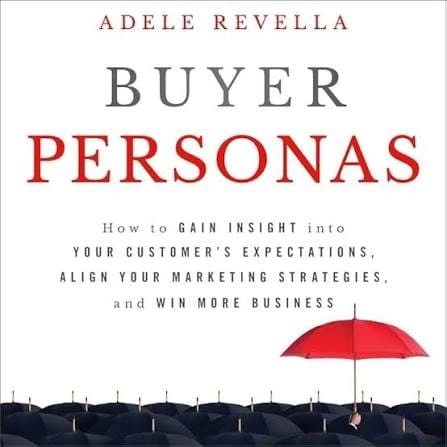
Buyer Persona

Author: Adele Revella

The Big Idea

Understanding buyers requires discovering the insights behind their actual buying decisions, not inventing a profile based on assumptions about who they are.

The book is particularly valuable for EVUNN because it moves beyond basic demographics and asks you to understand the buying insights that influence real decisions.

For this step, we are especially interested in:

What alternatives did the buyer consider?

What did they expect from each option?

What influenced their decision?

What made one option more valuable than another?

This gives you much stronger information for positioning than simply researching competitors.


What Business Problem Does This Book Solve?

“I know who my customer is, but I don’t know what actually drives their buying decision.”

A typical persona might tell you:

Age: 35–45
Job: Consultant
Income: ₦X
Location: Lagos

That information may be useful.

But it doesn’t tell you:

Why did they choose this solution?

What alternatives did they consider?

What made them reject those alternatives?

What did they value most?

Who influenced their decision?

What made them trust one option over another?

Those are the insights EVUNN needs.


Should I Read It Now?

YES.

Read this book specifically to understand buying decisions and buyer insights.

You don’t need to turn this into a full buyer-persona research project.

Your objective is narrower:

Understand how your customer evaluates alternatives when deciding how to solve the problem.


Which Parts Matter Most?

You don’t need to read the entire book.

Chapter 1 — Understand Buying Decisions and the People Who Make Them

ESSENTIAL

This establishes the difference between simply knowing who a buyer is and understanding how they make decisions.

Pay particular attention to:

Buying Insights

and why demographic and psychographic information alone isn’t enough.


Chapter 2 — Focus on the Insights That Guide Marketing Decisions

ESSENTIAL

Focus on:

The 5 Rings of Buying Insight

This is particularly useful because it helps you uncover the information behind the customer’s decision rather than simply describing the customer.


Chapter 3 — Decide How You Will Discover Buyer Persona Insights

IMPORTANT

Focus on how interviews and other research methods can uncover genuine buying insights.

The goal is to learn from actual buyers rather than inventing assumptions.


Chapter 4 — Gain Permission and Schedule Buyer Interviews

SELECTIVE

Pay particular attention to:

Which Buyer Should You Interview?

and especially:

Interview Buyers Who Chose You as Well as Those Who Did Not

This is extremely valuable for EVUNN.

Someone who chose another solution can reveal:

What your offer was competing against in the real world.


Chapter 5 — Conduct Probing Buyer Interviews

SELECTIVE

Focus particularly on:

  • “Take Me Back to the Day…”

  • Questions that keep the conversation flowing

  • Who influences the decision

  • The perceived value of differentiators

  • What actually affected the decision

You are looking for decision evidence, not compliments.


Chapter 6 — Mine Your Interviews for Buying Insights

IMPORTANT

Learn how to turn raw conversations into actual buying insights.

This prevents the toolkit from becoming a collection of interesting customer quotes.


Chapter 7 — Determine How Many Buyer Personas You Need

SELECTIVE

Focus on:

Segment Buyers Based on Insights, Not Profiles

This is useful if your research reveals that different groups make the buying decision differently.

Don’t create multiple personas simply because customers have different demographics.


Chapter 8 — Decide What to Say to Buyers

SELECTIVE

For this step, focus particularly on:

  • Evaluate Your Competitive Ranking

  • Assess Relative Value to Buyers

These concepts become important bridges into Step 4 — Define Your Position.


What Should I Skip For Now?

You don’t need to study the entire marketing implementation side of the book.

For now, skip or skim the sections dealing primarily with:

  • Marketing activities

  • Sales enablement

  • Sales playbooks

  • Long-term organizational implementation

  • Strategic planning

Those become more relevant later.

Your immediate objective is:

Understand the customer’s decision.


Your EVUNN Action

Build Your Customer Alternative & Decision Map

Take the:

Best-Fit Customer Profile

from Step 1

and the:

Buying Situation Profile

from Step 2.

Now investigate what happens after the customer decides they want to make a change.


1. Identify the Alternatives

Ask:

“What could this customer do instead of buying my offer?”

Include:

Do Nothing

What happens if they decide not to act?

DIY

How could they solve it themselves?

Existing Resources

Who or what could they use internally?

Other Providers

Who else could they hire?

Substitute Solutions

Could they solve the underlying problem through a completely different approach?


2. Identify Why Each Alternative Is Attractive

For every major alternative ask:

“Why would my customer consider this option?”

For example:

DIY

→ Cheaper
→ More control
→ No external commitment

Course

→ Affordable
→ Convenient
→ Self-paced

Consultant

→ Expertise
→ Personalisation
→ Faster progress

Do Nothing

→ No immediate cost
→ No disruption

Don’t assume the answer.

Where possible, get it from actual customers.


3. Identify the Customer’s Decision Criteria

Ask:

“What does this customer care about when deciding between these options?”

Possible criteria include:

  • Price

  • Expertise

  • Trust

  • Speed

  • Convenience

  • Personalisation

  • Reputation

  • Proof

  • Risk

  • Ease of implementation

  • Expected outcome

  • Specialisation

But don’t simply tick boxes.

Identify the criteria that actually influence this customer’s decision.


4. Identify What Matters Most

Not every decision criterion has equal importance.

Ask:

“Which factors can actually change the customer’s choice?”

For example:

A customer may say price matters.

But if they choose a provider charging twice as much because they trust their expertise, trust and expertise may matter more than price.

You are looking for the real decision drivers.


5. Identify Who Influences the Decision

Ask:

“Who else affects this customer’s decision?”

Depending on the business, it could be:

  • A spouse

  • Business partner

  • Manager

  • CEO

  • Procurement

  • Colleague

  • Friend

  • Existing advisor

  • Professional network

For a B2B expert business, this can be particularly important because the person experiencing the problem may not be the person approving the purchase.


6. Identify Why Customers Reject Alternatives

Ask:

“Why would this customer decide against each alternative?”

For example:

“They tried solving it themselves but couldn’t get consistent results.”

or:

“They considered hiring a consultant but felt the approach was too generic.”

or:

“They wanted to take a course but knew they wouldn’t have time to implement it.”

This is valuable because it reveals gaps in the alternatives.


7. Identify Why They Would Choose Your Offer

Now ask:

“Given everything we’ve learned, what could make our offer the preferred choice?”

Don’t write:

“Because we’re better.”

Instead identify a specific reason.

For example:

“Because the offer provides personalised implementation rather than just information.”

or:

“Because it is designed specifically for newly promoted managers during their first 90 days.”

At this point, treat the answer as a positioning hypothesis, not your final positioning.


8. Identify Your Primary Alternative

You may discover that your offer isn’t primarily competing with another business.

Your biggest alternative may be:

Do nothing.

Or:

DIY.

Or:

An internal solution.

Or:

A different type of professional.

Identify the alternative that your customer is most likely to choose instead.

This becomes your:

Primary Competitive Alternative


9. Capture Evidence

If you already have customer interviews or research from earlier phases, use them.

If you don’t have enough evidence, mark the assumption as:

UNCONFIRMED

Don’t manufacture certainty.

The purpose of this exercise is to separate:

What we know

from

What we believe

and:

What we still need to discover.


Create Your Customer Decision Map

Your finished map should connect:

Buying Situation

Alternatives Considered

Why Each Alternative Is Attractive

Decision Criteria

Most Important Decision Drivers

Influencers

Reasons Alternatives Are Rejected

Why Your Offer Could Win

Primary Competitive Alternative

This is much more valuable than a simple competitor list.


🧠 EVUNN Mindset Checkpoint

Are you trying to prove that your offer is better?

This is a common resistance at this stage.

You may discover that customers value an alternative more than you expected.

Don’t immediately defend your offer.

Don’t explain why they are wrong.

Don’t manipulate the evidence to make your offer look superior.

Instead ask:

“What can I learn from why they prefer that alternative?”

The goal is not to win the research.

The goal is to understand the market.

Optional reading: The Confidence Gap — Russ Harris

If you find yourself avoiding customer conversations because you’re afraid of hearing that customers don’t want your offer, use this as a mindset checkpoint.

Optional. Do not read it unless this resistance is actually present.


🔓 EVUNN Execution Toolkit

Customer Alternative & Decision Map

Don’t guess what customers compare when deciding whether to buy.

Use the EVUNN Customer Alternative & Decision Map to identify the alternatives they consider, why those alternatives are attractive, what criteria influence the decision, who affects the choice and why customers ultimately choose one option over another.

→ Unlock The Toolkit


One Payment. All Stage 1 Toolkits. Yours For Life.

No monthly subscription. No recurring fees. Just the tools you need to execute.

→ Unlock All Stage 1 Execution Toolkits


Your Step 3 Output

By the end of this step, you should have a:

CUSTOMER ALTERNATIVE & DECISION LANDSCAPE

Containing:

Alternatives Considered

Why Customers Consider Them

Decision Criteria

Primary Decision Drivers

Decision Influencers

Reasons Alternatives Are Rejected

Potential Reason to Choose Your Offer

Primary Competitive Alternative


What You Should Now Know

You started Phase 3 knowing:

WHO

Your best-fit customer.

WHEN

Their buying situation.

You now understand:

HOW THEY CHOOSE

You know what alternatives they consider and what influences their decision.

That gives you the information needed for the next strategic move.

You are no longer asking:

“How can I make my offer look different?”

You can now ask the much more important question:

“What position should my offer occupy in this customer’s mind, given what I now know about their needs, situation and alternatives?”

NEXT: STEP 4 — DEFINE YOUR POSITION

What should my offer be known for by the customer who is most likely to buy it?

To understand their experience, use Book 3. Title: Practical Empathy

Practical empathy


Author: Indi Young

Time Investment: 5+ hours (Audiobook) 

Listen to Audiobook with Audible free trial |Buy at the Bookshop


The Big Idea from Practical Empathy 

Empathy helps you move beyond assumptions and develop a deeper understanding of how people experience problems, situations, what they do, and what matters to them.

For an expert, this is a critical shift. Your expertise tells you what you think the problem is. Empathy helps you understand the problem from their perspective.


What Does this Book Help you Achieve?

Practical Empathy helps you:

  • Listen without immediately interpreting

  • Understand people’s experiences more deeply

  • Separate what people actually say from your assumptions

  • Make sense of what you hear

  • Identify patterns across people’s experiences

  • Use those insights to improve what you create

The goal isn’t to become better at selling.

It’s to become better at understanding.


Should I Read it Now?

YES.

You’ve already explored:

Step 1: What problems might exist?

Step 2: Why might people want to solve them?

Now you need to understand: What is this experience actually like for the person living through it?


Which Chapters Matter Most for me Now?

Chapter 2: Empathy Brings Balance (Essential)

Understand what empathy actually means and why it matters when making decisions about customers.

Chapter 3: Put Empathy to Work (Essential)

Learn how empathy can become part of how you investigate and understand problems.

Chapter 4: A New Way to Listen (Essential)

This is one of the most important chapters for this stage.

Learn to listen to someone’s experience without immediately jumping to solutions, advice or conclusions.

Chapter 5: Make Sense of What You Heard (Essential)

Find out how to process and deepen your understanding of what people tell you.

Chapter 6: Apply Empathy to What You Create (Essential)

Understand how patterns in people’s experiences can influence what you eventually create.

Chapter 1: Business Is Out of Balance (Read this chapter for context only)

It explains why relying only on numbers and analytical thinking can leave important parts of the customer experience invisible.

Skip Chapters 7–9 for now

They focus more heavily on applying empathy within workplaces and organizations.

Listen to Audiobook with Audible free trial | Buy at the Bookshop


Your Step 3 Outcome

By the end of this step, you should have:

  • A deeper understanding of the experience behind each problem  of  the 3 problems generated in step 1

  • A clearer distinction between what you know and what you’re assuming

  • Initial insight into what people think, feel and do

  • A better understanding of their frustrations and desired outcomes

  • A list of questions you still need to investigate with real people

Notice what hasn’t happened yet:

You haven’t validated the problems yet. That’s intentional.

You’ve developed empathy, but empathy based on your own reflection is still not enough.

The next step takes you deeper.


🔒 Ready to Put Empathy into Practice?

Reading about empathy is not the same as practising it.

The EVUNN Customer Empathy Toolkit gives you a structured way to examine the problem from the customer’s perspective and separate evidence from assumptions.


One Payment. For All EVUNN Stage 1 toolkits.

What Should I Learn Next?

You now have a better understanding of the customer’s experience.

But there’s another question:

What are they actually trying to accomplish?

A customer may describe a problem, but the problem itself isn’t always the real objective.

They may be trying to make progress toward something bigger.

Step 4: Jobs-to-Be-Done

You’ll move from: Understanding their experience to understanding the progress they’re actually trying to make.

Leave a Reply

Your email address will not be published. Required fields are marked *