

Make Your EVUNN Journey Personal
Not sure which step is right for your business?
This roadmap is part of the EVUNN business-building journey. Tell us what you’re building and where you are right now, and we’ll point you to the roadmap that’s right for your situation – free.
Free |Takes 1 minute
THE PROBLEM: I understand my best-fit customer, what triggers them to act and what alternatives they consider, but I don't know what position my offer should own in their mind.
Your product should take a particular position in the mind of your target customers if consistent sales is your goal
Step 4: Define Your Position
Your Stage 1 access includes all the EVUNN Toolkits you’ll need to do the work. Don’t just read. Use them as you move through each step.
You now know: Who your customer is. When they become ready to act. What alternatives they consider.
Now, its time to ask this critical question:
Given everything I know, how should my offer be understood in the market?
This is where positioning begins. Positioning is not simply choosing a tagline. It is not writing: I am a business coach who helps entrepreneurs grow. And it is also not listing everything you can do.
Positioning is deciding the context in which your offer should be understood, and the specific value it should be associated with.
Your goal is to make it easier for the right customer to think: This is specifically for someone like me, and this is why it is different from the alternatives I could choose.
The EVUNN Mindset Shift
From How do I describe what I do? → What should I be known for?
The natural thing most experts do is to position themselves or their offer around their credentials. You might say: I’m a lawyer with 15 years’ experience or I’m a certified leadership coach.
These may establish credibility, but they don’t necessarily establish a market position.
Your position is about the meaning the customer attaches to your offer. So instead of asking: How do I describe my expertise, ask:
What should this particular customer immediately associate with my offer?
Recommended Book for this Step: Obviously Awesome
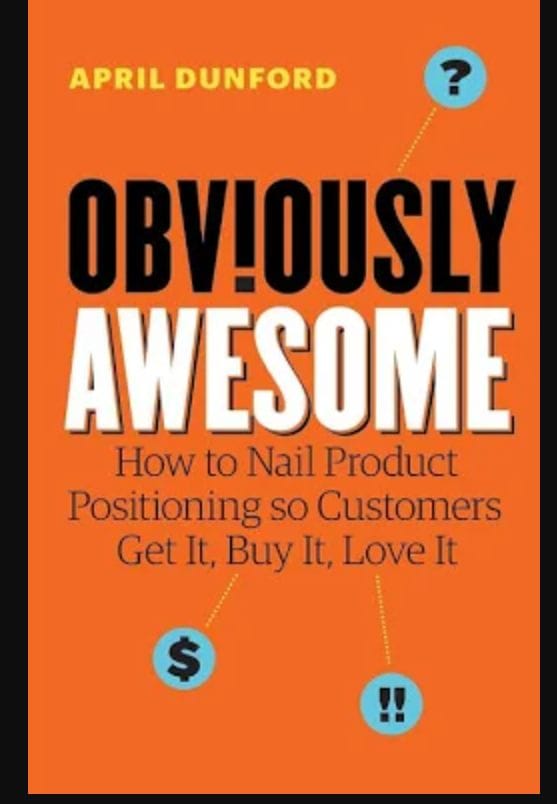
The Big Idea from Obviously Awesome
Positioning is about creating the right context for customers to understand the value of your offer.
The same offer can appear ordinary in one context and highly valuable in another.
Obviously Awesome’s positioning process helps you move through:
Customers
↓
Competitive Alternatives
↓
Unique Attributes
↓
Customer Value
↓
Customers Who Care Most
↓
Market Frame of Reference
↓
Position
This is exactly the sequence you need.
What Business Problem Does this Book Solve?
It solves: My offer is valuable, but I haven’t figured out the context that makes its value obvious to the right customer.
An expert may have many capabilities, but putting all of them into the market creates a vague offer. For example: I help businesses with strategy, leadership, marketing and operations.
The customer has to figure out: Which problem is this person particularly good at solving?
Positioning gives the customer a clearer answer.
Should I Read Obviously Awesome Now?
Yes. This is the best time to read Obviously Awesome (after completing Steps 1–3) because you already have the raw material the positioning process requires.
Don’t read it as a branding book. Read it as a market decision-making framework.
Your question while reading should be: How do I determine the context in which my offer becomes most valuable and relevant?
Which Parts of Obviously Awesome Matter Most to you now? Focus on these:
Part I: What Is Positioning (ESSENTIAL)
Positioning as Context -This is foundational. Understand why positioning isn’t simply a statement about what you sell.
The context in which the customer evaluates your offer changes how they perceive its value.
The Five (plus One) Components of Effective Positioning (ESSENTIAL)
Understand the components that make positioning effective.
Part II: The 10-Step Positioning Process
Step 1 – Understand the Customers Who Love Your Product (ESSENTIAL)
This connects directly to the Best-Fit Customer Profile you created in Step 1. The goal isn’t to appeal to everyone.
It’s to understand who is most likely to see the value in what you’ve created.
Step 2: Form a Positioning Team (SKIP) Not necessary now.
Skip Step 3 For Now
Step 3: Align Your Positioning Vocabulary and Let Go of Your Positioning Baggage
Step 4: List Your True Competitive Alternatives (ESSENTIAL)
This directly connects to Step 3. Your positioning must be understood relative to the alternatives your customer actually considers.
Step 5: Isolate Your Unique Attributes or Features (ESSENTIAL)
Identify what genuinely makes your offer different. Don’t simply list your credentials. Look at the actual attributes of your offer.
Step 6: Map the Attributes to Value Themes (ESSENTIAL)
This is where you move from what’s different about us to why does that difference matter to the customer?
A difference without customer value isn’t useful positioning.
Step 7: Determine Who Cares a Lot (ESSENTIAL)
This is so important for your expert business. You don’t need everyone to care equally. You need to identify who cares enough about this particular value to choose your offer?
Step 8: Find a Market Frame of Reference (ESSENTIAL)
This is one of the most important sections for Step 4. Ask: What context or category should the customer use to understand this offer?
The frame of reference influences what customers compare you against and how they interpret your value.
Step 9: Layer On a Trend (SKIM / OPTIONAL)
A trend can strengthen positioning in some businesses. But don’t force this.
An expert-based business doesn’t need a trend to have strong positioning.
Step 10: Capture Your Positioning (ESSENTIAL)
This is where you document the positioning decision so you can use it consistently.
Listen to Audiobook with Libro|Buy the Book at the Bookshop
What Should I Ignore For Now?
Don’t spend time perfecting:
Website headlines
Taglines
Social media bios
Sales copy
Advertisements
Content hooks
Those come later.
At this stage, you’re making a strategic positioning decision.
Your EVUNN Action
Build Your Positioning Blueprint
Bring forward your three previous outputs from the last 3 steps ( if you are an EVUNN premium user, the first 3 steps will be automatically inputed in the toolkit. No need for manual inputs):
Step 1
Best-Fit Customer Profile
Step 2
Buying Situation Profile
Step 3
Customer Alternative & Decision Landscape
Now use them to determine your position.
1. Define the Customer You Want to Position For
Ask: Who is most likely to care deeply about the value my offer creates?”
Don’t simply use your broad target market. Identify the customer for whom your offer has the strongest relevance.
2. Identify the Competitive Context
Bring forward the alternatives from Step 3.
Ask: What would this customer compare my offer against?
Your position needs to make sense within this competitive context.
3. Identify Your Unique Attributes
Ask: What does my offer genuinely do differently?
Look at:
Approach
Method
Process
Specialisation
Expertise
Delivery
Experience
Speed
Convenience
Personalisation
Risk reduction
Don’t manufacture differences.
Identify genuine attributes.
Get the rest of the EVUNN execution steps in Premium.
EVUNN Action Steps, Doers Community & Execution Toolkits are for paid users.
Get the rest of the Action Steps for this step, plus all Stage 1 Action Steps and EVUNN Execution Toolkits with 12 months of access.
EVUNN Mindset Checkpoint
Are you afraid to narrow your position? You may think, but I can help many different people or I don’t want to exclude anyone or I have so much expertise; I want to show all of it.
This is the reason and where a lot experts make positioning weaker.
You don’t have to stop being capable of serving other customers. You are simply deciding: Who should immediately recognise that this offer is particularly relevant to them?
Optional reading: Read Essentialism by Greg McKeown if you find yourself unable to choose because you want to include everything.
This is optional. Do not interrupt the execution flow unless you actually encounter this resistance.
Your Step 4 Output
By the end of this step, you should end up with a POSITIONING BLUEPRINT containing:
Best-Fit Customer
↓
Competitive Context
↓
Unique Attributes
↓
Customer Value Themes
↓
Customers Who Care Most
↓
Market Frame of Reference
↓
A Chosen Position
↓
Positioning Statement
↓
Known For Statement (once you are done implementing step 4)
Decide what you want to be known for and find your place in your customer’s mind.
You can be good at what you do and still be difficult to choose. If your customer can’t quickly understand who you’re for, what you help them achieve, and what you want to be known for, your offer can get lost in the crowd.
🔓 Use the EVUNN Execution Toolkit: Positioning Canvas
Turn your customer and market research into a clear market position.
The EVUNN Positioning Canvas helps you define the place you want to own in the market, the customer you want to serve, the problem you want to be known for solving, and the space you want your business to occupy.
Before you build your marketing message, be clear on your offer position so you don’t end up trying to be everything to everyone and have an offer for no one.
Get the Positioning Canvas + every other Stage 1 Toolkit for 12 months, plus access to the EVUNN Doers Community.
₦5,500 today.
Follow the roadmap. Use the tools. Do the work.
What Should I Do Next?
You started Phase 3 with: I have an offer.
You now know:
WHO: Best-Fit Customer
WHEN: Buying Situation
HOW THEY CHOOSE: Alternatives & Decision Landscape
WHAT YOU SHOULD BE KNOWN FOR: Position
That is a major shift because you are no longer simply describing your expertise. You have chosen how your offer should be understood by the market.
But there is still one question your customer will ask: Why should I choose you instead of the alternatives?
That is different from positioning and that is the job of the next step.
Next? Step 5: Define Your Differentiation
Why should my best-fit customer choose my offer over the alternatives?