

How to Differentiate Your Business: A Practical Strategy | EVUNN
Make Your EVUNN Journey Personal
Not sure which step is right for your business?
This roadmap is part of the EVUNN business-building journey. Tell us what you’re building and where you are right now, and we’ll point you to the roadmap that’s right for your situation – free.
Free |Takes 1 minute
THE PROBLEM: I know how I want my offer to be positioned, but I don't know what would make the right customer choose it over the alternatives.
Identify why your best fit customer should choose your offer and not the other alternatives before you start marketing
Step 5: Define Your Differentiation
Your Stage 1 access includes all the EVUNN Toolkits you’ll need to do the work. Don’t just read. Use them as you move through each step.
By this time, if you have been implementing the phase 3 steps, you should now already have:
A Best-Fit Customer Profile
A defined Buying Situation
A Customer Alternative & Decision Landscape
A Positioning Blueprint
But your customer can still ask: Why should I choose this offer instead of the other options available to me?
That is the question differentiation must answer. Differentiation is not about proving that you are better at everything. It is not I have more experience or I provide excellent service or I have a unique framework.
Those statements may be true. But the important question is:
What is meaningfully different about this offer that this particular customer actually values?
Your objective is to identify the differences that can make your offer meaningfully preferable to the alternatives.
The EVUNN Mindset Shift
Now, you go from How am I different? → What difference matters to the customer?
Naturally, experts or professionals look at differentiation from their own perspective.
They ask: what makes me special? But the customer is asking: Why should I care?
Your credentials, experience and expertise may be impressive but they only become commercially useful when they create something the customer values.
So don’t ask how can I make myself look different? Ask: what can I change, improve or create that makes this offer more valuable to my best-fit customer?
This is the difference between being different and being meaningfully different.
Recommended Book for Step 5: Blue Ocean Strategy
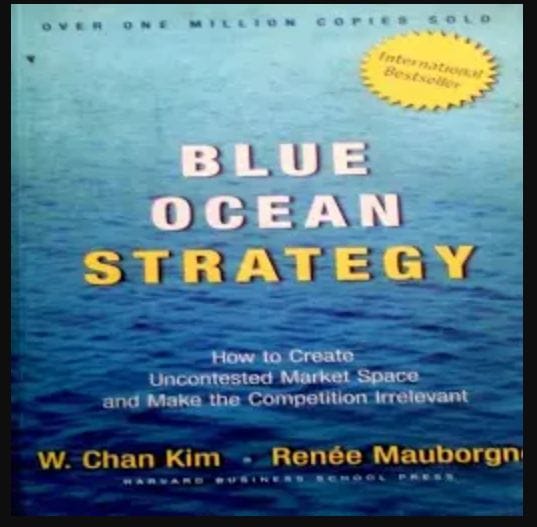
The Big Idea from The Blue Ocean Strategy
Instead of competing only on the factors everyone in the market already competes on, you can rethink the value you provide by eliminating, reducing, raising or creating factors that change the customer’s experience.
This book speaks to the problem a lot of expert-based businesses like coaches, consultants, freelancers and professional service providers are facing because most of them compete on the same things:
Experience
Expertise
Credentials
Personal attention
Quality
Price
Number of services
Years in business
The result is often a crowded market where everyone says: I’m better.
Blue Ocean Strategy gives you another question: what could we change about the value we provide so the customer has a more compelling reason to choose us?
What Business Problem Does The Blue Ocean Strategy Solve?
It takes care of: My market is crowded, and I don’t know how to create meaningful differentiation without simply claiming that I’m better.
The Blue Ocean Strategy helps you examine the factors on which customers currently compare competing offers.
Then you can ask four powerful questions:
- Eliminate: What can we remove because customers don’t really need it?
- Reduce : What can we provide at a lower level because the market is over-serving customers?
- Raise: What should we increase because customers genuinely value it?
- Create: What could we introduce that customers would value but existing alternatives don’t provide?
These questions become a practical way to discover customer-relevant differentiation.
Should I Read It Now?
Yes, your objective is to use the book to identify meaningful ways your offer could create and communicate distinctive customer value.
You are not trying to create an entirely new industry.
You are trying to find a stronger value position within the market you have chosen.
Which Parts of Blue Ocean Strategy Matter Most for this Step? Focus on these:
Part One: Blue Ocean Strategy
Chapter 1: Creating Blue Oceans (IMPORTANT READ)
Focus on the central idea of creating a different value proposition rather than competing only within existing market rules.
The important question here is: Are we simply competing on the same factors as everyone else?
Chapter 2: Analytical Tools and Frameworks (MOST IMPORTANT)
Pay particular attention to:
- Strategy Canvas : Use this to understand the factors customers currently compare across competing alternatives.
- Four Actions Framework: This gives you the core questions: Eliminate, Reduce, Raise, Create
Chapter 3: Reconstruct Market Boundaries (SKIM for Now)
This is useful for learning how businesses can look beyond obvious competitors and rethink the boundaries of a market.
You don’t need to master the entire framework at this stage.
Chapter 4: Focus on the Big Picture, Not the Numbers (SKIP FOR NOW)
Useful for broader strategic planning, but not necessary for deciding how your expert-based offer should differentiate itself.
Chapter 5: Reach Beyond Existing Demand (SKIM)
Useful for thinking about customers outside your current target market.
But your immediate objective is to strengthen the offer for your Best-Fit Customer.
Chapter 6: Get the Strategic Sequence Right (SKIM)
Useful background for thinking about whether your proposed changes make sense strategically.
Not essential to the immediate execution exercise.
Part Three: Executing Blue Ocean Strategy (SKIP FOR NOW)
Chapters 7–10 deal primarily with organizational execution, alignment and renewal.
Those issues become more relevant as a business grows.
You don’t need them to complete your initial differentiation strategy.
What Should I Ignore For Now?
Don’t turn this into a competition to invent something nobody else has.
You don’t need:
A bizarre business model
A complicated proprietary framework
A new industry category
A strange pricing model
A long list of artificial differentiators
Differentiation does not mean being different for the sake of being different. Your difference must matter to the customer.
Your EVUNN Action
Build Your Differentiation & Value Innovation Map. To do that, bring forward your outputs from: Step 3 (Customer Alternative & Decision Landscape) and. Step 4 (Positioning Blueprint)
You are now going to identify where your offer can create meaningful customer value that the alternatives do not provide in the same way. Follow these steps:
1. Identify What Customers Currently Compare
Start with the alternatives your customer considers.
List the factors they appear to use when deciding between those alternatives.
For example:
Price
Speed
Expertise
Personalisation
Convenience
Support
Implementation
Access
Flexibility
Depth
Results
Risk
Reputation
Use the evidence from your earlier research where possible. Don’t simply guess what customers care about.
2. Map The Current Market
Look at the alternatives side by side.
Ask: What does the market currently over-emphasise?
For example, most competitors compete heavily on:
More content
More features
More hours
More certifications
Lower price
More services
This raises an important question: Are customers actually getting more value from all of this?
Get the rest of the EVUNN Action Steps in Premium
EVUNN Action Steps, Doers Community & Execution Toolkits are for paid users.
Get the Action Steps for this step, plus all Stage 1 Action Steps and EVUNN Execution Toolkits, with 12 months of access.
EVUNN Mindset Checkpoint
Are you trying too hard to be different?
When most experts hear the word differentiation, they sometimes feel they must invent something nobody else has. Don’t start thinking: I need a proprietary framework or I need something nobody else does.
Your goal is not to be unique. Your goal is to be meaningfully preferable to the right customer.
Sometimes your strongest differentiation is simply:
A narrower customer
A better process
A faster path
Greater personalisation
Better implementation
A more convenient experience
Lower risk
A more relevant specialisation
Ask: What can I do differently that this customer genuinely values?
Optional reading: The War of Art by Steven Pressfield. Listen to Audiobook with Audible Free Trial
Use this only if you find yourself stuck because you believe you need a completely original idea before you can move forward.
This is a mindset checkpoint, not a required reading assignment.
Your Step 5 Output
By the end of this step, you should have a DIFFERENTIATION STRATEGY that Contains:
Competitive Alternatives
↓
Customer Decision Factors
↓
Current Market Value Factors
↓
Eliminate
↓
Reduce
↓
Raise
↓
Create
↓
Potential Differentiators
↓
Customer Value Created
↓
Core Differentiators
↓
Differentiation Statement
Find What Makes You Meaningfully Different
It’s time to stop saying you’re different and figure out how you actually are.
🔓Use the EVUNN Execution Toolkit: Differentiation & Value Innovation Map
Don’t compete by simply claiming that you’re better.
The EVUNN Differentiation & Value Map helps you identify what you can do differently, what your customers actually value, and which differences are strong enough to matter in the market
Don’t claim to be different without giving customers a real reason to choose you.
Get the Differentiation & Value Map + every other Stage 1 Toolkit for 12 months, plus access to the EVUNN Doers Community.
₦5,500 today.
Follow the roadmap. Use the tools. Do the work.
What Should I Do Next?
You began Step 5 knowing: I have chosen the position I want my offer to own. You now leave knowing why your best-fit customer should prefer your offer over the alternatives.
Right now, you should have:
A Best-Fit Customer
↓
A Buying Situation
↓
An Alternative Landscape
↓
A Market Position
↓
And now, a Meaningful Differentiation Strategy
At this point though, your differentiation is still a strategic decision. The next challenge is communication.
Your customer may not automatically understand your positioning or differentiation simply because you’ve defined them internally.
So the next question becomes: How do I communicate this clearly enough that the right customer immediately understands why this offer matters to them?
Next? Step 6: Build The Core Message
How do I explain my offer so the right customer understands its value and wants to know more?