value proposition

Value Proposition: How to Show Customers Why Your Offer Is Valuable | EVUNN

PROBLEM: I understand the problem, but I don't fully understand what it's like to experience it.

To find a profitable problem to solve, you must understand what it is like to experience the problem

STEP 3: DEVELOPING EMPATHY

Yes. If I were building EVUNN, I would write Step 7 so that it uses the work already completed in Steps 1–6, rather than making the user start another discovery exercise.

The key output should be a Customer Value Proposition that becomes an input for Step 8 and eventually Phase 3.

Step 7 — Define The Value Proposition

The Problem We’re Solving

“I have an offer, but I can’t clearly explain why this particular customer should see it as valuable.”

You now have:

  • A validated problem

  • A promising solution

  • Problem–Solution Fit

  • A defined customer outcome

  • A transformation roadmap

  • A designed offer

  • A packaged offer

But there’s still a gap.

You know what you’re offering.

Your customer needs to understand why it matters to them.

That’s the job of your value proposition.

A value proposition connects:

Customer Need → Your Offer → Desired Outcome → Value

It answers:

“Why should this customer care about this particular offer?”


The EVUNN Mindset Shift

From “Here’s What I Do” → “Here’s The Value You Get”

Experts often describe their expertise:

“I provide business consulting.”

“I offer executive coaching.”

“I provide marketing services.”

“I train professionals.”

But your customer isn’t buying your expertise.

They’re buying what your expertise helps them accomplish.

So instead of starting with:

“What do I want to tell people about my offer?”

start with:

“What does this customer value, and how does my offer create that value?”


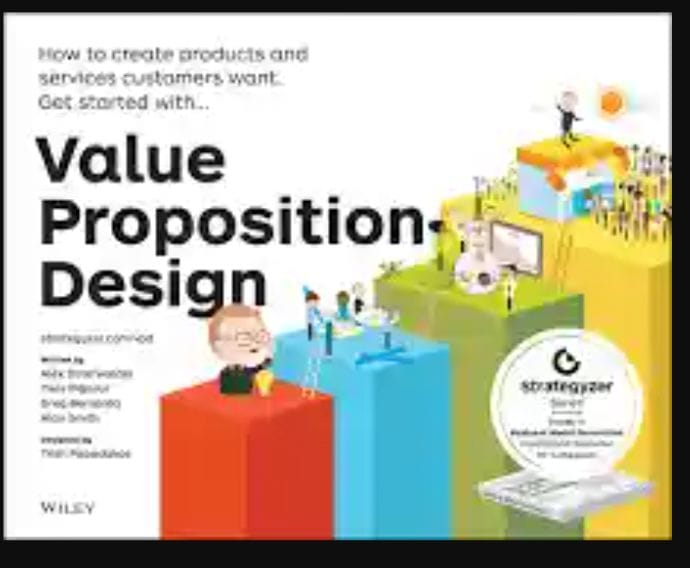
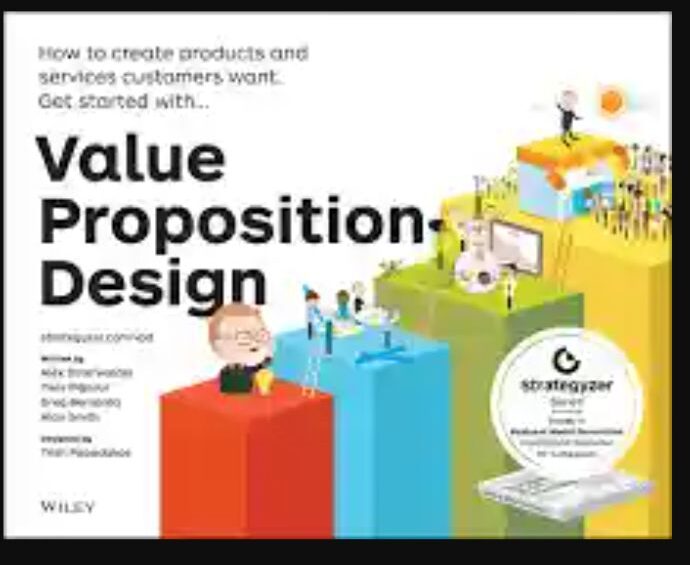
📖 Book — Value Proposition Design

Value Proposition Design

Authors: Alexander Osterwalder, Yves Pigneur, Greg Bernarda & Alan Smith

This is the primary book for Step 7.

You don’t need to read the entire book.

Your goal is to use its Value Proposition Canvas to connect your customer’s needs with your offer.


What To Read

1.1 Customer Profile — Essential

Focus on:

  • Customer Jobs

  • Pains

  • Gains

You have already done much of this work in Phase 1.

Do not start from scratch.

Bring forward the strongest evidence from your:

  • Problem Opportunity Finder

  • Buyer Motivation Mapper

  • Jobs-to-be-Done Canvas

  • Customer Discovery Interview Kit

  • Problem Validation Toolkit

Your job now is to select and prioritize, not rediscover.


1.2 Value Map — Essential

Focus on:

  • Products & Services

  • Pain Relievers

  • Gain Creators

This connects the offer you created in Steps 5–6 with the customer’s actual needs.


1.3 Fit — Essential

This is the most important section for this step.

Ask:

Does our offer actually create meaningful value for this customer?


2.3 Understanding Customers — Recommended

Use this only where your existing customer evidence isn’t strong enough.

Don’t turn Step 7 back into customer discovery.


2.4 Making Choices — Recommended

This helps you decide which pains and gains deserve priority.

Your value proposition should not try to solve everything.


Your EVUNN Action

Build Your Customer Value Proposition

Don’t begin by writing a sentence.

First establish the value logic.


1. Bring Forward Your Customer

Start with the customer you selected during your earlier work.

Complete:

This offer is designed for: __________

Don’t broaden the customer definition at this stage.

Use the customer group connected to the validated problem.


2. Identify The Customer’s Most Important Job

Ask:

“What is this customer ultimately trying to accomplish?”

Use the Jobs-to-be-Done work you already completed.

Prioritize the job most directly connected to your offer.


3. Select The Most Important Pain

You may have identified many pains during Phase 1.

Don’t bring all of them forward.

Select the pain that:

  • Is important

  • Is connected to the validated problem

  • Your offer can genuinely address

  • Matters enough to influence behaviour

Complete:

The most important pain this offer addresses is: __________


4. Select The Most Important Gain

Now ask:

“What does this customer most want to achieve or experience instead?”

Use the Customer Outcome from Step 3.

Complete:

The most important gain/outcome this customer wants is: __________

This keeps Step 7 connected to the work you’ve already done.


5. Map Your Offer

Now bring forward the Packaged Offer from Step 6.

List:

Products & Services

What does the customer actually receive?


Pain Relievers

For each major pain, ask:

“How does my offer reduce or remove this pain?”


Gain Creators

For the desired gain/outcome, ask:

“How does my offer help create this result?”


6. Find The Strongest Fit

Now put the two sides together:

CUSTOMER

Job

Pain

Gain

OFFER

Product/Service

Pain Reliever

Gain Creator

Now ask:

“Where is the strongest connection between what this customer needs and what my offer provides?”

That is your customer–offer fit.

You don’t need to claim that your offer solves every customer problem.

Find the most important value connection.


7. Identify Your Core Value

Complete:

Our offer creates value for [customer] by helping them [solve important problem] so they can [achieve desired outcome].

Then make it more specific.

Ask:

“Why is this valuable enough for the customer to care about?”

Think about consequences such as:

  • Time saved

  • Money gained or protected

  • Risk reduced

  • Frustration removed

  • Capability gained

  • Progress accelerated

  • Confidence increased

  • A meaningful goal achieved

Don’t automatically use all of these.

Use what is actually relevant to your customer.


8. Write Your Customer Value Proposition

Now—and only now—write the proposition.

Use this structure:

For [specific customer] who [important problem/need], [offer] helps them [desired outcome] by [how the offer creates that result].

Your first version doesn’t need to be perfect.

It needs to be true, specific and grounded in your previous research.


9. Run The Value Proposition Test

Before moving forward, test it.

Relevance

Does it address something the customer actually cares about?

Specificity

Could a competitor say exactly the same thing?

If almost anyone could say it, make it more specific.

Outcome

Does it communicate a meaningful result?

Evidence

Do you have customer evidence supporting the problem and desired outcome?

Credibility

Can your offer realistically produce the promised result?

Value

Would achieving the outcome actually matter enough to influence a buying decision?


Important: Don’t Confuse These Three Things

This distinction is important for the rest of EVUNN.

Value Proposition

Why is this offer valuable to this customer?

Positioning

How should this offer be perceived relative to alternatives?

Messaging

How do we communicate that value and position to the market?

You are doing Value Proposition here.

Positioning and messaging belong later in Phase 3.


Your Step 7 Deliverable

By the end of this step, you should have a:

Customer Value Proposition Map

Containing:

Target Customer

Customer Job

Important Pain

Desired Gain/Outcome

Your Offer

Pain Reliever

Gain Creator

Strongest Customer–Offer Fit

Customer Value Proposition

This becomes a reusable business asset.

You should be able to return to it whenever you:

  • Change your offer

  • Review your customer

  • Create marketing

  • Write a sales page

  • Create content

  • Talk to prospects

  • Test your offer


Your Phase 2 Master Offer Blueprint

At this point, the work you’ve created should flow together:

Validated Problem

Most Promising Solution

Problem–Solution Fit

Customer Outcome

Transformation Roadmap

Designed Offer

Packaged Offer

Customer Value Proposition

This is the point where you can clearly explain:

Who you’re helping → what matters to them → what you’re offering → what value it creates.

But there is one more question.

“Is there anything we can change about the offer itself to make the value stronger and reduce the customer’s hesitation to buy?”

That’s Step 8.


🔓 EVUNN Execution Toolkit

Customer Value Proposition Canvas

Don’t leave this step with scattered notes.

Use the EVUNN Customer Value Proposition Canvas to bring your customer and offer work together in one place.

You’ll map:

Customer Jobs → Pains → Gains

against:

Your Offer → Pain Relievers → Gain Creators

and finish with your Core Customer Value Proposition.

→ Unlock The Toolkit

One Payment. All Stage 1 Toolkits. Yours For Life.

No monthly subscription. No recurring fees. Just the tools you need to execute.

→ Unlock All Stage 1 Execution Toolkits


What Should I Learn Next?

You now know why your offer is valuable.

But knowing the value isn’t the same as making the offer as compelling and low-risk as possible.

The next question is:

“How can I strengthen the value of this offer and increase the customer’s confidence in buying it?”

Step 8 — Increase Offer Value & Customer Confidence

That’s where we’ll work on value enhancement, proof, risk reduction, bonuses, guarantees, delivery confidence and other mechanisms that can make the offer easier to say yes to.

To understand their experience, use Book 3. Title: Practical Empathy

Practical empathy


Author: Indi Young

Time Investment: 5+ hours (Audiobook) 

Listen to Audiobook with Audible free trial |Buy at the Bookshop


The Big Idea from Practical Empathy 

Empathy helps you move beyond assumptions and develop a deeper understanding of how people experience problems, situations, what they do, and what matters to them.

For an expert, this is a critical shift. Your expertise tells you what you think the problem is. Empathy helps you understand the problem from their perspective.


What Does this Book Help you Achieve?

Practical Empathy helps you:

  • Listen without immediately interpreting

  • Understand people’s experiences more deeply

  • Separate what people actually say from your assumptions

  • Make sense of what you hear

  • Identify patterns across people’s experiences

  • Use those insights to improve what you create

The goal isn’t to become better at selling.

It’s to become better at understanding.


Should I Read it Now?

YES.

You’ve already explored:

Step 1: What problems might exist?

Step 2: Why might people want to solve them?

Now you need to understand: What is this experience actually like for the person living through it?


Which Chapters Matter Most for me Now?

Chapter 2: Empathy Brings Balance (Essential)

Understand what empathy actually means and why it matters when making decisions about customers.

Chapter 3: Put Empathy to Work (Essential)

Learn how empathy can become part of how you investigate and understand problems.

Chapter 4: A New Way to Listen (Essential)

This is one of the most important chapters for this stage.

Learn to listen to someone’s experience without immediately jumping to solutions, advice or conclusions.

Chapter 5: Make Sense of What You Heard (Essential)

Find out how to process and deepen your understanding of what people tell you.

Chapter 6: Apply Empathy to What You Create (Essential)

Understand how patterns in people’s experiences can influence what you eventually create.

Chapter 1: Business Is Out of Balance (Read this chapter for context only)

It explains why relying only on numbers and analytical thinking can leave important parts of the customer experience invisible.

Skip Chapters 7–9 for now

They focus more heavily on applying empathy within workplaces and organizations.

Listen to Audiobook with Audible free trial | Buy at the Bookshop


Your Step 3 Outcome

By the end of this step, you should have:

  • A deeper understanding of the experience behind each problem  of  the 3 problems generated in step 1

  • A clearer distinction between what you know and what you’re assuming

  • Initial insight into what people think, feel and do

  • A better understanding of their frustrations and desired outcomes

  • A list of questions you still need to investigate with real people

Notice what hasn’t happened yet:

You haven’t validated the problems yet. That’s intentional.

You’ve developed empathy, but empathy based on your own reflection is still not enough.

The next step takes you deeper.


🔒 Ready to Put Empathy into Practice?

Reading about empathy is not the same as practising it.

The EVUNN Customer Empathy Toolkit gives you a structured way to examine the problem from the customer’s perspective and separate evidence from assumptions.


One Payment. For All EVUNN Stage 1 toolkits.

What Should I Learn Next?

You now have a better understanding of the customer’s experience.

But there’s another question:

What are they actually trying to accomplish?

A customer may describe a problem, but the problem itself isn’t always the real objective.

They may be trying to make progress toward something bigger.

Step 4: Jobs-to-Be-Done

You’ll move from: Understanding their experience to understanding the progress they’re actually trying to make.

Leave a Reply

Your email address will not be published. Required fields are marked *