ideal customer profile

How to Define Your Ideal Customer Profile | EVUNN

PROBLEM: I understand the problem, but I don't fully understand what it's like to experience it.

To find a profitable problem to solve, you must understand what it is like to experience the problem

STEP 3: DEVELOPING EMPATHY

Yes. I understand the structure you want now. Step 1 of Phase 3 should follow the same architecture as the Phase 2 pages, with only the agreed addition of the optional EVUNN Mindset Checkpoint.

So I would rewrite Step 1 like this:

Step 1 — Define Your Best-Fit Customer

The Problem We’re Solving

“I have an offer that can solve a real problem, but I don’t know exactly who I should build and market it for.”

You have already validated the problem and built an offer around it.

But your offer may be useful to several different groups.

You may be thinking:

“My offer is for professionals.”

“My offer is for entrepreneurs.”

“My offer is for coaches.”

“My offer is for small business owners.”

These descriptions are too broad to guide your positioning.

Your job now is to identify the customer who has the strongest combination of need, motivation, value, buying ability and fit with your offer.

You are not trying to decide who you can help.

You are deciding:

“Who is most likely to need, value and buy this particular offer?”


The EVUNN Mindset Shift

From “Who could use my offer?” → “Who is most likely to buy it?”

Experts often resist narrowing their audience.

They think:

“But I can help many different people.”

That’s true.

You aren’t permanently excluding everyone else.

You’re deciding who gets your primary attention for this offer.

A clear customer makes it easier to:

  • Position your offer

  • Explain its value

  • Create relevant messaging

  • Identify alternatives

  • Choose marketing channels

  • Recognize good prospects

  • Build a repeatable acquisition system

Clarity creates relevance.


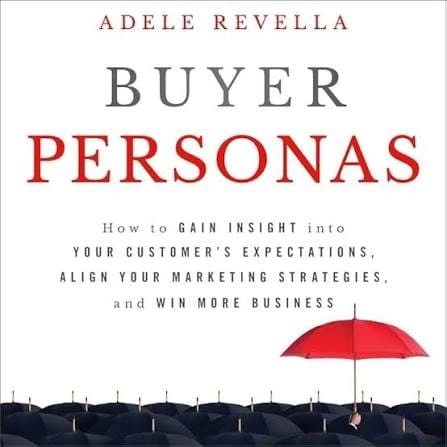
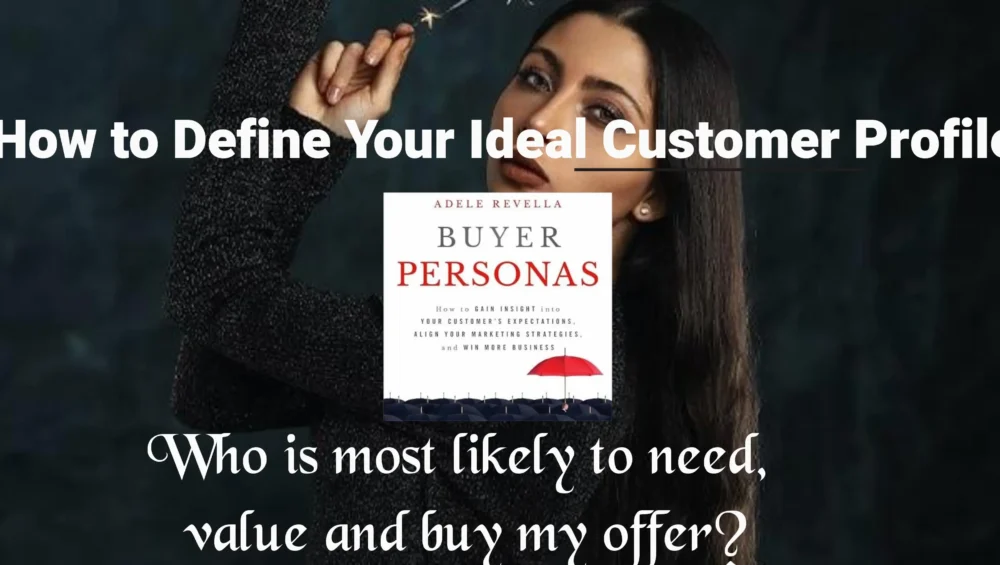
📖 Book — Buyer Persona

Buyer Persona

Author: Adele Revella

The Big Idea

Don’t invent a customer profile. Understand the buying decisions real customers make and the insights that drive those decisions.

Traditional customer personas often focus on demographics, interests and personality.

Revella’s approach focuses much more on understanding how buyers actually make decisions.

For EVUNN, this means you’re not creating a fictional customer avatar.

You’re trying to understand:

Who is most likely to buy this offer, what drives their decision, and what makes them choose one solution over another?


What Business Problem Does This Book Solve?

This book helps solve:

“I know who could benefit from my offer, but I don’t know which customers are most likely to actually buy it.”

This matters because the person who experiences the problem isn’t automatically the person who will buy the solution.

You need to understand:

  • Who experiences the problem most strongly

  • Who wants the outcome most

  • Who has a reason to act

  • Who can realistically buy

  • What they value in a solution

  • What influences their decision


Should I Read It Now?

YES — but read selectively.

Don’t read this book simply to learn how to create a traditional customer avatar.

Read it to learn how to identify buying insights that help you determine your best-fit customer.

As you read, keep asking:

“What does this teach me about identifying the people most likely to buy my offer?”


Which Chapters Matter Most?

You don’t need to read the entire book for this step.

READ FIRST

Chapter 1 — Understand Buying Decisions and the People Who Make Them

Learn why traditional demographics and psychographics aren’t enough to understand buyers.

Focus on the difference between describing a customer and understanding their buying decision.

Chapter 2 — Focus on the Insights That Guide Marketing Decisions

High priority.

Pay particular attention to the 5 Rings of Buying Insight.

These give you a stronger way to think about the information that actually matters when identifying a buyer.

Chapter 3 — Decide How You Will Discover Buyer Persona Insights

Learn how interviews and other research methods can uncover useful buying evidence.


READ SELECTIVELY

Chapter 5 — Conduct Probing Buyer Interviews

Use this if you need additional customer conversations.

Chapter 6 — Mine Your Interviews for Buying Insights

Use this if you have interviews that need to be analysed.

Chapter 7 — Determine How Many Buyer Personas You Need

Use this when you need to determine whether your offer should focus on one customer group or several.


What Should I Skip For Now?

You don’t need to read the entire book before completing this step.

Skip Chapter 4 for now

Unless you need help recruiting people for buyer interviews.

Skip most of Chapters 8–11 for now

These chapters move into:

  • What to say to buyers

  • Marketing activities

  • Buyer’s journey

  • Sales and marketing alignment

  • Strategic implementation

Those concepts become more useful later.

Your current question is simply:

Who is the best-fit customer for this offer?

Don’t let later marketing questions distract you from answering it.


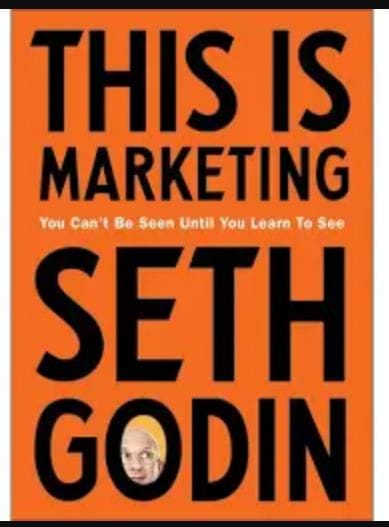
📖 Supporting Book — This Is Marketing

Author: Seth Godin

The Big Idea

Don’t try to serve everyone. Identify a specific group of people you can serve exceptionally well, understand what they want, and build your offer and message around them.

This book complements Buyer Persona by helping you move from understanding your potential customers to deliberately choosing the audience you want to focus on.

Why This Book Is Here

Buyer Persona helps you understand the people who experience the problem.

This Is Marketing helps you answer the next strategic question:

“Of all the people I could serve, who should I deliberately choose to serve first?”

This is where you begin to narrow your market and identify your smallest viable market.


What To Read

Chapter Four — The Smallest Viable Market

ESSENTIAL

This is the most important chapter for Step 1.

Learn why starting with a specific, focused group can be more powerful than trying to appeal to everyone.

Ask:

Who is the smallest group of people I could serve exceptionally well with this offer?


Chapter Eight — More of the Who: Seeking the Smallest Viable Market

ESSENTIAL

Go deeper into identifying the people you are choosing to serve.

Use this chapter to refine the audience you identified through your Buyer Persona work.

Ask:

Who specifically is most likely to value the transformation my offer provides?


Chapter Nine — People Like Us Do Things Like This

READ

Use this chapter to understand the importance of shared identity, beliefs and behaviour within a market.

Ask:

What does my chosen audience believe, value or identify with?

This can help you move beyond demographic descriptions and understand the worldview of the people you want to serve.


Chapter Fourteen — Treat Different People Differently

READ

This reinforces the importance of not treating an entire market as though everyone has identical needs, motivations or expectations.

Use it to think about whether your current audience definition is still too broad.


Chapter Fifteen — Reaching the Right People

SKIM

This will become more useful later when you work on customer acquisition and distribution.

For Step 1, focus only on the principle of reaching the right audience rather than trying to reach everyone.


What You Can Skip For Now

You do not need to read the entire book for this step.

For now, you can skip or save these sections for later:

  • Chapters 1–3

  • Chapters 5–7

  • Chapters 10–13

  • Chapters 16–23

They contain valuable marketing ideas, but they are not necessary for completing the Best-Fit Customer and Smallest Viable Audience work in Step 1.

You can return to them when you reach the marketing and customer-acquisition stages.


Your EVUNN Takeaway

After reading the relevant chapters, you should be able to answer:

“Who specifically am I choosing to build this offer for?”

Not:

“Who could possibly use it?”

But:

“Who is most likely to need it, value it and act on it?”

Your goal:

Move from:

Potential Market

Best-Fit Customer

Smallest Viable Audience

Focused Market

This gives you a deliberate audience to carry forward into Step 2: Define the Customer’s Buying Situation.


Your EVUNN Action

Build Your Best-Fit Customer Profile

Return to your Validated Offer Blueprint from Phase 2.

You already know:

The problem

Who experienced it

The situation

The desired outcome

The solution they valued

What you learned during validation

Now use that evidence to identify the strongest customer group.


1. Identify Your Potential Customer Groups

List the different groups that could reasonably benefit from your offer.

Don’t choose yet.

First identify the realistic possibilities.


2. Compare Problem Intensity

Ask:

Who experiences this problem most strongly?

Look for customers for whom the problem is:

  • Frequent

  • Costly

  • Frustrating

  • Urgent

  • Consequential


3. Compare Outcome Value

Ask:

Who values the outcome of my offer most?

Identify the group for whom achieving the desired outcome would make the greatest meaningful difference.


4. Compare Buying Motivation

Ask:

Who has the strongest reason to act?

Look for triggers such as:

  • A new responsibility

  • A deadline

  • A major change

  • A performance problem

  • Increasing consequences

  • A new opportunity

Remember:

Having a problem doesn’t automatically make someone a buyer.


5. Compare Buying Ability

Ask:

Who can realistically buy this offer?

Consider:

  • Who controls the purchasing decision?

  • Who controls the budget?

  • Are they already paying for alternatives?

  • Does solving the problem create enough value to justify the price?

  • Are there barriers that could prevent them from buying?


6. Compare Solution Fit

Ask:

For whom is my particular offer especially well suited?

Consider:

  • Their situation

  • Their needs

  • Their desired outcome

  • Their level of expertise

  • Their resources

  • Their constraints


7. Compare Reachability

Ask:

Can I realistically reach this customer?

Consider whether they are accessible through:

  • Professional networks

  • LinkedIn

  • Industry associations

  • Communities

  • Events

  • Referrals

  • Partnerships

  • Online platforms

You’re not choosing your acquisition channel yet.

You’re simply checking whether this customer is realistically accessible.


Identify Your Buying Insights

Now go beyond simply describing the customer.

Use your existing customer discovery and validation evidence to answer:

What situation were they in?

What triggered their search for a solution?

What outcome were they trying to achieve?

What did they value when evaluating solutions?

What alternatives did they consider?

What concerns could prevent them from buying?

What made your solution attractive to them?

What evidence supports your conclusions?

If you don’t know the answer to an important question:

Don’t invent it.

A gap in evidence is a signal that you may need additional customer research.


Choose Your Best-Fit Customer

Compare your potential customer groups across:

FactorQuestion
Problem IntensityWho needs the problem solved most urgently?
Outcome ValueWho values the desired outcome most?
Buying MotivationWho has the strongest reason to act?
Buying AbilityWho can realistically buy?
Solution FitWho fits the offer best?
ReachabilityWho can I realistically reach?

You’re looking for the strongest overall fit, not a mathematically perfect customer.


Write Your Best-Fit Customer Statement

Complete:

My offer is primarily designed for [specific customer] who [specific situation/problem] and want [specific outcome].

Then complete:

They are a strong fit because [evidence/reason].

Your statement should be specific enough that you can recognize whether someone is a strong potential customer or not.


🧠 EVUNN MINDSET CHECKPOINT

Are you resisting narrowing your audience?

You may be thinking:

“But I can help many different people.”

If this is preventing you from making a decision, you may want to read:

Essentialism — Greg McKeown

Focus on the parts that help you understand the value of choosing what matters most and eliminating unnecessary options.

This is optional.

If you are comfortable narrowing your audience, skip this checkpoint and continue.

The mindset checkpoint should never interrupt your execution.


🔓 EVUNN Execution Toolkit

Ideal Customer Profile Builder

Don’t guess who your offer is for.

Use the EVUNN Ideal Customer Profile Builder to compare potential customer groups, capture your existing buying insights, identify your strongest customer fit and create your Best-Fit Customer & Buying Insight Profile.

→ Unlock The Toolkit


One Payment. All Stage 1 Toolkits. Yours For Life.

No monthly subscription. No recurring fees. Just the tools you need to execute.

→ Unlock All Stage 1 Execution Toolkits


Your Step 1 Output

By the end of this step, you should have:

BEST-FIT CUSTOMER & BUYING INSIGHT PROFILE

Containing:

Best-fit customer

Situation

Problem

Desired outcome

Buying motivation

Buying considerations

Solution fit

Supporting evidence

This becomes your customer anchor for the rest of Phase 3.

You’ll use it when you:

  • Define the customer’s buying situation

  • Identify alternatives

  • Position the offer

  • Develop differentiation

  • Create your core message

  • Build marketing hooks

  • Choose where to reach them


What Should I Learn Next?

You now know who your best-fit customer is.

But knowing who they are doesn’t tell you when they become ready to buy.

A person can experience the same problem for years without taking action.

Something usually changes first:

A new responsibility.

A deadline.

A growing consequence.

A major opportunity.

A change in circumstances.

Something makes them think:

“I need to solve this now.”

That moment is the buying situation.

NEXT: STEP 2 — DEFINE THE CUSTOMER’S BUYING SITUATION

What happens that makes my best-fit customer decide it’s time to solve this problem?

To understand their experience, use Book 3. Title: Practical Empathy

Practical empathy


Author: Indi Young

Time Investment: 5+ hours (Audiobook) 

Listen to Audiobook with Audible free trial |Buy at the Bookshop


The Big Idea from Practical Empathy 

Empathy helps you move beyond assumptions and develop a deeper understanding of how people experience problems, situations, what they do, and what matters to them.

For an expert, this is a critical shift. Your expertise tells you what you think the problem is. Empathy helps you understand the problem from their perspective.


What Does this Book Help you Achieve?

Practical Empathy helps you:

  • Listen without immediately interpreting

  • Understand people’s experiences more deeply

  • Separate what people actually say from your assumptions

  • Make sense of what you hear

  • Identify patterns across people’s experiences

  • Use those insights to improve what you create

The goal isn’t to become better at selling.

It’s to become better at understanding.


Should I Read it Now?

YES.

You’ve already explored:

Step 1: What problems might exist?

Step 2: Why might people want to solve them?

Now you need to understand: What is this experience actually like for the person living through it?


Which Chapters Matter Most for me Now?

Chapter 2: Empathy Brings Balance (Essential)

Understand what empathy actually means and why it matters when making decisions about customers.

Chapter 3: Put Empathy to Work (Essential)

Learn how empathy can become part of how you investigate and understand problems.

Chapter 4: A New Way to Listen (Essential)

This is one of the most important chapters for this stage.

Learn to listen to someone’s experience without immediately jumping to solutions, advice or conclusions.

Chapter 5: Make Sense of What You Heard (Essential)

Find out how to process and deepen your understanding of what people tell you.

Chapter 6: Apply Empathy to What You Create (Essential)

Understand how patterns in people’s experiences can influence what you eventually create.

Chapter 1: Business Is Out of Balance (Read this chapter for context only)

It explains why relying only on numbers and analytical thinking can leave important parts of the customer experience invisible.

Skip Chapters 7–9 for now

They focus more heavily on applying empathy within workplaces and organizations.

Listen to Audiobook with Audible free trial | Buy at the Bookshop


Your Step 3 Outcome

By the end of this step, you should have:

  • A deeper understanding of the experience behind each problem  of  the 3 problems generated in step 1

  • A clearer distinction between what you know and what you’re assuming

  • Initial insight into what people think, feel and do

  • A better understanding of their frustrations and desired outcomes

  • A list of questions you still need to investigate with real people

Notice what hasn’t happened yet:

You haven’t validated the problems yet. That’s intentional.

You’ve developed empathy, but empathy based on your own reflection is still not enough.

The next step takes you deeper.


🔒 Ready to Put Empathy into Practice?

Reading about empathy is not the same as practising it.

The EVUNN Customer Empathy Toolkit gives you a structured way to examine the problem from the customer’s perspective and separate evidence from assumptions.


One Payment. For All EVUNN Stage 1 toolkits.

What Should I Learn Next?

You now have a better understanding of the customer’s experience.

But there’s another question:

What are they actually trying to accomplish?

A customer may describe a problem, but the problem itself isn’t always the real objective.

They may be trying to make progress toward something bigger.

Step 4: Jobs-to-Be-Done

You’ll move from: Understanding their experience to understanding the progress they’re actually trying to make.

Leave a Reply

Your email address will not be published. Required fields are marked *