how to improve your sales process

How to Improve Your Sales Process: Review, Learn & Improve | EVUNN

PROBLEM: I understand the problem, but I don't fully understand what it's like to experience it.

To find a profitable problem to solve, you must understand what it is like to experience the problem

STEP 3: DEVELOPING EMPATHY

I would make Step 7 the conclusion of Phase 4, and importantly, I would not introduce another book.

The purpose of Step 7 is to help the learner stop treating sales as a series of isolated activities and start treating it as a system they can measure, learn from and improve.

It should also close the loop:

Step 1: Build acquisition plan
Step 2: Build prospect list
Step 3: Start conversations
Step 4: Diagnose opportunity
Step 5: Present & close offer
Step 6: Follow up & handle resistance
Step 7: Review, learn & improve

Here is how I would write it.


STEP 7 — REVIEW, LEARN & IMPROVE

The Problem We’re Solving

“I’ve started selling, but I don’t know what’s working, what’s not working or what I should change.”

You have now put your acquisition and sales process into action.

You have:

  • Identified your target customer.

  • Built your prospect list.

  • Started conversations.

  • Diagnosed customer opportunities.

  • Presented your offer.

  • Asked for commitments.

  • Followed up.

  • Handled resistance.

But activity does not automatically produce learning.

You may have contacted 30 prospects and made no sales.

What does that mean?

Maybe:

Your prospects were poorly selected.

Your message wasn’t relevant.

You weren’t reaching the right people.

You didn’t ask enough questions.

The problem wasn’t urgent.

You diagnosed the wrong opportunity.

Your offer wasn’t compelling.

The price wasn’t justified.

You failed to follow up properly.

Or the market simply isn’t responding to the problem you thought mattered.

If you don’t review what happened, you won’t know.

You will simply repeat the same process.

That’s why the final step is:

Turn your sales activity into learning.


THE EVUNN MINDSET SHIFT

From “I need to sell more” → “I need to learn what makes the right customers move.”

When sales are slow, the natural response is often:

“I need more leads.”

So you contact more people.

Still no sales.

Then:

“I need a better pitch.”

So you rewrite the pitch.

Still no sales.

Then:

“I need to post more content.”

So you create more content.

But if you don’t understand where the process is breaking, you may simply be increasing activity without improving performance.

The better question is:

“What is the evidence telling me?”

Your sales process is producing data.

Every conversation gives you information.

Every rejection gives you information.

Every objection gives you information.

Every sale gives you information.

Every stalled opportunity gives you information.

Your job is to turn that information into better decisions.


THE EVUNN SALES LEARNING LOOP

Your sales process should now become a continuous loop:

ACT

OBSERVE

REVIEW

LEARN

CHANGE

TEST

ACT AGAIN

This is how your sales process improves.

You don’t need to reinvent everything after every conversation.

You need to identify patterns.


WHAT SHOULD YOU REVIEW?

There are five major areas.

1. PROSPECT QUALITY

Did you approach the right people?

2. CONVERSATION QUALITY

Did prospects engage?

3. OPPORTUNITY QUALITY

Did conversations reveal real problems worth solving?

4. OFFER CONVERSION

Did qualified opportunities move toward purchase?

5. FOLLOW-UP & DELIVERY

Did commitments actually turn into customers and completed engagements?

This gives you a way to identify where the problem actually is.


YOUR EVUNN ACTION

REVIEW, LEARN & IMPROVE YOUR SALES PROCESS

Don’t review your sales activity by asking:

“How many people did I contact?”

That number matters, but it isn’t enough.

Review the journey from:

Prospect

Conversation

Diagnosed Opportunity

Offer

Commitment

Customer


1. REVIEW YOUR PROSPECTS

Start at the beginning.

Look at the prospects you approached.

Ask:

Fit

Did they actually match my Best-Fit Customer?

Problem

Did they have the problem I expected?

Situation

Was there a genuine reason for the problem to matter now?

Reachability

Could I realistically reach and engage them?

Priority

Were these actually the right people to approach first?

Look for patterns.

If most prospects weren’t experiencing the problem, your prospect criteria may be wrong.

If most prospects fit but never responded, your approach may be the problem.

If prospects responded but had no meaningful problem, your original problem assumptions may need revisiting.


2. REVIEW YOUR CONVERSATIONS

Now look at the conversations you started.

Ask:

  • Did prospects respond?

  • Did they continue the conversation?

  • Did they share useful information?

  • Did they reveal a meaningful problem?

  • Did they ask questions?

  • Did they show interest in exploring further?

  • Where did conversations stop?

You are looking for the point where momentum disappears.

For example:

50 prospects

20 conversations

10 meaningful conversations

5 diagnosed opportunities

3 offers

1 customer

That tells you much more than simply:

“I contacted 50 people.”


3. REVIEW YOUR CONVERSION BETWEEN STAGES

Create a simple sales funnel.

For example:

StageNumber
Prospects contacted50
Conversations started20
Qualified opportunities8
Offers presented5
Commitments gained3
Customers2

You don’t need complicated analytics.

You need enough information to identify where prospects are dropping out.

Ask:

“Where is the biggest drop?”

That is where you investigate first.


4. REVIEW YOUR CUSTOMER CONVERSATIONS

Go back through what customers and prospects actually said.

Don’t rely only on your memory.

Look for repeated language.

What problems did they describe?

What words did they use?

What outcomes did they want?

What frustrated them?

What did they misunderstand?

What did they ask about repeatedly?

What concerns appeared?

What did they care about more than you expected?

This can reveal whether your original assumptions were correct.


5. REVIEW YOUR DIAGNOSIS

Step 4 taught you to diagnose the customer’s opportunity.

Now ask:

“Was my diagnosis actually correct?”

For each opportunity, compare:

What I initially believed

with:

What the customer actually told me

You may discover:

You misunderstood the problem.

The problem was real but low priority.

The customer had a different desired outcome.

The consequences were different from what you expected.

Another problem was more important.

The customer didn’t see the problem the way you did.

This is valuable learning.


6. REVIEW YOUR OFFER

Look at the offers you presented.

Ask:

Did the customer understand what I was offering?

Did they understand the outcome?

Did the offer clearly connect to the problem we diagnosed?

Did they understand why it mattered?

Did they understand the investment?

What part of the offer generated interest?

What part created hesitation?

What questions did customers repeatedly ask?

If customers repeatedly misunderstand the offer, don’t simply blame the customer.

Your offer may need to become clearer.


7. REVIEW RESISTANCE

Your Step 6 conversations contain valuable information.

Create a list of the resistance you encountered.

For example:

ConcernNumber of Times
Price6
Timing4
Need more information3
Need partner approval2
Trust1

Then ask:

“What pattern is appearing?”

If the same concern appears repeatedly, don’t simply prepare another response.

Investigate whether the underlying sales process needs to change.

For example:

If everyone says:

“I don’t understand exactly what I get.”

Your offer presentation may need improvement.

If everyone says:

“I don’t think this is urgent.”

Your positioning or target customer may need reconsideration.

If everyone says:

“I can’t afford this.”

You may need to investigate whether the value, customer segment or pricing is wrong.


8. REVIEW YOUR WINS

Do not study only your failures.

Study your sales.

Ask:

“Why did this customer say yes?”

Look at:

  • Where you found them.

  • What problem they had.

  • What made the problem urgent.

  • What they valued.

  • What they asked.

  • What convinced them.

  • What concerns they had.

  • What happened during the sales process.

  • Why they decided to act.

Your best customers can reveal your best sales process.


9. IDENTIFY YOUR SALES PATTERNS

Now look across your conversations.

Complete these statements:

The customers most likely to engage are:


The problem they most consistently mention is:


The situation that creates urgency is:


The acquisition channel producing the best prospects is:


The message that gets the strongest response is:


The most common resistance is:


The strongest reason customers buy is:


The point where most opportunities stall is:


These patterns are more valuable than isolated opinions.


10. FIND YOUR BIGGEST BOTTLENECK

You cannot improve everything at once.

Identify the one stage that is currently limiting your sales process the most.

For example:

Problem:

Many prospects → few conversations

Likely area to investigate:
Prospect quality or outreach.

Problem:

Many conversations → few opportunities

Likely area to investigate:
Problem relevance or discovery.

Problem:

Many opportunities → few offers accepted

Likely area to investigate:
Offer, value or decision process.

Problem:

Many verbal commitments → few completed purchases

Likely area to investigate:
Follow-up or execution.

Your objective is:

Fix the bottleneck, not everything.


11. FORM ONE LEARNING HYPOTHESIS

Don’t make ten changes at once.

Choose one important observation and turn it into a hypothesis.

For example:

“I believe independent consultants who recently launched their practice are more responsive than established consultants because the need for customer acquisition is more urgent.”

Or:

“I believe prospects are hesitating because I am presenting the offer before making the financial consequence of the problem clear.”

Then decide:

“What can I change and test?”


12. RUN THE NEXT EXPERIMENT

Change one meaningful variable.

For example:

Target customer

Test a narrower customer segment.

Acquisition channel

Test LinkedIn instead of referrals.

Opening message

Change the first approach.

Discovery

Ask a different question.

Offer

Change how the outcome is presented.

Follow-up

Change the reason and timing for follow-up.

Then observe what happens.

You are not trying to prove yourself right.

You are trying to learn.


13. UPDATE YOUR SALES SYSTEM

When you learn something important, don’t leave it in your head.

Update the relevant part of your system.

For example:

If you discover that your best prospects are newly promoted managers:

Update your Best-Fit Customer.

If you discover that a particular buying signal predicts stronger conversations:

Update your Prospect Criteria.

If a particular question consistently uncovers valuable information:

Update your Conversation Guide.

If customers repeatedly misunderstand your offer:

Update your Offer Presentation.

If one objection keeps appearing:

Update your sales process.

The learning should change the system.


14. DECIDE WHAT TO KEEP, CHANGE OR STOP

For each part of your acquisition and sales process, decide:

KEEP

It is working.

CHANGE

It shows potential but needs improvement.

STOP

It consistently produces poor results.

TEST

You don’t have enough evidence yet.

This prevents you from abandoning something after one bad result—or continuing something simply because you have invested time in it.


15. SET YOUR NEXT SALES EXPERIMENT

Before leaving this step, decide:

What will I test next?

Define:

Hypothesis

What do I believe?

Change

What will I do differently?

Audience

Who will I test it with?

Measurement

What will I observe?

Timeframe

How long will I run the test?

Decision Rule

What result would cause me to keep, change or stop the approach?

This turns learning into action.


🧠 EVUNN MINDSET CHECKPOINT

Are you measuring activity—or learning?

It is easy to celebrate:

“I contacted 100 people.”

But 100 contacts don’t necessarily mean progress.

You need to know:

What happened?

Why did it happen?

What did I learn?

What will I change?

The goal isn’t to become obsessed with sales metrics.

The goal is to become evidence-driven.

Don’t say:

“People don’t want my offer.”

Ask:

“What evidence do I have?”

Don’t say:

“LinkedIn doesn’t work.”

Ask:

“What happened to the prospects I approached through LinkedIn?”

Don’t say:

“My price is too high.”

Ask:

“What exactly did prospects say, and what happened after they raised the price concern?”

Don’t turn one experience into a universal truth.

Look for patterns.


THE EVUNN LEARNING LOOP

Your sales process should now become:

PLAN

PROSPECT

CONVERSE

DIAGNOSE

OFFER

FOLLOW UP

MEASURE

LEARN

IMPROVE

TEST AGAIN

This is how a repeatable customer acquisition system begins to emerge.


YOUR PHASE 4 REVIEW

Before leaving Phase 4, review the entire process.

STEP 1 — BUILD YOUR CUSTOMER ACQUISITION PLAN

Can I explain:

Who I want to reach?

Where I can find them?

How I will approach them?


STEP 2 — BUILD YOUR FIRST PROSPECT LIST

Do I have:

Real prospects?

Qualification criteria?

Problem signals?

Buying-situation signals?


STEP 3 — START THE CONVERSATION

Can I:

Approach prospects naturally?

Earn their attention?

Start a relevant conversation?


STEP 4 — DIAGNOSE THE OPPORTUNITY

Can I determine:

What problem exists?

Why does it matter?

What happens if it remains unresolved?

What outcome does the customer want?

Is there a genuine opportunity?


STEP 5 — PRESENT & CLOSE THE OFFER

Can I:

Connect my recommendation to the diagnosed opportunity?

Present the value clearly?

Ask for commitment?

Move the customer toward a decision?


STEP 6 — FOLLOW UP & HANDLE RESISTANCE

Can I:

Understand hesitation?

Investigate resistance?

Respond without becoming defensive?

Create a clear next commitment?

Know when to stop pursuing an opportunity?


STEP 7 — REVIEW, LEARN & IMPROVE

Can I:

Identify what is working?

Find where opportunities are being lost?

Recognise patterns?

Identify my biggest bottleneck?

Run a focused experiment?

Improve my process based on evidence?

If you can answer yes to these questions, you have moved beyond simply trying to sell.

You are beginning to build a customer acquisition system.


🔓 EVUNN EXECUTION TOOLKIT

Sales Learning & Improvement Dashboard

Don’t rely on memory to improve your sales process.

Use the EVUNN Sales Learning & Improvement Dashboard to capture your sales activity, track movement between stages, identify bottlenecks, record customer feedback and resistance, analyse patterns and decide what to change next.

The toolkit helps you move from:

Sales Activity

Evidence

Patterns

Learning

Experiment

Improvement

→ Open Toolkit


ONE PAYMENT. ALL STAGE 1 TOOLKITS. YOURS FOR LIFE.

No monthly subscription. No recurring fees. Just the tools you need to execute.

→ Unlock All Stage 1 Execution Toolkits


YOUR STEP 7 OUTPUT

By the end of this step, you should have a:

SALES LEARNING & IMPROVEMENT SYSTEM

Containing:

Sales Activity

Conversion Data

Customer Feedback

Resistance Patterns

Bottleneck

Learning

Next Hypothesis

Sales Experiment

Improved Process

Your objective is not to produce a complicated sales report.

Your objective is to know:

What is working, where the process is breaking, what the evidence is telling you and what you will change next.


WHAT YOU SHOULD NOW KNOW

You entered Phase 4 with:

“I need to find customers.”

You now leave knowing:

“I have a process for finding the right prospects, starting conversations, diagnosing opportunities, presenting offers, gaining commitments, following up and learning from the results.”

You have moved through the complete customer acquisition process:

Find the right people

Start the conversation

Understand the opportunity

Present the right offer

Gain commitment

Handle resistance

Follow up

Learn

Improve

And this is the important final shift:

Your first sales process does not need to be perfect. It needs to produce enough evidence for you to improve it.

Because customer acquisition is not something you figure out once.

It is a system you build, test and improve through real customer interactions.


PHASE 4 COMPLETE

You have now built the foundation for acquiring your first customers.

But acquiring a customer is not the end of the journey.

The next question is:

“How do I turn the customer I acquired into a successful customer—and build a business that can deliver the promised outcome consistently?”

That takes you into the next phase.

NEXT PHASE → CUSTOMER DELIVERY & RETENTION

From getting the customer → to delivering the value.

To understand their experience, use Book 3. Title: Practical Empathy

Practical empathy


Author: Indi Young

Time Investment: 5+ hours (Audiobook) 

Listen to Audiobook with Audible free trial |Buy at the Bookshop


The Big Idea from Practical Empathy 

Empathy helps you move beyond assumptions and develop a deeper understanding of how people experience problems, situations, what they do, and what matters to them.

For an expert, this is a critical shift. Your expertise tells you what you think the problem is. Empathy helps you understand the problem from their perspective.


What Does this Book Help you Achieve?

Practical Empathy helps you:

  • Listen without immediately interpreting

  • Understand people’s experiences more deeply

  • Separate what people actually say from your assumptions

  • Make sense of what you hear

  • Identify patterns across people’s experiences

  • Use those insights to improve what you create

The goal isn’t to become better at selling.

It’s to become better at understanding.


Should I Read it Now?

YES.

You’ve already explored:

Step 1: What problems might exist?

Step 2: Why might people want to solve them?

Now you need to understand: What is this experience actually like for the person living through it?


Which Chapters Matter Most for me Now?

Chapter 2: Empathy Brings Balance (Essential)

Understand what empathy actually means and why it matters when making decisions about customers.

Chapter 3: Put Empathy to Work (Essential)

Learn how empathy can become part of how you investigate and understand problems.

Chapter 4: A New Way to Listen (Essential)

This is one of the most important chapters for this stage.

Learn to listen to someone’s experience without immediately jumping to solutions, advice or conclusions.

Chapter 5: Make Sense of What You Heard (Essential)

Find out how to process and deepen your understanding of what people tell you.

Chapter 6: Apply Empathy to What You Create (Essential)

Understand how patterns in people’s experiences can influence what you eventually create.

Chapter 1: Business Is Out of Balance (Read this chapter for context only)

It explains why relying only on numbers and analytical thinking can leave important parts of the customer experience invisible.

Skip Chapters 7–9 for now

They focus more heavily on applying empathy within workplaces and organizations.

Listen to Audiobook with Audible free trial | Buy at the Bookshop


Your Step 3 Outcome

By the end of this step, you should have:

  • A deeper understanding of the experience behind each problem  of  the 3 problems generated in step 1

  • A clearer distinction between what you know and what you’re assuming

  • Initial insight into what people think, feel and do

  • A better understanding of their frustrations and desired outcomes

  • A list of questions you still need to investigate with real people

Notice what hasn’t happened yet:

You haven’t validated the problems yet. That’s intentional.

You’ve developed empathy, but empathy based on your own reflection is still not enough.

The next step takes you deeper.


🔒 Ready to Put Empathy into Practice?

Reading about empathy is not the same as practising it.

The EVUNN Customer Empathy Toolkit gives you a structured way to examine the problem from the customer’s perspective and separate evidence from assumptions.


One Payment. For All EVUNN Stage 1 toolkits.

What Should I Learn Next?

You now have a better understanding of the customer’s experience.

But there’s another question:

What are they actually trying to accomplish?

A customer may describe a problem, but the problem itself isn’t always the real objective.

They may be trying to make progress toward something bigger.

Step 4: Jobs-to-Be-Done

You’ll move from: Understanding their experience to understanding the progress they’re actually trying to make.

how to follow up with a potential customer

How to Follow Up With a Potential Customer & Handle Resistance | EVUNN

PROBLEM: I understand the problem, but I don't fully understand what it's like to experience it.

To find a profitable problem to solve, you must understand what it is like to experience the problem

STEP 3: DEVELOPING EMPATHY

Absolutely. I would write Step 6 as the natural continuation of Step 5, using Never Split the Difference selectively and keeping the EVUNN philosophy focused on understanding resistance rather than overcoming objections.


STEP 6 — FOLLOW UP & HANDLE RESISTANCE

The Problem We’re Solving

“The customer hasn’t said yes yet. I don’t know whether to follow up, what to say when they hesitate, or how to respond when they raise concerns without becoming pushy.”

In Step 5, you presented your offer.

You connected your recommendation to the customer’s diagnosed opportunity.

You explained the value.

You discussed the investment.

You asked for a decision.

But the customer didn’t necessarily say:

“Yes. Let’s do it.”

They may have said:

“Let me think about it.”

“It’s too expensive.”

“I need to speak to my partner.”

“Can you send me more information?”

“Now isn’t the right time.”

“I’ll get back to you.”

Or they may have simply stopped responding.

This is where many experts get stuck.

They either:

Chase the customer

or

Give up too quickly.

They send:

“Just checking in.”

Then:

“Any update?”

Then:

“I haven’t heard back from you.”

Eventually, the opportunity disappears.

But the problem isn’t necessarily that the customer said no.

The problem is that something remains unresolved.

Your job in Step 6 is to find out what that is.

You need to determine:

What is preventing movement?

And:

Is this opportunity still worth pursuing?


THE EVUNN MINDSET SHIFT

From “I need to overcome their objection” → “I need to understand what is preventing the decision.”

When a customer says:

“It’s too expensive.”

Your instinct may be to defend your price.

When they say:

“I need to think about it.”

You may immediately try to persuade them.

When they go silent, you may send another message.

But you don’t yet know what the resistance actually means.

“Too expensive” could mean:

  • They don’t see enough value.

  • They genuinely don’t have the budget.

  • They are comparing alternatives.

  • They don’t trust the expected outcome.

  • The problem isn’t important enough.

  • They want a lower price.

“Let me think about it” could mean:

  • They need more information.

  • They need another decision-maker.

  • They have an unresolved concern.

  • They aren’t convinced.

  • They aren’t ready.

  • They don’t want to say no directly.

You don’t know until you investigate.

So don’t rush to overcome resistance.

Resistance is information.


📖 RECOMMENDED BOOK

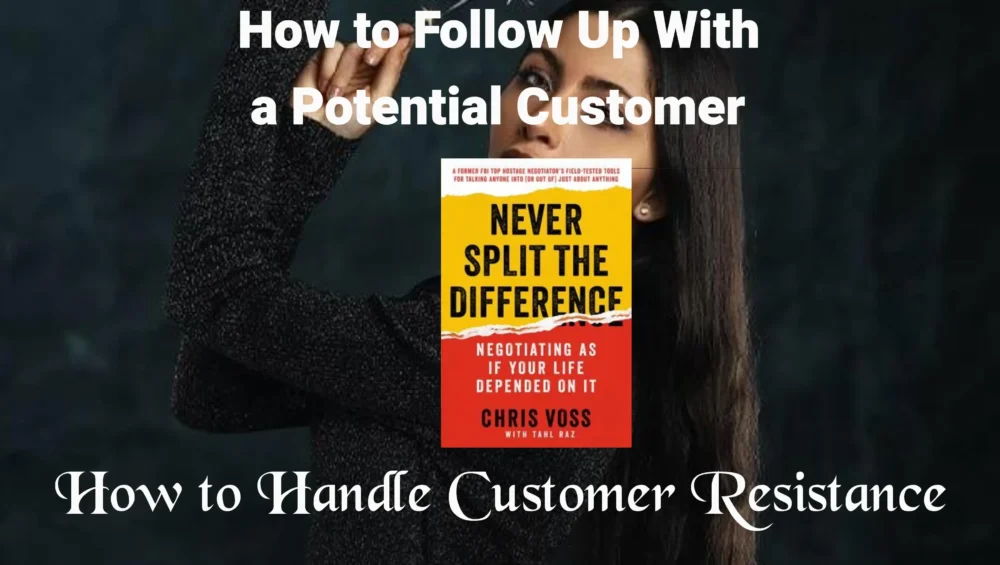
Never Split the Difference

Author: Chris Voss

The Big Idea

When a customer hesitates or resists, your first instinct may be to persuade them.

But persuasion before understanding can make resistance worse.

A better approach is to:

Listen

Understand

Label

Ask

Clarify

Discover what is really happening

Determine the appropriate next step

That is where Never Split the Difference becomes useful.

You are not reading it to become a professional negotiator.

You are extracting the techniques that help you navigate difficult customer conversations.

The most relevant ideas for EVUNN are:

  • Tactical empathy

  • Mirroring

  • Labelling

  • Making it safe to say no

  • Calibrated questions

  • Summarising

  • Discovering hidden information

  • Securing follow-through


What Business Problem Does This Book Solve?

“The customer is hesitating or resisting, but I don’t know what is really behind the resistance or how to move the conversation forward.”

A weak response looks like this:

Customer:
“Your price is too high.”

Expert:
“But we’re actually very affordable compared with other providers.”

The expert has defended the offer without understanding the concern.

A better response is:

“It sounds like the investment is a significant concern.”

Then listen.

The customer might explain:

“It’s not actually the amount. We have already committed this quarter’s budget elsewhere.”

Now you know something completely different.

The goal is not to have the perfect response to every objection.

The goal is to discover what is actually happening.


SHOULD I READ IT NOW?

YES — BUT SELECTIVELY.

You do not need to read the entire book before completing this step.

Your objective is:

“Learn how to understand resistance, uncover hidden concerns, ask better questions and create clear next steps without becoming defensive or pushy.”


WHICH PARTS MATTER MOST?

CHAPTER 2 — BE A MIRROR

IMPORTANT

Mirroring encourages the other person to continue talking.

Customer:

“We’re not ready to move forward yet.”

You:

“Not ready yet?”

Then stop.

Let them explain.

The important EVUNN lesson isn’t simply the technique.

It is the discipline of not rushing to fill silence with your own explanation.


CHAPTER 3 — DON’T FEEL THEIR PAIN, LABEL IT

ESSENTIAL

This is one of the most useful chapters for Step 6.

Instead of immediately solving the customer’s concern, acknowledge what appears to be happening.

For example:

“It sounds like the timing is the main concern.”

“It seems like you’re uncertain whether the investment is justified.”

“It sounds like you need another person involved before making the decision.”

Then allow the customer to respond.

They can:

Confirm

Correct

Clarify

That gives you information.

EVUNN APPLICATION

Resistance → Label → Listen → Understand

Not:

Resistance → Defend → Persuade


CHAPTER 4 — BEWARE “YES”—MASTER “NO”

ESSENTIAL

A customer saying:

“Yes, that sounds good.”

doesn’t necessarily mean they are committed.

Sometimes people say yes simply to end a conversation.

A clear no can actually be more useful because it allows the real issue to surface.

The EVUNN lesson:

Make it safe for the customer to disagree with you.

You want honest information.

Not polite agreement.


CHAPTER 5 — TRIGGER THE TWO WORDS THAT IMMEDIATELY TRANSFORM ANY NEGOTIATION

IMPORTANT

The two words are:

“That’s right.”

The principle is simple:

Summarise before you persuade.

For example:

“So, if I’ve understood you correctly, you don’t disagree that the problem needs to be solved. Your concern is whether now is the right time to make the investment.”

Then listen.

If the customer responds:

“That’s right.”

you have evidence that you understand their position.

That creates a stronger foundation for the next step.


CHAPTER 7 — CREATE THE ILLUSION OF CONTROL

ESSENTIAL

Use calibrated questions to help the customer think through the situation rather than telling them what they should do.

For example:

“What would need to happen for you to feel comfortable moving forward?”

“How would you like to handle this?”

“What do you think the next step should be?”

“What would make this workable for you?”

The objective is not manipulation.

It is to make the customer an active participant in resolving the decision.


CHAPTER 8 — GUARANTEE EXECUTION

IMPORTANT

A decision isn’t the same thing as execution.

A customer can say:

“Yes.”

and still never:

  • Pay

  • Sign

  • Schedule

  • Provide information

  • Start

  • Implement

So once a commitment is made, make the next action concrete.

For example:

“Great. I’ll send the agreement today. Once it’s signed, we’ll schedule our first session.”

The EVUNN principle:

Don’t leave commitments vague.


CHAPTER 10 — FIND THE BLACK SWAN

ESSENTIAL

Sometimes the reason a customer isn’t moving is something you don’t know exists.

You think:

“The price is too high.”

But the real issue is:

Their budget has been frozen.

You think:

“They need more information.”

But the real issue is:

Their partner doesn’t trust the solution.

You think:

“They’re not interested.”

But the real issue is:

They’re waiting for another event before acting.

The lesson:

Don’t assume you know why the customer is hesitating.

Investigate.


WHAT SHOULD I SKIP FOR NOW?

Chapter 1 — The New Rules

SKIM

Useful context, but not essential to completing the execution task.

Chapter 6 — Bend Their Reality

SKIM

Useful for understanding perception, value and fairness, but don’t make psychological persuasion a core EVUNN lesson.

Chapter 9 — Bargain Hard

SKIP FOR NOW

This is more relevant to formal negotiation and price bargaining.

If the learner later needs advanced negotiation skills, they can return to it.


YOUR EVUNN ACTION

FOLLOW UP & HANDLE RESISTANCE

Now return to the opportunities from Step 5 that have not yet moved to a clear decision.

Your objective is not to chase them.

Your objective is to determine:

“Why hasn’t this opportunity moved forward?”


1. REVIEW THE LAST COMMITMENT

Return to your Step 5 record.

What did the customer last agree to?

For example:

  • Review the proposal

  • Speak to a partner

  • Discuss internally

  • Provide information

  • Schedule another meeting

  • Make a decision

  • Start the engagement

Then ask:

“What was supposed to happen next?”

Your follow-up should connect to that commitment.


2. IDENTIFY THE UNRESOLVED ISSUE

Ask:

“What might currently be preventing movement?”

Consider:

VALUE

They don’t see enough value.

PRICE

The investment is a concern.

TIMING

The problem isn’t urgent enough.

TRUST

They aren’t confident in you or the solution.

FIT

The offer may not actually be appropriate.

AUTHORITY

Someone else needs to decide.

INFORMATION

They still have unanswered questions.

RISK

They are afraid of making the wrong decision.

PRIORITY

Something else matters more right now.

NO REAL NEED

The opportunity may not actually be strong.

Don’t treat these as conclusions.

They are hypotheses to investigate.


3. REOPEN THE CONVERSATION WITHOUT CHASING

Avoid:

“Just checking in.”

Instead, connect your follow-up to something the customer actually said.

For example:

“When we spoke, you mentioned that your main concern was getting your acquisition process working consistently. I wanted to check whether that is still a priority for you.”

Or:

“When we last spoke, you wanted to discuss the proposal with your partner. Were you able to have that conversation?”

Your follow-up should have context and purpose.


4. LISTEN FOR THE REAL CONCERN

If the customer says:

“It’s too expensive.”

Don’t immediately defend your price.

Ask:

“What makes the investment difficult?”

Or:

“Is the concern the amount itself, or whether the expected outcome justifies the investment?”

Then listen.


5. LABEL THE CONCERN

Use what you have learned.

For example:

“It sounds like you’re not questioning whether the problem exists. You’re unsure whether now is the right time to invest in solving it.”

Then stop.

Allow the customer to respond.

They may say:

“Exactly.”

Or:

“Not quite.”

Both answers are useful.


6. ASK A CALIBRATED QUESTION

Once you understand the concern, ask a question that helps the customer think through it.

Examples:

“What would need to happen for this to become a priority?”

“What would make you comfortable moving forward?”

“What is the biggest thing preventing you from deciding?”

“How would you like to approach this?”

“What would need to change for this to work?”

The goal isn’t to trap the customer.

It is to understand what needs to happen next.


7. DETERMINE WHETHER THE CONCERN IS SOLVABLE

Not every resistance should be overcome.

Ask:

Can this reasonably be addressed?

If yes:

Address it.

If more information is needed:

Provide it.

If another decision-maker is needed:

Bring them in.

If the offer needs clarification:

Clarify it.

If timing is wrong:

Agree on a realistic future point.

If the customer genuinely doesn’t want the solution:

Accept the no.

Your goal is not to keep every opportunity alive.


8. DO NOT DISCOUNT AUTOMATICALLY

If someone says:

“It’s too expensive.”

Don’t immediately say:

“I can give you a discount.”

First understand the concern.

Ask:

“Compared with what?”

or:

“What makes the investment difficult?”

or:

“What would you need to see to feel that the investment is justified?”

Price may not actually be the problem.

And if price genuinely is the problem, determine whether the appropriate response is:

  • Changing scope

  • Changing timing

  • Changing payment structure

  • Changing the offer

  • Or disqualifying the opportunity

Don’t negotiate against yourself.


9. FOLLOW UP WITH A PURPOSE

Every follow-up should have a reason.

Good reasons include:

  • A promised document

  • A scheduled decision

  • A proposal review

  • An unanswered question

  • New information

  • A decision-maker becoming available

  • An agreed follow-up date

  • A change in the customer’s situation

Use:

Context

Reason for contacting

Useful information or question

Clear next step


10. KNOW WHEN TO STOP

Persistence does not mean pursuing someone forever.

If the customer:

  • Has clearly declined

  • Repeatedly says it isn’t a priority

  • Stops engaging despite reasonable follow-up

  • Isn’t a fit

  • Cannot justify the investment

  • Doesn’t have a meaningful need

then stop pursuing the opportunity.

A clean no is better than a permanent maybe.


11. CLASSIFY THE OUTCOME

After follow-up, classify the opportunity.

READY

The concern has been resolved and the customer is ready.

ACTIVE

The opportunity remains real and a specific next step exists.

NURTURE

The problem is real, but the timing isn’t right.

NEEDS MORE INFORMATION

The customer needs something specific before deciding.

DECISION-MAKER REQUIRED

Another person needs to be involved.

NOT A FIT

The opportunity should be disqualified.

LOST

The customer has decided not to proceed.

This prevents your pipeline from becoming a collection of forgotten “maybe” opportunities.


12. DOCUMENT WHAT YOU LEARNED

For every follow-up, record:

Customer’s Concern

What the Concern Actually Means

Evidence

Your Response

Customer’s Reaction

Next Commitment

Follow-Up Date

Opportunity Status

What You Learned

That final field matters.

A lost opportunity can still improve your sales process.


🧠 EVUNN MINDSET CHECKPOINT

Are you following up—or chasing?

There is a difference.

CHASING

“Have you decided?”

“Any update?”

“Just checking in.”

“I haven’t heard back from you.”

FOLLOWING UP

“When we spoke, you mentioned that your main concern was X. Has anything changed?”

“You said you wanted to discuss this with your partner. Were you able to do that?”

“You mentioned that timing was the main issue. Is solving this still a priority?”

Follow-up has context.

It is connected to something the customer actually said or committed to.


And ask yourself:

Am I trying to overcome resistance—or understand it?

Resistance is not necessarily an obstacle standing between you and the sale.

It is information.

It may tell you:

Your offer isn’t clear.

The value isn’t strong enough.

The customer isn’t ready.

The wrong person is involved.

The timing is wrong.

The problem isn’t important enough.

Or the opportunity isn’t real.

If you immediately try to overcome every concern, you may end up selling something the customer doesn’t actually need.

Remember:

Don’t fight resistance. Investigate it.

And:

A customer saying “no” is better than a customer saying “maybe” forever.


OPTIONAL MINDSET READING

No Additional Book Required

Never Split the Difference is sufficient for this step.

Don’t add another objection-handling book.

The learner needs to practice listening, questioning and follow-up, not consume more theory.


🔓 EVUNN EXECUTION TOOLKIT

Follow-Up & Resistance Tracker

Don’t send endless:

“Just checking in.”

Use the EVUNN Follow-Up & Resistance Tracker to understand why an opportunity has stalled, identify the customer’s unresolved concern, plan the next conversation, record commitments and decide whether to continue, nurture or close the opportunity.

The toolkit helps you map:

Last Commitment

Current Status

Customer Concern

What the Concern Really Means

Evidence

Response

Next Commitment

Follow-Up Date

Opportunity Decision

Open Toolkit


ONE PAYMENT. ALL STAGE 1 TOOLKITS. YOURS FOR LIFE.

No monthly subscription. No recurring fees. Just the tools you need to execute.

Unlock All Stage 1 Execution Toolkits


YOUR STEP 6 OUTPUT

By the end of this step, you should have an:

ACTIVE SALES FOLLOW-UP SYSTEM

Your process should now look like:

Presented Offer

Customer Response

Unresolved Concern

Investigation

Response

Next Commitment

Follow-Up

Decision

Your opportunities should now fall into clear categories:

Ready

Active

Nurture

Needs More Information

Decision-Maker Required

Not a Fit

Lost

Your objective is not to create the biggest possible pipeline.

Your objective is to know:

Why hasn’t this opportunity moved forward, what needs to happen next, and whether it is still worth pursuing?


WHAT YOU SHOULD NOW KNOW

You entered this step with:

“The customer hasn’t decided yet. I don’t know what to say next.”

You leave knowing:

“I can identify what is preventing movement, investigate the customer’s concern, respond without becoming defensive, establish the next commitment and know when to continue or stop pursuing the opportunity.”

You have now moved through:

Prospect

Conversation

Diagnosis

Opportunity

Offer

Commitment

Resistance

Follow-Up

Decision

But making individual sales isn’t enough.

You now need to know whether the system itself is working.

Which prospects are converting?

Which conversations are producing opportunities?

Where are customers getting stuck?

Which concerns keep appearing?

Which offers convert?

Which acquisition channels produce the best customers?

What should you change?

That is the final step.

NEXT: STEP 7 — REVIEW, LEARN & IMPROVE

“What is my sales process teaching me, and what should I change to make it work better?”

To understand their experience, use Book 3. Title: Practical Empathy

Practical empathy


Author: Indi Young

Time Investment: 5+ hours (Audiobook) 

Listen to Audiobook with Audible free trial |Buy at the Bookshop


The Big Idea from Practical Empathy 

Empathy helps you move beyond assumptions and develop a deeper understanding of how people experience problems, situations, what they do, and what matters to them.

For an expert, this is a critical shift. Your expertise tells you what you think the problem is. Empathy helps you understand the problem from their perspective.


What Does this Book Help you Achieve?

Practical Empathy helps you:

  • Listen without immediately interpreting

  • Understand people’s experiences more deeply

  • Separate what people actually say from your assumptions

  • Make sense of what you hear

  • Identify patterns across people’s experiences

  • Use those insights to improve what you create

The goal isn’t to become better at selling.

It’s to become better at understanding.


Should I Read it Now?

YES.

You’ve already explored:

Step 1: What problems might exist?

Step 2: Why might people want to solve them?

Now you need to understand: What is this experience actually like for the person living through it?


Which Chapters Matter Most for me Now?

Chapter 2: Empathy Brings Balance (Essential)

Understand what empathy actually means and why it matters when making decisions about customers.

Chapter 3: Put Empathy to Work (Essential)

Learn how empathy can become part of how you investigate and understand problems.

Chapter 4: A New Way to Listen (Essential)

This is one of the most important chapters for this stage.

Learn to listen to someone’s experience without immediately jumping to solutions, advice or conclusions.

Chapter 5: Make Sense of What You Heard (Essential)

Find out how to process and deepen your understanding of what people tell you.

Chapter 6: Apply Empathy to What You Create (Essential)

Understand how patterns in people’s experiences can influence what you eventually create.

Chapter 1: Business Is Out of Balance (Read this chapter for context only)

It explains why relying only on numbers and analytical thinking can leave important parts of the customer experience invisible.

Skip Chapters 7–9 for now

They focus more heavily on applying empathy within workplaces and organizations.

Listen to Audiobook with Audible free trial | Buy at the Bookshop


Your Step 3 Outcome

By the end of this step, you should have:

  • A deeper understanding of the experience behind each problem  of  the 3 problems generated in step 1

  • A clearer distinction between what you know and what you’re assuming

  • Initial insight into what people think, feel and do

  • A better understanding of their frustrations and desired outcomes

  • A list of questions you still need to investigate with real people

Notice what hasn’t happened yet:

You haven’t validated the problems yet. That’s intentional.

You’ve developed empathy, but empathy based on your own reflection is still not enough.

The next step takes you deeper.


🔒 Ready to Put Empathy into Practice?

Reading about empathy is not the same as practising it.

The EVUNN Customer Empathy Toolkit gives you a structured way to examine the problem from the customer’s perspective and separate evidence from assumptions.


One Payment. For All EVUNN Stage 1 toolkits.

What Should I Learn Next?

You now have a better understanding of the customer’s experience.

But there’s another question:

What are they actually trying to accomplish?

A customer may describe a problem, but the problem itself isn’t always the real objective.

They may be trying to make progress toward something bigger.

Step 4: Jobs-to-Be-Done

You’ll move from: Understanding their experience to understanding the progress they’re actually trying to make.

how to close a sale

How to Close a Sale: Present Your Offer & Gain Commitment | EVUNN

PROBLEM: I understand the problem, but I don't fully understand what it's like to experience it.

To find a profitable problem to solve, you must understand what it is like to experience the problem

STEP 3: DEVELOPING EMPATHY

Yes. Based on the actual contents of The Lost Art of Closing, I would write Step 5 somewhat differently from my earlier draft.

The key recommendation is this:

Do not teach Step 5 as “make a presentation and then close.” Teach it as “turn a qualified opportunity into a relevant recommendation and gain the commitments that move the customer toward a decision.”

That is much closer to Iannarino’s framework. The book explicitly frames closing around ten commitments across the buying journey rather than treating closing as one final event. (Google Books)

I would also leave detailed objection/resistance handling for Step 6, even though Chapter 11 is in this book. That preserves the progression of your EVUNN roadmap.

Here is the version I recommend.


STEP 5 — PRESENT & CLOSE THE OFFER

The Problem We’re Solving

“I have diagnosed a real customer opportunity, but I don’t know how to turn that diagnosis into an offer the customer can understand, value and confidently decide on.”

In Step 4, you diagnosed the opportunity.

You established:

  • The customer’s current state

  • Their desired future state

  • The gap between the two

  • What is causing the gap

  • The impact of the gap

  • Why the problem matters

  • Why change may be necessary

  • Whether the opportunity is worth pursuing

You now have something important:

A reason to make a recommendation.

But this is where many experts make another mistake.

They jump from:

“I understand your problem.”

to:

“Here is everything I can do for you.”

They start talking about:

Their expertise

Their credentials

Their methodology

Their services

Their features

Their process

Their experience

Their price

And then they ask:

“What do you think?”

The problem is that the offer has become disconnected from the diagnosis.

The customer may be thinking:

“How does this actually help me close the gap we just discussed?”

Your job in this step is to make that connection clear.

You are moving from:

Diagnosis

Recommendation

Customer Commitment

Decision


THE EVUNN MINDSET SHIFT

From “I need to close the sale” → “I need to gain the next commitment.”

The word closing can make experts uncomfortable.

You may think:

“I don’t want to pressure people.”

So you avoid asking for a decision.

Or you may go in the opposite direction and start trying to persuade the customer.

You explain more.

You add more features.

You defend your price.

You offer discounts.

You keep talking.

But closing does not have to mean forcing someone to buy.

Iannarino’s framework is built around gaining commitments throughout the buying process rather than treating the close as one isolated event. The commitments include time, exploration, change, collaboration, consensus, investment, review, resolving concerns, decision and execution. (Google Books)

For EVUNN, the important shift is:

Your job is not to force a “yes.” Your job is to help the customer make the commitments necessary to move forward.

That means asking:

What does the customer need to commit to next?

What information do they need?

Who else needs to be involved?

Are they committed to change?

Are they willing to collaborate?

Are they willing to invest?

Are they ready to decide?

And once they decide:

Are they ready to execute?


📖 RECOMMENDED BOOK

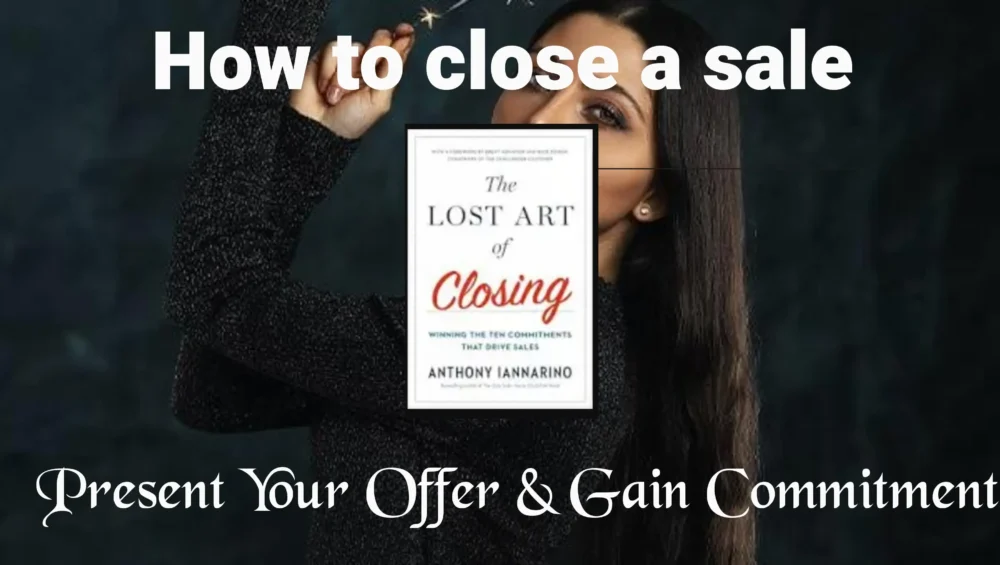
The Lost Art of Closing

Author: Anthony Iannarino

The Big Idea

Closing is not something you do only at the end of a sales conversation.

It is a process of gaining the commitments that move a customer from their current situation toward the outcome they want.

The book identifies ten major commitments:

Time

Explore

Change

Collaborate

Build Consensus

Invest

Review

Resolve Concerns

Decide

Execute

These commitments do not have to happen in a perfectly linear sequence. But they give you a useful way to understand what needs to happen before an opportunity can move forward. (The Sales Blog)

This is why the book fits Step 5.

You are not learning how to become a pushy salesperson.

You are learning how to guide a qualified customer toward a clear decision.


What Business Problem Does This Book Solve?

“I have a good solution, but my sales conversations stall because the customer doesn’t commit to moving forward.”

You may have:

A real problem

A strong diagnosis

A relevant solution

A good offer

A reasonable price

And still fail to make the sale.

Why?

Because the customer may not yet be committed to:

Changing

Collaborating

Investing

Getting other stakeholders involved

Reviewing the proposal

Resolving concerns

Making a decision

The offer itself is only one part of the process.


SHOULD I READ IT NOW?

YES — selectively.

You do not need to read the entire book before completing Step 5.

Your objective is:

“Learn how to present a recommendation that connects to the customer’s diagnosed opportunity and gain the commitments needed to move that opportunity toward a decision.”

Focus on the chapters that help you do that.


WHICH PARTS MATTER MOST?

CHAPTER 1 — A NEW PHILOSOPHY OF COMMITMENT GAINING

ESSENTIAL

Start here.

This chapter establishes the philosophy behind the entire book.

The important shift is:

Don’t obsess over the final close.

Instead:

Gain the commitment needed to move the process forward.

This changes how you conduct the conversation.

Instead of asking:

“How do I get this person to buy?”

Ask:

“What commitment needs to happen next?”


CHAPTER 2 — CONTROL THE COMMITMENTS AND CONTROL THE PROCESS

ESSENTIAL

This helps you understand why a sales opportunity can appear healthy while actually going nowhere.

A customer saying:

“Send me the proposal.”

is not necessarily a meaningful commitment.

A stronger process establishes:

What happens next

Who is involved

When it happens

What each person needs to do

What decision will be made

This prevents vague next steps such as:

“I’ll get back to you.”


CHAPTER 3 — TRADING VALUE

ESSENTIAL

Before asking for a commitment, make sure you are creating value.

The customer should receive something useful from the interaction:

A useful insight

A clearer diagnosis

A better understanding of their situation

A recommendation

A useful framework

A path forward

This reinforces an important EVUNN principle:

Don’t ask for commitment without giving the customer a reason to continue.


CHAPTER 6 — THE COMMITMENT TO CHANGE

ESSENTIAL

This connects directly to Step 4.

You already established the gap.

Now determine whether the customer is actually committed to changing the current state.

Ask:

Do they agree the current situation needs to change?

Do they believe the gap matters?

Do they want the future state?

Are they willing to do something differently?

If the customer is comfortable with the current situation, don’t rush into presenting your solution.

You may need to return to diagnosis.


CHAPTER 7 — THE COMMITMENT TO COLLABORATE

ESSENTIAL

Your customer should not be treated as a passive recipient of your expertise.

They may need to:

Provide information

Share access

Give feedback

Make decisions

Involve their team

Participate in implementation

Help shape the solution

This is particularly important for coaches, consultants and professionals selling expertise.

Your offer is not simply:

“I will do something to you.”

It is:

“We will work together to achieve a defined outcome.”


CHAPTER 8 — THE COMMITMENT TO BUILD CONSENSUS

IMPORTANT

This matters especially when more than one person influences the purchase.

For example:

The user of the service

The business owner

A manager

Finance

A procurement team

A partner

A spouse

A board

You need to know:

Who else needs to be involved?

For a simple B2C purchase, this may be less important.

For B2B consulting or professional services, it can be critical.

Don’t build an entire section of your process around complex consensus if your offer is normally sold to one decision-maker.

Use this chapter according to your business model.


CHAPTER 9 — THE COMMITMENT TO INVEST

ESSENTIAL

This is where the customer decides whether the expected value justifies the investment.

Investment isn’t only money.

It can include:

Money

Time

Attention

Internal resources

People

Access

Political capital

Implementation effort

Your job is to make the relationship between:

Investment

and

Expected Value

clear.

Don’t immediately respond to price concerns by discounting.

First understand what the customer is actually evaluating.


CHAPTER 10 — THE COMMITMENT TO REVIEW

ESSENTIAL

A proposal should not simply be emailed into the void.

The customer should commit to reviewing it.

Ideally:

“Let’s schedule a time to go through the proposal together.”

This gives you an opportunity to:

Explain the recommendation

Answer questions

Confirm alignment

Identify concerns

Clarify the investment

Establish the next commitment

The goal is not to send a document.

The goal is to move the buying process forward.


CHAPTER 12 — THE COMMITMENT TO DECIDE

ESSENTIAL

This is where you actually ask for the decision.

Many experts are uncomfortable here.

They finish the conversation with:

“I’ll leave it with you.”

“Think about it.”

“Let me know.”

And then wonder why the opportunity disappears.

You need to be willing to ask:

“Are you ready to move forward?”

Or:

“What do you need to decide whether to proceed?”

A “no” is also useful.

A clear no is better than an opportunity sitting indefinitely in your pipeline.

The goal is not to force a yes.

The goal is to get a clear decision.


CHAPTER 13 — THE COMMITMENT TO EXECUTE

IMPORTANT

The sale isn’t truly complete when the customer says yes.

They still need to:

Sign

Pay

Schedule

Provide information

Attend

Implement

Begin

The transition from:

Decision → Execution

should be clear.

Your customer should know exactly what happens after they say yes.


CHAPTER 14 — GUIDELINES FOR CLOSING

ESSENTIAL

Use this chapter as your practical review.

After completing Step 5, return to it and ask:

Am I asking for commitments clearly?

Am I creating value?

Am I avoiding pressure?

Am I establishing specific next steps?

Am I actually asking for the decision?

Am I helping the customer move forward?


WHAT SHOULD I SAVE FOR STEP 6?

CHAPTER 11 — THE COMMITMENT TO RESOLVE CONCERNS

SAVE FOR STEP 6

This is deliberately moved into the next step.

The learner should understand that concerns will arise.

But Step 6 is specifically:

FOLLOW UP & HANDLE RESISTANCE

So detailed work on:

Price concerns

Timing concerns

Risk

Hesitation

“Let me think about it”

“It’s too expensive”

“Not right now”

“Send me more information”

“No budget”

“I’m not sure”

belongs there.

This keeps the roadmap clean.


YOUR EVUNN ACTION

PRESENT & CLOSE YOUR OFFER

Now take one of the Qualified Sales Opportunities you created in Step 4.

Your task is to turn that diagnosis into a relevant recommendation and move the customer toward a clear decision.


1. START WITH THE CUSTOMER’S DIAGNOSIS

Return to Step 4.

Record:

Current State

Where are they now?

Future State

Where do they want to be?

Gap

What is preventing them from getting there?

Impact

What is the gap costing them?

Why

Why does solving it matter?

Don’t abandon this information when you begin selling.

It is the foundation of your offer.


2. DEFINE YOUR RECOMMENDATION

Now answer:

“Based on everything I have learned, what do I recommend?”

Your recommendation should directly address the diagnosed gap.

Avoid:

“I offer business consulting.”

Instead:

“Based on the challenges you’ve described, I recommend that we work together to build and implement a repeatable customer acquisition process.”

The recommendation should feel like a logical response to the diagnosis.


3. EXPLAIN WHY YOU RECOMMEND IT

Answer:

“Why is this the appropriate response to this customer’s situation?”

Connect:

Customer Situation

Gap

Recommendation

For example:

“You currently depend heavily on referrals, which makes your client flow unpredictable. Because the main gap is the absence of a repeatable acquisition process, I recommend that we build a system around your best-fit customers and establish a consistent prospecting and outreach process.”

The customer should be able to see the connection.


4. DEFINE THE OFFER

Now specify:

What You Will Do

The major components of the service.

Why You Will Do It

The part of the gap each component addresses.

What the Customer Will Receive

Deliverables, support, access, implementation or other relevant components.

What the Engagement Is Designed to Achieve

The intended outcome.

Do not turn this into a giant list of features.

The customer should understand why each important component exists.


5. PRESENT THE OFFER

Use this simple structure:

WHAT I HEARD

Summarise their situation.

THE GAP

Explain where they are versus where they want to be.

WHAT I RECOMMEND

Present your solution.

WHY

Explain why it addresses their gap.

WHAT’S INCLUDED

Explain the relevant components.

WHAT THIS IS DESIGNED TO ACHIEVE

Describe the intended outcome.

THE INVESTMENT

State your price clearly.

THE NEXT STEP

Explain what happens next.

This is not a performance.

It is a continuation of the diagnostic conversation.


6. GAIN THE COMMITMENT TO CHANGE

Before asking the customer to invest in your solution, confirm:

“Are they actually committed to changing the current situation?”

Ask questions such as:

“Is this a problem you want to solve now?”

“How important is it for you to change this?”

“What happens if you continue with the current approach?”

If the answer is essentially:

“It’s not really a priority.”

Stop.

You may not have an active opportunity.


7. GAIN THE COMMITMENT TO COLLABORATE

Establish what the customer will need to contribute.

For example:

“For this to work, I’ll need access to your current sales process and you’ll need to participate in the weekly working sessions. Is that something you’re comfortable committing to?”

This makes the engagement real.


8. IDENTIFY WHO NEEDS TO BE INVOLVED

Ask:

“Who else needs to be involved in this decision?”

If other stakeholders matter, don’t wait until the end to discover them.

Identify:

Decision-maker

Budget owner

Users

Influencers

Other relevant stakeholders

For a simple one-person purchase, keep this simple.

For a larger B2B engagement, make consensus part of the process.


9. DISCUSS THE INVESTMENT

Present:

What the customer is investing

and

What the engagement is designed to help them achieve.

Do not immediately defend your price.

Do not automatically discount.

Instead, make sure the customer understands:

What they are buying

Why it is relevant

What the investment is

What participation is required

What outcome the engagement is designed to produce


10. GAIN THE COMMITMENT TO REVIEW

Don’t simply send the proposal and hope.

If a proposal is necessary, establish:

When it will be reviewed

Who will review it

What questions need to be answered

What happens after the review

For example:

“I’ll send the proposal today. Let’s schedule 30 minutes on Thursday to review it together and decide whether it makes sense to move forward.”

That is a much stronger next step than:

“I’ll send it and you can get back to me.”


11. ASK FOR THE DECISION

When the opportunity is ready, ask.

Examples:

“Would you like to move forward?”

“Are you ready to proceed?”

“Does this feel like the right solution for what you’re trying to achieve?”

“What would you need to decide whether to move forward?”

Don’t manipulate the customer.

Don’t create artificial urgency.

Don’t pressure them into saying yes.

Ask for a clear decision.


12. ESTABLISH THE EXECUTION COMMITMENT

If the customer says yes, don’t end with:

“Great. I’ll be in touch.”

Move immediately to execution.

Confirm:

Start date

Payment

Agreement

Information required

People involved

First activity

Next meeting

The customer should leave knowing:

“I have said yes, and I know exactly what happens next.”


13. RECORD THE OUTCOME

Capture:

Offer Presented

Customer Response

Commitments Gained

Decision

Next Commitment

Decision Date

People Involved

Outstanding Concerns

Execution Date

Opportunity Status

Possible statuses:

Won

Decision Pending

Follow-Up Required

Not Now

Lost

Disqualified


🧠 EVUNN MINDSET CHECKPOINT

Are you trying to close—or are you helping the customer commit?

You may believe selling means convincing someone to buy.

It doesn’t have to.

A better process is:

Understand

Diagnose

Recommend

Create Value

Gain Commitment

Ask for Decision

Execute

The customer should understand why your recommendation makes sense before you ask them to invest.

And you should be comfortable accepting:

Yes

No

Not yet

I need more information

All four are useful.

A clear decision is better than an indefinite maybe.

Ask yourself:

Have I earned the next commitment?

If not, don’t force the next stage.

Go back and determine what is missing.


Optional Mindset Reading

No Additional Book Required

Do not add another sales book here.

The Lost Art of Closing is sufficient for this step.

The book already provides the commitment-gaining framework needed to move from opportunity to decision. (PenguinRandomhouse.com)

If you struggle specifically with objections and resistance, don’t add another book here either.

That belongs to Step 6.


🔓 EVUNN EXECUTION TOOLKIT

Offer Presentation & Commitment Planner

Don’t create a generic sales pitch.

Use the EVUNN Offer Presentation & Commitment Planner to turn a qualified opportunity into a relevant recommendation and identify the commitments needed to move it forward.

The toolkit helps you map:

Customer Diagnosis

Recommended Solution

Value Connection

Offer

Commitment to Change

Commitment to Collaborate

Commitment to Invest

Commitment to Review

Commitment to Decide

Commitment to Execute

Open Toolkit


ONE PAYMENT. ALL STAGE 1 TOOLKITS. YOURS FOR LIFE.

No monthly subscription. No recurring fees. Just the tools you need to execute.

Unlock All Stage 1 Execution Toolkits


YOUR STEP 5 OUTPUT

By the end of this step, you should have a:

PRESENTED OFFER + CLEAR NEXT COMMITMENT

Your process should now look like:

Qualified Sales Opportunity

Customer Diagnosis

Relevant Recommendation

Offer

Customer Commitment

Decision

Execution Plan

The objective is not simply to have sent a proposal.

Your objective is to know:

What you recommended

  •  

Why it addresses the customer’s gap

  •  

What the customer is being asked to invest

  •  

What commitment they have made

  •  

What decision has been reached

  •  

What happens next


WHAT YOU SHOULD NOW KNOW

You entered this step with:

“I understand the customer’s opportunity and I believe I can help.”

You leave knowing:

“I can turn that opportunity into a relevant recommendation, gain the commitments needed to move it forward, ask for a decision and establish the path to execution.”

You have now moved through:

Prospect

Conversation

Diagnosis

Opportunity

Recommendation

Offer

Commitment

Decision

But not every customer will decide immediately.

Some will hesitate.

Some will raise concerns.

Some will ask for more information.

Some will stop responding.

Some will question the price.

Some will say:

“I need to think about it.”

That does not automatically mean the opportunity is dead.

The next skill is learning how to follow up without chasing, understand resistance without becoming defensive, and determine whether an opportunity should continue.

NEXT: STEP 6 — FOLLOW UP & HANDLE RESISTANCE

“What do I do when the customer hesitates, raises concerns, asks for more information or stops responding?”


My additional recommendation for EVUNN

I would make one important product decision here: do not make the Step 5 toolkit a “sales script generator.”

Make it a Commitment Planner.

That differentiates EVUNN from generic sales-training material. The learner should finish the toolkit knowing:

“What is the next commitment I need from this customer, why should they make it, and what will we do if they don’t?”

That is much more useful than memorising closing lines—and it carries the learner naturally into Step 6. Iannarino himself describes the approach as gaining multiple commitments rather than relying only on the final close. (The Sales Blog)

To understand their experience, use Book 3. Title: Practical Empathy

Practical empathy


Author: Indi Young

Time Investment: 5+ hours (Audiobook) 

Listen to Audiobook with Audible free trial |Buy at the Bookshop


The Big Idea from Practical Empathy 

Empathy helps you move beyond assumptions and develop a deeper understanding of how people experience problems, situations, what they do, and what matters to them.

For an expert, this is a critical shift. Your expertise tells you what you think the problem is. Empathy helps you understand the problem from their perspective.


What Does this Book Help you Achieve?

Practical Empathy helps you:

  • Listen without immediately interpreting

  • Understand people’s experiences more deeply

  • Separate what people actually say from your assumptions

  • Make sense of what you hear

  • Identify patterns across people’s experiences

  • Use those insights to improve what you create

The goal isn’t to become better at selling.

It’s to become better at understanding.


Should I Read it Now?

YES.

You’ve already explored:

Step 1: What problems might exist?

Step 2: Why might people want to solve them?

Now you need to understand: What is this experience actually like for the person living through it?


Which Chapters Matter Most for me Now?

Chapter 2: Empathy Brings Balance (Essential)

Understand what empathy actually means and why it matters when making decisions about customers.

Chapter 3: Put Empathy to Work (Essential)

Learn how empathy can become part of how you investigate and understand problems.

Chapter 4: A New Way to Listen (Essential)

This is one of the most important chapters for this stage.

Learn to listen to someone’s experience without immediately jumping to solutions, advice or conclusions.

Chapter 5: Make Sense of What You Heard (Essential)

Find out how to process and deepen your understanding of what people tell you.

Chapter 6: Apply Empathy to What You Create (Essential)

Understand how patterns in people’s experiences can influence what you eventually create.

Chapter 1: Business Is Out of Balance (Read this chapter for context only)

It explains why relying only on numbers and analytical thinking can leave important parts of the customer experience invisible.

Skip Chapters 7–9 for now

They focus more heavily on applying empathy within workplaces and organizations.

Listen to Audiobook with Audible free trial | Buy at the Bookshop


Your Step 3 Outcome

By the end of this step, you should have:

  • A deeper understanding of the experience behind each problem  of  the 3 problems generated in step 1

  • A clearer distinction between what you know and what you’re assuming

  • Initial insight into what people think, feel and do

  • A better understanding of their frustrations and desired outcomes

  • A list of questions you still need to investigate with real people

Notice what hasn’t happened yet:

You haven’t validated the problems yet. That’s intentional.

You’ve developed empathy, but empathy based on your own reflection is still not enough.

The next step takes you deeper.


🔒 Ready to Put Empathy into Practice?

Reading about empathy is not the same as practising it.

The EVUNN Customer Empathy Toolkit gives you a structured way to examine the problem from the customer’s perspective and separate evidence from assumptions.


One Payment. For All EVUNN Stage 1 toolkits.

What Should I Learn Next?

You now have a better understanding of the customer’s experience.

But there’s another question:

What are they actually trying to accomplish?

A customer may describe a problem, but the problem itself isn’t always the real objective.

They may be trying to make progress toward something bigger.

Step 4: Jobs-to-Be-Done

You’ll move from: Understanding their experience to understanding the progress they’re actually trying to make.

sales opportunity

How to Diagnose a Sales Opportunity | EVUNN

PROBLEM: I understand the problem, but I don't fully understand what it's like to experience it.

To find a profitable problem to solve, you must understand what it is like to experience the problem

STEP 3: DEVELOPING EMPATHY

I would make a few deliberate changes from the previous version:

  • Gap Selling remains the primary book.

  • I would focus the reading much more tightly around Current State → Future State → Gap → Discovery → Is the Gap Worth It? → Why.

  • I would not introduce another core book at this stage. The learner already has enough reading. Gap Selling is strong enough to carry Step 4.

  • I would remove The Challenger Sale as the optional reading. It is not necessary here and could distract from the diagnostic process.

  • The mindset checkpoint should focus on the two real resistances: stopping at the problem and being unwilling to walk away when the gap isn’t worth solving.

  • The output should be a Qualified Opportunity, not merely an “Opportunity Diagnosis,” because the learner needs to decide whether the opportunity deserves to move to Step 5.

Here is how I would write it in your established EVUNN structure:

STEP 4 — DIAGNOSE THE OPPORTUNITY

The Problem We’re Solving

“I have spoken to potential customers and heard about their problems, but I don’t know which problems represent a real opportunity worth solving.”

In Step 3, you started real customer conversations.

You approached prospects.

You listened to their experiences.

You asked questions.

You recorded what they have tried.

You identified problems, behaviours, consequences and buying signals.

You now have customer evidence.

But there is a problem.

A customer having a problem does not automatically mean you have a sales opportunity.

Someone can say:

“I need more customers.”

“I need better marketing.”

“I need to improve my operations.”

“I need help with my team.”

“I need to increase my revenue.”

But these statements are only the beginning.

You still need to understand:

Where are they now?

Where do they want to be?

What is preventing them from getting there?

What is the gap?

What is the gap costing them?

Why does closing the gap matter?

Why do they need to change now?

And most importantly:

Is this gap important enough for the customer to invest in closing it?

This is where diagnosis begins.

Your goal is not to find a problem you can solve.

Your goal is to determine whether there is a valuable customer opportunity worth pursuing.


THE EVUNN MINDSET SHIFT

From “They have a problem” → “I understand the gap.”

Experts are often very good at recognising problems.

You hear:

“I can’t get enough clients.”

And immediately think:

“I know how to fix that.”

You hear:

“My team isn’t performing.”

And immediately think:

“I know what training they need.”

You hear:

“I don’t know how to package my expertise.”

And immediately think:

“I can help them build an offer.”

Your expertise makes this tempting.

But there is a danger.

You may start solving the problem before you have properly diagnosed it.

The customer may have described a symptom.

The real problem may be somewhere else.

And even if the problem is real, it may not be important enough to solve.

So the better question is not:

“Can I solve this problem?”

It is:

“What is the gap between where this customer is and where they need to be, and is closing that gap important enough for them to act?”

That is the thinking behind Gap Selling.

You are moving from:

Problem

Diagnosis

Opportunity


📖 RECOMMENDED BOOK

Gap Selling

Author: Keenan

The Big Idea

Customers do not buy simply because they have problems.

They buy when the difference between their current state and their desired future state creates enough value, pain or urgency to justify change.

That difference is the gap.

Your job is therefore not to rush into presenting your solution.

Your job is to understand the customer’s:

Current State

Future State

Gap

Impact

Why

Need for Change

This makes Gap Selling the natural primary book for Step 4.

You are not reading it simply to learn sales techniques.

You are learning how to diagnose a customer’s situation well enough to determine whether a genuine sales opportunity exists.


What Business Problem Does This Book Solve?

“I can identify a customer’s problem, but I don’t know how to determine how serious it is, what is causing it, what it is costing them or whether they have enough reason to act.”

A weak sales conversation often looks like this:

Customer:

“We need more customers.”

Expert:

“I can help you with that.”

Offer presented.

But the expert still doesn’t know:

How many customers the business currently has

How many it needs

Why the current number is insufficient

What is causing the shortfall

What the shortfall is costing

What the desired situation looks like

What happens if nothing changes

Whether solving it is a priority

A diagnostic conversation goes much deeper.

You are trying to understand the business reality behind the statement.


SHOULD I READ IT NOW?

YES — selectively.

You do not need to read every chapter of Gap Selling before completing this step.

Your objective is:

“Learn how to diagnose a customer’s current state, future state, the gap between them, the impact of that gap and whether the customer has a compelling reason to change.”

The most important chapters are below.


WHICH PARTS MATTER MOST?

CHAPTER THREE — THE CURRENT STATE

ESSENTIAL

This is where you establish where the customer actually is today.

Go beyond the customer’s first description of the problem.

Ask:

What is happening now?

How are they currently operating?

What have they already tried?

What is working?

What isn’t working?

Who is affected?

How frequently does the problem occur?

What resources are involved?

What happens if they continue operating this way?

The objective is to create a specific picture of reality.

Instead of:

“My business isn’t growing.”

You want something closer to:

“Revenue has remained at approximately ₦5 million per year for the last two years despite increasing marketing activity.”

Specificity makes diagnosis possible.


CHAPTER FOUR — THE FUTURE STATE

ESSENTIAL

Now understand where the customer wants to go.

Ask:

What are they trying to achieve?

What would they like to change?

What would success look like?

What result do they actually want?

What would improve if the problem were solved?

What would they be able to do that they cannot do now?

Do not substitute your preferred outcome for the customer’s desired outcome.

Your customer may not want:

“Better marketing.”

They may want:

“A predictable flow of qualified clients every month.”

The future state must matter to them.


CHAPTER SIX — THE GAP DEFINED

ESSENTIAL

This is the heart of Step 4.

Place the customer’s:

Current State

beside their:

Future State

Then ask:

“What is preventing them from getting from where they are now to where they want to be?”

That difference is the gap.

For example:

Current State

The consultant relies almost entirely on referrals and has unpredictable monthly revenue.

Future State

She wants a predictable flow of qualified clients each month.

Gap

She does not have a repeatable customer acquisition system that consistently generates qualified prospects.

This is much more useful than simply recording:

“She needs more customers.”

You are beginning to understand the actual opportunity.


CHAPTER EIGHT — DISCOVERY: KNOW YOUR CLIENTS BETTER THAN THEY KNOW THEMSELVES

ESSENTIAL

This chapter is particularly important for the EVUNN learner because it reinforces the need to keep investigating.

The prospect’s first answer is not necessarily the complete diagnosis.

They may describe:

A symptom

An assumption

A consequence

A visible problem

Or something they believe is causing the problem

Your job is to investigate.

Ask:

What happened?

Why is that happening?

What have you tried?

What changed?

Who is affected?

What happens next?

What is causing the situation?

The goal is not to prove that the prospect is wrong.

The goal is to understand the situation more deeply than the initial problem statement.


CHAPTER NINE — IS THE GAP WORTH IT?

ESSENTIAL

This is one of the most important chapters for EVUNN.

A gap can be real without being commercially valuable.

Ask:

How significant is the gap?

What is it costing the customer?

What happens if nothing changes?

How much does solving it matter?

What would closing the gap make possible?

Why should they act now?

This is where you begin separating:

A problem someone has

from:

An opportunity someone is motivated to solve.


CHAPTER TEN — KNOW YOUR CUSTOMERS’ WHY

ESSENTIAL

The customer needs a reason to change.

Understand:

Why does this matter?

Why now?

Why is the current situation no longer acceptable?

What happens if they don’t change?

What will improve if they do?

The customer’s “why” gives context to the gap.

Two customers can have the same problem but completely different levels of motivation.

You need to understand what makes the opportunity important to this particular customer.


CHAPTER SEVEN — GET THEM TO LET YOU HELP

IMPORTANT

This becomes relevant after you have developed enough understanding of the customer’s situation.

You are not trying to force your way into the conversation.

You are earning permission to help by demonstrating that you understand the customer’s situation.

The deeper your diagnosis, the more naturally you can move toward a discussion about whether you can help close the gap.

This becomes the bridge into Step 5.


WHAT SHOULD I READ LATER?

CHAPTER ELEVEN — HOW TO DO A KICKASS DEMO

SAVE FOR STEP 5

This becomes more relevant when you are presenting your solution.

CHAPTER THIRTEEN — TROUBLESHOOTING

SAVE FOR LATER

Useful when deals begin encountering problems or stalls.

CHAPTER TWELVE — MOVE YOUR DEALS THROUGH THE PIPELINE

SAVE FOR LATER

This is more relevant once you have opportunities moving through your sales process.

PART III — GAP PROSPECTING

SAVE FOR STEP 2 / REVIEW LATER

Chapters 14–17 deal with prospecting, which EVUNN has already addressed in Step 2.

There is no need to make the learner repeat that work here.


YOUR EVUNN ACTION

DIAGNOSE YOUR BEST SALES OPPORTUNITIES

Now return to the prospects you spoke with in Step 3.

You are going to turn your customer evidence into qualified sales opportunities.

Do not diagnose every person on your original prospect list.

Start with the prospects who gave you the strongest evidence.

Your objective is:

Evidence → Diagnosis → Qualified Opportunity


1. SELECT YOUR STRONGEST PROSPECTS

Review your Step 3 conversation records.

Identify prospects who demonstrated:

A real problem

A meaningful impact

Evidence they have tried to solve it

A clear desired outcome

Some level of urgency

Willingness to continue the conversation

Select your strongest opportunities first.


2. DOCUMENT THE CURRENT STATE

For each prospect, answer:

Where are they now?

What is happening?

How are they currently handling the situation?

What have they already tried?

What is not working?

Who is affected?

How often does the problem occur?

What resources are involved?

What happens if nothing changes?

Be specific.

Do not write:

“Their business is struggling.”

Write what is actually happening.

For example:

“The business generates approximately 80 leads per month but converts fewer than five into paying customers.”

Your diagnosis should be based on evidence from the customer, not assumptions.


3. DEFINE THE FUTURE STATE

Now determine where the customer wants to be.

Ask:

What are they trying to achieve?

What would they like to change?

What does success look like?

What result matters most?

What would become possible if the problem were solved?

Write the future state in the customer’s terms.


4. DEFINE THE GAP

Put the two states together.

Current State

Where are they now?

Future State

Where do they want to be?

Gap

What prevents them from getting there?

Write the gap in one clear statement.

For example:

Current State: The consultant relies mainly on referrals and has unpredictable monthly revenue.

Future State: She wants a predictable flow of qualified clients each month.

Gap: She does not have a repeatable customer acquisition system that consistently generates qualified prospects.

You are now moving beyond:

“They need more customers.”

to:

“I understand what is preventing them from achieving the result they want.”


5. INVESTIGATE THE ROOT CAUSE

Do not stop at the first explanation.

Ask:

Why is this happening?

What is causing the gap?

What have they already tried?

Why didn’t those attempts work?

What else is contributing to the situation?

What assumptions are they making?

What is underneath the visible problem?

You are not trying to sound intelligent.

You are trying to understand the situation accurately.


6. IDENTIFY THE IMPACT

Now determine what the gap is costing the customer.

Look for:

Lost revenue

Lost customers

Wasted time

Additional costs

Missed opportunities

Operational inefficiency

Delayed growth

Customer dissatisfaction

Team pressure

Personal or professional consequences

Where possible, quantify the impact.

For example:

“The current process takes approximately 15 hours each week and delays client delivery by an average of three days.”

The impact makes the gap tangible.


7. UNDERSTAND THE CUSTOMER’S WHY

Ask:

Why does this need to change?

Why now?

What has made the problem important?

What happens if nothing changes?

What would solving it make possible?

What would the customer gain?

What would they avoid losing?

The answer to “why” is often more important than the problem itself.


8. TEST WHETHER THE GAP IS WORTH CLOSING

Now make a judgment.

Strong Opportunity

The customer:

Has a meaningful current-state problem

Has a clear desired future state

Has a significant gap

Understands the impact

Has a compelling reason to change

Has some urgency

Is willing to take a next step

Potential Opportunity

The problem appears real, but:

The impact is unclear

The future state is vague

Urgency is weak

The customer has not committed to change

More investigation is required

Weak Opportunity

The customer:

Does not consider the problem important

Is comfortable with the current state

Has little meaningful impact

Has no compelling reason to change

Is unwilling to take a next step

Is not a fit for your offer

Do not manufacture an opportunity.

If the gap isn’t important enough to the customer, move on.


9. CONFIRM YOUR DIAGNOSIS WITH THE CUSTOMER

Do not assume your diagnosis is correct simply because it makes sense to you.

Reflect it back.

For example:

“From what you’ve told me, it sounds like the main issue isn’t actually generating leads. You’re generating enough interest, but you don’t have a consistent process for converting those leads into paying customers. Is that an accurate description of what is happening?”

Then listen.

The customer may:

Confirm it

Correct it

Add something you missed

Reveal a deeper issue

Disagree completely

All of these are useful.

Your diagnosis should be tested with the customer, not created entirely in your head.


10. DETERMINE WHETHER YOU SHOULD ADVANCE THE OPPORTUNITY

Now decide what should happen next.

Advance

The opportunity is meaningful and the customer wants to explore a solution.

Investigate Further

The opportunity appears promising but you still have important unanswered questions.

Pause

The problem exists, but there is insufficient urgency or value to move forward.

Disqualify

The prospect is not a good fit or there is no meaningful opportunity.

This is important.

Not every conversation should become a sale.

A strong sales process knows when to move forward and when to stop.


11. DOCUMENT THE OPPORTUNITY

For every qualified opportunity, capture:

Prospect

Current State

Future State

The Gap

Root Cause

Impact

Customer’s Why

Urgency

Existing Attempts

Desired Outcome

Evidence

Opportunity Status

Potential Solution Area

Next Step

Do not write your full solution yet.

You are still working from the customer’s situation.

Your diagnosis should lead the solution—not the other way around.


🧠 EVUNN MINDSET CHECKPOINT

Are you stopping at the problem?

This is one of the biggest mistakes you can make at this stage.

A prospect says:

“I need more customers.”

And you write:

Problem: Lack of customers.

You think you understand the opportunity.

But you don’t.

You still need to know:

Where are they now?

Where do they want to be?

What is preventing them from getting there?

What is the gap?

What is the impact?

Why does closing the gap matter?

Why does it matter now?

A problem statement is not a diagnosis.

The prospect may even be describing a symptom rather than the underlying problem.

For example:

“I need more leads.”

But after investigating, you discover that they already generate enough leads.

The real issue is poor conversion.

Or:

“I need better marketing.”

But the real issue is an unclear offer.

Or:

“I need to hire more people.”

But the real issue is an inefficient process.

Your job is not to stop at the first problem statement.

Your job is to keep investigating until you understand the gap.

And there is another test:

Are you willing to walk away when the gap isn’t worth solving?

You may want the prospect to become a customer.

You may have spent time researching them.

You may believe strongly in your solution.

But if:

The impact is small

The customer isn’t motivated

The urgency is weak

The desired outcome is unclear

The customer is satisfied with the current state

or the gap simply isn’t valuable enough to close,

then you may not have a real sales opportunity.

Do not manufacture urgency.

Do not exaggerate pain.

Do not convince someone that a problem matters when it doesn’t matter to them.

Remember:

Your job is not to turn every problem into a sale. Your job is to identify the problems where the gap is valuable enough for the customer to want change.


Optional Mindset Reading

No Additional Book Required

You do not need another sales book at this stage.

Gap Selling already provides the diagnostic framework you need.

If you find yourself struggling to accept that some prospects are not worth pursuing, return to:

Chapter 9 — Is the Gap Worth It?

and

Chapter 10 — Know Your Customers’ Why

The important thing is not more reading.

It is learning to diagnose honestly.


🔓 EVUNN EXECUTION TOOLKIT

Opportunity Diagnosis Canvas

Don’t move from:

“The customer has a problem.”

straight to:

“Here is my solution.”

Use the EVUNN Opportunity Diagnosis Canvas to map:

Current State

Future State

The Gap

Root Cause

Impact

Customer’s Why

Urgency

Value of Change

Opportunity Status

The toolkit helps you determine which customer situations represent genuine sales opportunities and which should be investigated further, paused or disqualified.

Open Toolkit

| Go Back to Roadmap

ONE PAYMENT. ALL STAGE 1 TOOLKITS. YOURS FOR LIFE.

No monthly subscription. No recurring fees. Just the tools you need to execute.

Unlock All Stage 1 Execution Toolkits


YOUR STEP 4 OUTPUT

By the end of this step, you should have:

QUALIFIED SALES OPPORTUNITIES

Your process should now look like:

Customer Conversations

Customer Evidence

Current State

Future State

The Gap

Root Cause

Impact

Customer’s Why

Urgency

Value of Change

Opportunity Status

Qualified Sales Opportunity

Your objective is not to turn every prospect into an opportunity.

Your objective is to identify the prospects where:

The problem is real

  •  

The gap matters

  •  

The impact is meaningful

  •  

The customer wants change

  •  

There is a reason to act


WHAT YOU SHOULD NOW KNOW

You entered this step with:

“This prospect has a problem I may be able to solve.”

You leave knowing:

“I understand where this customer is, where they want to be, the gap between those two states, what is causing it, what it is costing them, why it matters and whether there is a reason to act.”

You have moved from:

Problem → Diagnosis → Opportunity

You no longer have simply a prospect who mentioned a problem.

You now have a clearer picture of whether there is a real sales opportunity worth pursuing.

But there is still one important question.

If the opportunity is real, valuable and worth solving:

How do you present your solution so the customer can see how it closes the gap—and make it easy for them to decide?

NEXT: STEP 5 — PRESENT & CLOSE THE OFFER

“How do I connect my solution to the customer’s opportunity and move them toward a decision?”

To understand their experience, use Book 3. Title: Practical Empathy

Practical empathy


Author: Indi Young

Time Investment: 5+ hours (Audiobook) 

Listen to Audiobook with Audible free trial |Buy at the Bookshop


The Big Idea from Practical Empathy 

Empathy helps you move beyond assumptions and develop a deeper understanding of how people experience problems, situations, what they do, and what matters to them.

For an expert, this is a critical shift. Your expertise tells you what you think the problem is. Empathy helps you understand the problem from their perspective.


What Does this Book Help you Achieve?

Practical Empathy helps you:

  • Listen without immediately interpreting

  • Understand people’s experiences more deeply

  • Separate what people actually say from your assumptions

  • Make sense of what you hear

  • Identify patterns across people’s experiences

  • Use those insights to improve what you create

The goal isn’t to become better at selling.

It’s to become better at understanding.


Should I Read it Now?

YES.

You’ve already explored:

Step 1: What problems might exist?

Step 2: Why might people want to solve them?

Now you need to understand: What is this experience actually like for the person living through it?


Which Chapters Matter Most for me Now?

Chapter 2: Empathy Brings Balance (Essential)

Understand what empathy actually means and why it matters when making decisions about customers.

Chapter 3: Put Empathy to Work (Essential)

Learn how empathy can become part of how you investigate and understand problems.

Chapter 4: A New Way to Listen (Essential)

This is one of the most important chapters for this stage.

Learn to listen to someone’s experience without immediately jumping to solutions, advice or conclusions.

Chapter 5: Make Sense of What You Heard (Essential)

Find out how to process and deepen your understanding of what people tell you.

Chapter 6: Apply Empathy to What You Create (Essential)

Understand how patterns in people’s experiences can influence what you eventually create.

Chapter 1: Business Is Out of Balance (Read this chapter for context only)

It explains why relying only on numbers and analytical thinking can leave important parts of the customer experience invisible.

Skip Chapters 7–9 for now

They focus more heavily on applying empathy within workplaces and organizations.

Listen to Audiobook with Audible free trial | Buy at the Bookshop


Your Step 3 Outcome

By the end of this step, you should have:

  • A deeper understanding of the experience behind each problem  of  the 3 problems generated in step 1

  • A clearer distinction between what you know and what you’re assuming

  • Initial insight into what people think, feel and do

  • A better understanding of their frustrations and desired outcomes

  • A list of questions you still need to investigate with real people

Notice what hasn’t happened yet:

You haven’t validated the problems yet. That’s intentional.

You’ve developed empathy, but empathy based on your own reflection is still not enough.

The next step takes you deeper.


🔒 Ready to Put Empathy into Practice?

Reading about empathy is not the same as practising it.

The EVUNN Customer Empathy Toolkit gives you a structured way to examine the problem from the customer’s perspective and separate evidence from assumptions.


One Payment. For All EVUNN Stage 1 toolkits.

What Should I Learn Next?

You now have a better understanding of the customer’s experience.

But there’s another question:

What are they actually trying to accomplish?

A customer may describe a problem, but the problem itself isn’t always the real objective.

They may be trying to make progress toward something bigger.

Step 4: Jobs-to-Be-Done

You’ll move from: Understanding their experience to understanding the progress they’re actually trying to make.

customer conversations

Customer Conversations: How to Talk to Potential Customers | EVUNN

PROBLEM: I understand the problem, but I don't fully understand what it's like to experience it.

To find a profitable problem to solve, you must understand what it is like to experience the problem

STEP 3: DEVELOPING EMPATHY

STEP 3 — START CUSTOMER CONVERSATIONS

The Problem We’re Solving

“I have identified the right prospects, but I don’t know how to approach them and start a conversation that leads to something useful.”

In Step 2, you built your First Prospect List.

You identified:

Your Best-Fit Customer

Your prospect qualification criteria

Problem signals

Buying-situation signals

Real prospects

Your highest-priority prospects

You now know who you want to approach.

But knowing who to contact is not the same as knowing how to start a conversation.

You may have 25–50 qualified prospects sitting on your list and still find yourself asking:

What should I say?

How do I approach them without sounding like I’m selling?

How do I get them to respond?

What questions should I ask?

How do I keep the conversation natural?

When should I introduce what I do?

How do I know whether the conversation is worth continuing?

This is where customer conversations begin.

Your goal is not to contact as many people as possible.

Your goal is to start genuine conversations with the right prospects and learn enough about their situation to determine whether there is a real opportunity worth pursuing.


THE EVUNN MINDSET SHIFT

From “I need to sell them” → “I need to understand them.”

When experts approach potential customers, they often feel pressure to prove their expertise.

So they immediately:

Explain what they do

Describe their service

Talk about their credentials

Present their solution

Send their offer

Tell the prospect why they need it

Ask whether they would buy

But this creates a problem.

You are having a conversation based on your assumptions rather than the prospect’s reality.

A better approach is to become curious.

You already have a hypothesis about the problem you solve.

Now you need to find out what is actually happening in the prospect’s world.

The better question is not:

“How do I convince this person to buy?”

It is:

“What can I learn from this person that will help me understand whether there is a problem worth solving?”

This is the principle behind The Mom Test.

A customer conversation is not an opportunity to collect compliments about your idea.

It is an opportunity to collect evidence.


📖 RECOMMENDED BOOK

The Mom Test

Author: Rob Fitzpatrick

The Big Idea

People can give you positive feedback about your business idea without ever becoming customers.

They may say:

“That sounds great.”

“I would definitely use that.”

“I know someone who needs this.”

“That is a really good idea.”

But these statements are not strong evidence.

The Mom Test teaches you how to have conversations that reveal real problems, real behaviour and real commitment instead of relying on opinions, compliments and hypothetical promises.

That makes it highly relevant to Step 3.

You are not reading it to become a better salesperson.

You are learning how to have better conversations with potential customers.


What Business Problem Does This Book Solve?

“I am talking to prospects, but I don’t know whether the information I’m getting is actually useful.”

A conversation can feel successful while giving you very little useful information.

A prospect may be polite.

They may agree with everything you say.

They may like your idea.

They may say they would buy.

But what matters is what they actually experience and do.

The Mom Test teaches you to look for evidence in:

Their current situation

Their past behaviour

Problems they have already experienced

Solutions they have already tried

What the problem has cost them

What they are doing about it now

What they are willing to do next

This helps you move from:

“They said they like my idea.”

to:

“I have evidence that this problem exists and matters to them.”


SHOULD I READ IT NOW?

YES — but selectively.

You do not need to read the entire book before completing this step.

Your objective is:

“Learn how to start and conduct customer conversations that reveal real problems, behaviour and buying signals rather than opinions and polite interest.”

The most important parts for this step are:


WHICH PARTS MATTER MOST?

INTRODUCTION — THE MOM TEST

ESSENTIAL

Start here.

Understand the central problem the book is trying to solve:

How do you talk to people about your idea without accidentally getting misleading feedback?

The key lesson for EVUNN is simple:

Don’t ask people to predict what they will do. Learn what they have already done.

This principle should guide your conversations throughout this step.


AVOIDING BAD DATA

ESSENTIAL

This is one of the most important sections for the EVUNN learner.

Learn to recognise the difference between:

Compliments

Opinions

Hypothetical statements

Real evidence

For example:

“I think that’s a great service.”

is an opinion.

“I paid a consultant ₦200,000 last month because I couldn’t solve this problem myself.”

is evidence of behaviour.

The first may be encouraging.

The second tells you much more.

As you conduct conversations, become suspicious of information that costs the prospect nothing to give you.

Look for what they have actually experienced, tried, spent, changed or committed to.


ASKING IMPORTANT QUESTIONS

ESSENTIAL

This section helps you move from vague conversation to useful discovery.

Your questions should uncover:

What they are trying to accomplish

What is preventing them from doing it

What they have already tried

How they currently handle the problem

How often it occurs

What happens when it is not solved

What the problem costs them

How important solving it is

The goal is not to ask every question on a script.

The goal is to learn how to ask questions that lead to specific stories and real examples.


KEEPING IT CASUAL

ESSENTIAL

Customer conversations do not need to feel like formal research interviews.

The more natural the conversation, the more likely the prospect is to talk openly about what is actually happening.

Don’t turn the conversation into:

Question.

Answer.

Question.

Answer.

Question.

Answer.

Listen.

Follow interesting details.

Ask for examples.

Ask what happened next.

Let the conversation develop naturally.

You are trying to understand the prospect, not complete a questionnaire.


COMMITMENT AND ADVANCEMENT

ESSENTIAL

Not every interested prospect is a serious prospect.

Someone saying:

“Keep me posted.”

is different from someone who:

Introduces you to the person responsible

Agrees to another conversation

Shares relevant information

Provides access to their process

Agrees to review a potential solution

Commits time to exploring the problem

The lesson is:

Interest is not commitment.

As conversations develop, pay attention to what prospects are willing to do, not simply what they are willing to say.


FINDING CONVERSATIONS

IMPORTANT

You already created your prospect list in Step 2.

Now use this section to think about how you will actually create opportunities to talk to those people.

Depending on your acquisition channel, this could involve:

LinkedIn messages

Email

Phone calls

Referrals

Professional networks

Communities

Events

Existing relationships

Introductions

The objective is not to send a generic sales message to everyone.

It is to create a reason for the right person to engage.


CHOOSING YOUR CUSTOMERS

IMPORTANT

Not every conversation should become a customer relationship.

Use what you learn from conversations to become more selective.

You may discover that some prospects:

Are not experiencing the problem

Have a different problem

Do not consider the problem important

Have already solved it another way

Are not ready to act

Are not a good fit for your offer

That’s useful information.

A conversation can be successful even when it tells you:

“This person is not my customer.”


RUNNING THE PROCESS

IMPORTANT

Customer conversations should become a process rather than isolated events.

Track:

Who you contacted

Who responded

Who you spoke with

What you learned

What problems appeared repeatedly

What assumptions were challenged

Who showed genuine interest

What next step was agreed

This will allow you to identify patterns across multiple conversations.


WHAT SHOULD I READ LATER?

You do not need to read every part of The Mom Test before moving forward.

The immediate objective is to become capable of having useful conversations.

Return later to sections that become more relevant as you refine your customer acquisition process.

The important thing is to apply the principles now rather than postpone action until you have finished the book.


📖 SUPPORTING BOOK

To Sell Is Human

Author: Daniel Pink

Why is this supporting rather than primary?

To Sell Is Human provides an excellent mindset for this stage, but it is not as directly focused on customer discovery conversations as The Mom Test.

Use it to develop the human side of selling.

You are not trying to manipulate prospects.

You are trying to understand them, communicate clearly and help them move toward a useful outcome.


WHAT PARTS MATTER MOST?

Chapter 1 — We’re All in Sales Now

ESSENTIAL

Understand the broader idea that selling is not simply a transactional activity.

When you run an expert-based business, you are constantly helping people understand:

A problem

An opportunity

A possible solution

A reason to act

This helps remove the idea that selling is something you should feel uncomfortable about.


Chapter 4 — Attunement

ESSENTIAL

This is particularly relevant to customer conversations.

You need to understand the situation from the prospect’s perspective.

Don’t approach the conversation thinking:

“What do I want to tell them?”

Think:

“What is happening from their point of view?”

This reinforces the EVUNN shift from expert-centred thinking to customer-centred thinking.


Chapter 6 — Clarity

IMPORTANT

Your job is not simply to collect information.

Sometimes people know they are struggling but cannot clearly explain what is happening.

Good conversations can help them articulate:

What they want

What is stopping them

Why it matters

What they have tried

What they need to change

This becomes increasingly valuable when you move into opportunity diagnosis.


Chapter 9 — Serve

IMPORTANT

Use this chapter to reinforce the principle that selling should ultimately be about creating value.

If you discover that your offer is not appropriate for the prospect, you do not need to force the sale.

The objective is to help the right people move toward the right solution.


What Should I Skip for Now?

Chapters 2–3

SKIM

Useful context for understanding the changing nature of selling, but not necessary for completing this execution step.

Chapter 5 — Buoyancy

SKIM

Useful when dealing with rejection and maintaining outreach activity.

You can return to it as you begin doing more prospecting.

Chapters 7–8 — Pitch & Improvise

SAVE FOR LATER

These become more relevant when you are ready to present and communicate your offer.

That belongs primarily in the later selling stages of the roadmap.


YOUR EVUNN ACTION

START YOUR FIRST CUSTOMER CONVERSATIONS

Now take the prospects you identified in Step 2 and turn them into real conversations.

This is where prospecting becomes customer acquisition.

Your objective is not to get everyone to buy.

Your objective is to:

Approach → Engage → Listen → Learn → Identify Evidence → Decide What Happens Next


1. SELECT YOUR FIRST PROSPECT BATCH

Go back to your First Prospect List.

Start with your:

A — High Priority Prospects

Select an initial group of 10 prospects.

Don’t start with your entire 25–50 prospect list.

You are testing your approach.

Choose people who have:

Strong customer fit

A relevant problem signal

A relevant buying-situation signal

A realistic way for you to reach them


2. PREPARE YOUR REASON FOR CONTACTING THEM

Before contacting each prospect, answer:

Why am I contacting this person?

What makes them relevant to the problem I am investigating?

What do I already know?

What do I still need to learn?

Your reason for contact should be based on their situation, not simply:

“I want to sell my service.”

You need a genuine reason for starting the conversation.


3. CREATE A SIMPLE CONVERSATION OPENER

Your first message or approach should make it easy for the prospect to engage.

Keep it:

Relevant

Specific

Brief

Natural

Human

Avoid immediately sending:

A long explanation of your business

Your entire offer

A brochure

A sales presentation

A list of credentials

A generic promotional message

The first objective is simply:

Start the conversation.


4. START THE CONVERSATION

Contact your first 10 prospects.

Depending on your acquisition channel, this might be through:

LinkedIn

Email

WhatsApp

Phone

Referral

Networking

In-person conversation

Do not wait until your message is perfect.

You are testing your approach.

Track:

Who you contacted

When you contacted them

Channel used

Whether they responded

Whether a conversation started


5. MOVE FROM THE OPENING TO CURIOSITY

Once the prospect engages, don’t immediately switch into presentation mode.

Become curious.

Explore their situation.

Ask questions such as:

“What are you currently trying to accomplish?”

“How are you handling that now?”

“What have you tried so far?”

“What happened when you tried it?”

“What makes this difficult?”

“When did this become a problem?”

“What happens when you don’t solve it?”

“How important is solving this right now?”

The exact questions will vary.

The principle remains the same:

Ask about their reality, not your hypothetical solution.


6. ASK FOR STORIES AND EXAMPLES

When a prospect gives you a general answer, go deeper.

If they say:

“It’s difficult to get customers.”

Don’t immediately record:

“Customer acquisition is a problem.”

Ask:

“Can you tell me about the last time that happened?”

If they say:

“I’ve tried several things.”

Ask:

“What did you try?”

If they say:

“It’s costing me a lot.”

Ask:

“What is it costing you?”

Specific experiences are more valuable than general opinions.


7. DO NOT PITCH TOO EARLY

You may discover something that sounds like a perfect opportunity.

Resist the urge to immediately explain your solution.

You still need to understand:

What is happening now?

Why is it happening?

What have they tried?

What is the impact?

How important is it?

What are they doing about it?

What would they like to change?

This prevents you from jumping from:

“I heard a problem.”

to:

“I know the solution.”

before you actually understand the opportunity.


8. LOOK FOR EVIDENCE

After each conversation, record evidence rather than impressions.

Look for:

Problem Evidence

Did they describe a real problem?

Behaviour Evidence

Have they actually experienced or acted on it?

Existing Solution Evidence

Have they tried to solve it?

Cost Evidence

Has the problem cost them something meaningful?

Urgency Evidence

Is solving it important now?

Commitment Evidence

Are they willing to take another step?

These signals will become the raw material for Step 4.


9. RECORD THE CONVERSATION

For every conversation, capture:

Prospect

Date

Channel

Situation

Problem described

Specific example

What they have tried

Current solution

Consequences

Importance / urgency

What surprised you

What assumptions were challenged

Potential opportunity

Next step

Keep the notes factual.

Write:

“They spent ₦150,000 on a consultant three months ago.”

Not:

“They really need my service.”

The first is evidence.

The second is your interpretation.


10. IDENTIFY THE NEXT STEP

Not every conversation should end with an offer.

Depending on what you learn, the next step may be:

Continue the conversation

Ask another question

Schedule a deeper conversation

Request additional information

Speak with another person involved

Invite them to review something

Move them into opportunity diagnosis

Or conclude that they are not a fit

The objective is to advance the right conversations, not force every conversation toward a sale.


11. REPEAT THE PROCESS

Complete at least:

5–10 customer conversations

before drawing strong conclusions.

One conversation can be interesting.

Several conversations allow you to see patterns.

Compare what you heard across prospects.

Ask:

What problems appeared repeatedly?

What surprised me?

Which assumptions were wrong?

Which signals appeared consistently?

Which prospects showed genuine urgency?

Which prospects were not actually a fit?

What do I need to investigate further?

This is where customer discovery becomes a learning process rather than a collection of random conversations.


🧠 EVUNN MINDSET CHECKPOINT

Are you trying to prove your idea instead of testing it?

This is one of the biggest dangers when speaking to potential customers.

You have spent time developing your expertise.

You have identified a problem.

You have created an offer.

You naturally want people to confirm that you are right.

But your customer conversations are not designed to make you feel right.

They are designed to help you find out what is true.

If a prospect tells you:

“I don’t have this problem.”

That is useful.

If they tell you:

“I have the problem, but it isn’t important enough to solve.”

That is useful.

If they tell you:

“I already pay someone to solve it.”

That is useful.

If they tell you:

“This is a major problem and I’ve tried three different solutions.”

That is useful.

Your job is not to make the evidence fit your idea.

Your job is to follow the evidence.

Remember:

A conversation that disproves your assumption can be more valuable than a conversation that confirms it.


Optional Mindset Reading

To Sell Is Human — Daniel Pink

If you need help becoming more comfortable with the human side of selling, return to:

Chapter 4 — Attunement

Chapter 5 — Buoyancy

Chapter 9 — Serve

This is optional.

You do not need to complete additional reading before starting your conversations.

The most important thing now is to talk to real people.


🔓 EVUNN EXECUTION TOOLKIT

Customer Conversation & Evidence Tracker

Don’t approach prospects with a generic pitch and hope someone responds.

Use the EVUNN Customer Conversation & Evidence Tracker to plan your first conversations, record what prospects actually say and do, capture problem and buying signals, identify recurring patterns and determine which conversations deserve further investigation.

Open Toolkit

| Go Back to Roadmap

ONE PAYMENT. ALL STAGE 1 TOOLKITS. YOURS FOR LIFE.

No monthly subscription. No recurring fees. Just the tools you need to execute.

Unlock All Stage 1 Execution Toolkits


YOUR STEP 3 OUTPUT

By the end of this step, you should have:

FIRST CUSTOMER CONVERSATIONS

Your process should now look like:

First Prospect List

10 High-Priority Prospects

Conversation Openers

Real Customer Conversations

Customer Evidence

Problem & Behaviour Patterns

Buying & Commitment Signals

Next-Step Decisions

Your objective is not to close 10 customers.

Your objective is to have 5–10 meaningful conversations that give you evidence about the problem, the prospect’s current situation and whether there is a reason to continue the conversation.


WHAT YOU SHOULD NOW KNOW

You entered this step with:

“I know who I want to approach.”

You leave knowing:

“I have spoken to real prospects, I understand more about what is happening in their world, and I know which conversations deserve deeper investigation.”

You have now moved from assumption to evidence.

But there is still a critical question.

You have heard problems.

You have collected stories.

You have identified patterns.

You may have found prospects who appear interested.

But:

Is there actually a valuable sales opportunity here?

A prospect having a problem does not automatically mean they have a problem worth paying to solve.

Now you need to understand the gap between where they are and where they want to be, how significant that gap is, what is causing it, and why solving it matters.

NEXT: STEP 4 — DIAGNOSE THE OPPORTUNITY

“Is this a real opportunity—or just a problem that someone happens to have?”

To understand their experience, use Book 3. Title: Practical Empathy

Practical empathy


Author: Indi Young

Time Investment: 5+ hours (Audiobook) 

Listen to Audiobook with Audible free trial |Buy at the Bookshop


The Big Idea from Practical Empathy 

Empathy helps you move beyond assumptions and develop a deeper understanding of how people experience problems, situations, what they do, and what matters to them.

For an expert, this is a critical shift. Your expertise tells you what you think the problem is. Empathy helps you understand the problem from their perspective.


What Does this Book Help you Achieve?

Practical Empathy helps you:

  • Listen without immediately interpreting

  • Understand people’s experiences more deeply

  • Separate what people actually say from your assumptions

  • Make sense of what you hear

  • Identify patterns across people’s experiences

  • Use those insights to improve what you create

The goal isn’t to become better at selling.

It’s to become better at understanding.


Should I Read it Now?

YES.

You’ve already explored:

Step 1: What problems might exist?

Step 2: Why might people want to solve them?

Now you need to understand: What is this experience actually like for the person living through it?


Which Chapters Matter Most for me Now?

Chapter 2: Empathy Brings Balance (Essential)

Understand what empathy actually means and why it matters when making decisions about customers.

Chapter 3: Put Empathy to Work (Essential)

Learn how empathy can become part of how you investigate and understand problems.

Chapter 4: A New Way to Listen (Essential)

This is one of the most important chapters for this stage.

Learn to listen to someone’s experience without immediately jumping to solutions, advice or conclusions.

Chapter 5: Make Sense of What You Heard (Essential)

Find out how to process and deepen your understanding of what people tell you.

Chapter 6: Apply Empathy to What You Create (Essential)

Understand how patterns in people’s experiences can influence what you eventually create.

Chapter 1: Business Is Out of Balance (Read this chapter for context only)

It explains why relying only on numbers and analytical thinking can leave important parts of the customer experience invisible.

Skip Chapters 7–9 for now

They focus more heavily on applying empathy within workplaces and organizations.

Listen to Audiobook with Audible free trial | Buy at the Bookshop


Your Step 3 Outcome

By the end of this step, you should have:

  • A deeper understanding of the experience behind each problem  of  the 3 problems generated in step 1

  • A clearer distinction between what you know and what you’re assuming

  • Initial insight into what people think, feel and do

  • A better understanding of their frustrations and desired outcomes

  • A list of questions you still need to investigate with real people

Notice what hasn’t happened yet:

You haven’t validated the problems yet. That’s intentional.

You’ve developed empathy, but empathy based on your own reflection is still not enough.

The next step takes you deeper.


🔒 Ready to Put Empathy into Practice?

Reading about empathy is not the same as practising it.

The EVUNN Customer Empathy Toolkit gives you a structured way to examine the problem from the customer’s perspective and separate evidence from assumptions.


One Payment. For All EVUNN Stage 1 toolkits.

What Should I Learn Next?

You now have a better understanding of the customer’s experience.

But there’s another question:

What are they actually trying to accomplish?

A customer may describe a problem, but the problem itself isn’t always the real objective.

They may be trying to make progress toward something bigger.

Step 4: Jobs-to-Be-Done

You’ll move from: Understanding their experience to understanding the progress they’re actually trying to make.

how to build a prospect list

How to Build a Prospect List | EVUNN

PROBLEM: I understand the problem, but I don't fully understand what it's like to experience it.

To find a profitable problem to solve, you must understand what it is like to experience the problem

STEP 3: DEVELOPING EMPATHY

STEP 2 — BUILD YOUR FIRST PROSPECT LIST
The Problem We’re Solving
“I know who I want to reach, but I don’t know exactly who I should approach first.”
In Step 1, you created your First-Customer Acquisition Plan.

You identified:

Your Best-Fit Customer
Where they may be found
Your initial acquisition channel
Your customer entry point
How you intend to move prospects toward a sale
But knowing your target market is not the same as having actual prospects.

You may know:

“I help consultants.”
But that is not a prospect.

You need to know:

Who are the specific people I should approach?
This is where prospecting begins.

Your goal is not to build the biggest possible database.

Your goal is to identify a focused group of real prospects who are likely to fit your customer profile and have a relevant problem or buying situation.


THE EVUNN MINDSET SHIFT
From “I need more leads” → “I need the right buyers.”
Traditional prospecting can easily become a numbers game:

Contact more people.
Send more messages.
Build a bigger list.
But more prospects do not automatically mean more customers.

If you are approaching people who:

Don’t fit your customer profile
Don’t have the problem
Aren’t in the relevant situation
Don’t have a reason to act
Aren’t appropriate for your offer
then increasing your outreach simply increases wasted effort.

The better question is:

“Who is most likely to have the problem I solve and have a reason to engage with me?”
This is the buyer-first approach that underpins Gap Prospecting.


📖 Recommended Book
Gap Prospecting
Authors: Keenan & Will Aitken

The Big Idea
Effective prospecting starts with the buyer—not with your product, your pitch or the number of people you can contact.

The book challenges traditional prospecting approaches and moves toward a more buyer-centred approach:

Understand the buyer

Understand the problem

Target the right buyer

Create a relevant reason to engage

That makes it a strong fit for Step 2.

You are not reading it simply to learn how to “find leads.”

You are learning how to identify better prospects.


What Business Problem Does This Book Solve?
“I’m contacting people, but I don’t know whether I’m actually targeting the right buyers.”
A prospect list can look impressive while being commercially useless.

You can have 500 names and still have no meaningful prospects.

The book’s Part II — Put the Buyer First — is particularly relevant to EVUNN because it focuses on understanding the buyer, mapping the problem and targeting the buyer.


Should I Read It Now?
YES — but only the relevant chapters.
You do not need to read the whole book before completing this step.

Your objective is:

“Learn how to identify and target prospects based on their situation and problem rather than simply their demographic or job title.”

Which Parts Matter Most?
PART II — PUT THE BUYER FIRST
Chapter 7 — Get to Know Your Buyer
ESSENTIAL
This is where you deepen your understanding of the person you are trying to reach.

Connect it to the Best-Fit Customer you created earlier.

You should be able to answer:

Who is this buyer?
What situation are they in?
What are they trying to accomplish?
What might be getting in their way?
What would make this problem relevant to them now?
The objective is to move beyond:

“My target market is small business owners.”
toward:

“My prospect is a small business owner who is experiencing a specific situation that makes the problem I solve relevant right now.”

Chapter 8 — Map the Problem
ESSENTIAL
You already identified and validated the problem in earlier phases.

Now use that understanding when identifying prospects.

Ask:

What observable signs might indicate that this person is experiencing the problem?
For example, the signal might be:

A recent role change
A new business launch
A new responsibility
A growth challenge
A stated goal
A visible operational problem
A request for help
A change in circumstances
You are looking for evidence of relevance, not simply demographic similarity.


Chapter 9 — Target Your Buyer
ESSENTIAL
This is the most directly relevant chapter for Step 2.

Use it to think about who should actually make it onto your prospect list.

Your objective is not:

“Find everyone who could possibly buy.”
It is:

“Identify the people most worth approaching first.”
This becomes the bridge between your Best-Fit Customer and your actual prospect list.


What Should I Read Later?
PART I — IT’S BROKEN
These chapters provide useful context about the problems with traditional prospecting.

For this step:

Chapter 1 — The Fundamental Challenge
SKIM

Useful for understanding why prospecting needs to change, but not essential to completing your task.

Chapter 2 — The Nine Truthbombs of Prospecting
SKIM

Useful context, but you do not need to study every principle before building your first prospect list.

Chapters 3–6
SKIP FOR NOW

They provide broader context around the current state and business impact of prospecting, but they are not necessary for this execution step.


What Should I Save for Step 3?
PART III — THE GOAL OF PROSPECTING
Keep these for the next step:

Chapter 10 — Light Up Your Buyer’s Brain
Chapter 11 — Get Sticky
Chapter 12 — Get Your Mind Right
These become more relevant when you move from:

“Who should I approach?”
to:

“How do I approach them in a way that earns attention and starts a conversation?”
That gives the roadmap a natural progression rather than making the user read the entire book at once.


YOUR EVUNN ACTION
BUILD YOUR FIRST PROSPECT LIST
Now turn your Best-Fit Customer into real prospects.

This is where the work moves from strategy to execution.


1. BRING FORWARD YOUR BEST-FIT CUSTOMER
Go back to the customer profile you created in Phase 3.

Record:

Who are they?

What situation are they in?

What problem are they experiencing?

What outcome do they want?

What makes this problem relevant now?

Who is NOT a fit?

This becomes your prospect qualification filter.


2. DEFINE YOUR PROSPECT CRITERIA
Before searching for people, decide what makes someone worth adding to your list.

Must Fit
The prospect must:


Strong Fit
The prospect is especially attractive if:


Not a Fit
Do not add prospects who:


The goal is to prevent yourself from collecting names simply because they look vaguely similar to your target customer.


3. IDENTIFY THE PROBLEM SIGNAL
Your validated problem should help you recognise potential prospects.

Ask:

“What would I be able to observe that suggests this person may be experiencing this problem?”
For example:

If you help newly promoted managers, a useful signal could be:

Recently promoted into their first management role.
If you help professionals turn expertise into consulting offers:

Recently launched an independent consulting practice but has not established a consistent offer or client pipeline.
The signal should connect directly to the problem you are solving.


4. IDENTIFY THE BUYING-SITUATION SIGNAL
A person can have a problem without being ready to act.

That’s why your Buying Situation matters.

Ask:

“What makes this problem relevant to this person now?”
Look for signals such as:

A recent promotion
A new role
A business launch
A major transition
A new responsibility
A growth target
A deadline
A visible challenge
A stated intention
A request for help
You are looking for the circumstances that make your offer more relevant now.


5. FIND WHERE YOUR PROSPECTS CAN BE IDENTIFIED
Return to the acquisition channel you selected in Step 1.

Then identify practical places where your prospects can be found.

Depending on your business, this could include:

LinkedIn
Professional directories
Industry associations
Company websites
Events
Conferences
Professional communities
Existing networks
Referrals
Alumni networks
Partnerships
Local business networks
Don’t ask:

“Where are the most people?”
Ask:

“Where can I identify people who fit my criteria?”

6. START WITH PEOPLE YOU CAN ACTUALLY REACH
Your first customer does not need to come from a massive audience.

Look at the people already within reasonable reach:

Existing professional connections
Previous contacts
LinkedIn connections
Industry relationships
Relevant communities
Previous customers
Referrals
Professional associations
You are not asking these people to buy simply because you know them.

You are identifying whether anyone in your existing network genuinely fits the customer criteria.


7. CREATE YOUR PROSPECT RECORD
For every prospect, capture only information that helps you determine fit and have a relevant conversation.

Prospect Name

Organisation

Role

Contact / Profile

Acquisition Channel

Problem Signal

Buying-Situation Signal

Why They May Be a Fit

Relevant Context

Date Added

Don’t turn prospect research into a research project.

You need enough information to understand why this person may be relevant.


8. PRIORITISE YOUR PROSPECTS
Not every prospect deserves the same attention.

Divide your prospects into three groups.

A — High Priority
Strong customer fit + strong problem signal + relevant buying situation.

Start here.

B — Potential
Good customer fit, but weaker evidence of need or timing.

Keep on the list.

C — Low Priority
Some characteristics match, but there is little evidence of the problem or buying situation.

Don’t spend your initial effort here.
This prevents you from wasting your limited time on weak prospects.


9. BUILD YOUR INITIAL PROSPECT BATCH
You do not need thousands of prospects.

Build a manageable initial batch.

25–50 qualified prospects
The exact number depends on:

Your market
Your offer
Your price
Your acquisition channel
How accessible your prospects are
How much time you can commit
The principle is:

Build enough prospects to test your acquisition approach without creating a list so large that you never contact anyone.
Your first list is an experiment.

It is not your permanent CRM database.


10. CHECK THE QUALITY OF YOUR LIST
Before you move to outreach, review the list.

Fit
Does this person match my Best-Fit Customer?

Problem
Is there a reasonable basis for believing they may experience the problem?

Situation
Is there a reason the problem may be relevant now?

Reachability
Can I realistically contact them?

Relevance
Would my offer genuinely be appropriate for them?

If most prospects fail these tests, don’t start outreach yet.

Improve the list.


11. DO NOT CONFUSE A PROSPECT WITH A LEAD
A name is not automatically a prospect.

A prospect should have enough evidence to suggest:

This person may genuinely fit the problem, customer and situation I’m targeting.
That distinction matters.

Otherwise, you are simply collecting contacts.

EVUNN is teaching you to build a qualified prospect pool.


12. PREPARE FOR THE CONVERSATION
For each high-priority prospect, you should now know:

Who are they?

Why might they be a fit?

What problem signal have I identified?

What buying-situation signal have I identified?

What do I still need to learn?

This final question is important.

You are not supposed to know everything about the prospect before contacting them.

You are identifying enough to make a relevant first approach.


🧠 EVUNN MINDSET CHECKPOINT
Are you building the list because contacting prospects makes you uncomfortable?
Prospecting can create resistance.

It is easier to:

Research
Organise
Build spreadsheets
Refine your profile
Improve your website
Create more content
Search for more prospects
than to actually approach someone.

But the prospect list is not the goal.

The conversation is.
Your list only needs to be good enough to help you begin.

Optional Mindset Reading
The War of Art — Steven Pressfield
Use this only if you notice yourself repeatedly preparing instead of taking the uncomfortable action of approaching prospects.

This is optional. It is not a core Step 2 book.


🔓 EVUNN EXECUTION TOOLKIT
First Prospect List Builder
Don’t build a giant database of random leads.

Use the EVUNN First Prospect List Builder to identify real prospects who match your Best-Fit Customer, capture relevant problem and buying-situation signals, rank prospects by priority and create a focused list ready for outreach.

→ Open Toolkit
| Go Back to Roadmap


ONE PAYMENT. ALL STAGE 1 TOOLKITS. YOURS FOR LIFE.
No monthly subscription. No recurring fees. Just the tools you need to execute.

→ Unlock All Stage 1 Execution Toolkits

YOUR STEP 2 OUTPUT
By the end of this step, you should have a:

FIRST PROSPECT LIST
Containing:

Best-Fit Customer Criteria

Prospect Qualification Criteria

Problem Signals

Buying-Situation Signals

Real Prospects

Prospect Information

Priority Ranking

25–50 Initial Prospects
Your objective is not to create a perfect database.

Your objective is to have a focused group of real people you can begin approaching and learning from.


WHAT YOU SHOULD NOW KNOW
You entered this step with:

“I know who my target customer is.”
You leave knowing:

“I know exactly who I am going to approach first, why they may be a fit and what makes their situation relevant.”
But identifying the right prospects is only the beginning.

Now you need to earn their attention and start a genuine conversation.

NEXT: STEP 3 — START THE CONVERSATION
“What do I say to a prospect that makes them want to engage rather than ignore me?”

To understand their experience, use Book 3. Title: Practical Empathy

Practical empathy


Author: Indi Young

Time Investment: 5+ hours (Audiobook) 

Listen to Audiobook with Audible free trial |Buy at the Bookshop


The Big Idea from Practical Empathy 

Empathy helps you move beyond assumptions and develop a deeper understanding of how people experience problems, situations, what they do, and what matters to them.

For an expert, this is a critical shift. Your expertise tells you what you think the problem is. Empathy helps you understand the problem from their perspective.


What Does this Book Help you Achieve?

Practical Empathy helps you:

  • Listen without immediately interpreting

  • Understand people’s experiences more deeply

  • Separate what people actually say from your assumptions

  • Make sense of what you hear

  • Identify patterns across people’s experiences

  • Use those insights to improve what you create

The goal isn’t to become better at selling.

It’s to become better at understanding.


Should I Read it Now?

YES.

You’ve already explored:

Step 1: What problems might exist?

Step 2: Why might people want to solve them?

Now you need to understand: What is this experience actually like for the person living through it?


Which Chapters Matter Most for me Now?

Chapter 2: Empathy Brings Balance (Essential)

Understand what empathy actually means and why it matters when making decisions about customers.

Chapter 3: Put Empathy to Work (Essential)

Learn how empathy can become part of how you investigate and understand problems.

Chapter 4: A New Way to Listen (Essential)

This is one of the most important chapters for this stage.

Learn to listen to someone’s experience without immediately jumping to solutions, advice or conclusions.

Chapter 5: Make Sense of What You Heard (Essential)

Find out how to process and deepen your understanding of what people tell you.

Chapter 6: Apply Empathy to What You Create (Essential)

Understand how patterns in people’s experiences can influence what you eventually create.

Chapter 1: Business Is Out of Balance (Read this chapter for context only)

It explains why relying only on numbers and analytical thinking can leave important parts of the customer experience invisible.

Skip Chapters 7–9 for now

They focus more heavily on applying empathy within workplaces and organizations.

Listen to Audiobook with Audible free trial | Buy at the Bookshop


Your Step 3 Outcome

By the end of this step, you should have:

  • A deeper understanding of the experience behind each problem  of  the 3 problems generated in step 1

  • A clearer distinction between what you know and what you’re assuming

  • Initial insight into what people think, feel and do

  • A better understanding of their frustrations and desired outcomes

  • A list of questions you still need to investigate with real people

Notice what hasn’t happened yet:

You haven’t validated the problems yet. That’s intentional.

You’ve developed empathy, but empathy based on your own reflection is still not enough.

The next step takes you deeper.


🔒 Ready to Put Empathy into Practice?

Reading about empathy is not the same as practising it.

The EVUNN Customer Empathy Toolkit gives you a structured way to examine the problem from the customer’s perspective and separate evidence from assumptions.


One Payment. For All EVUNN Stage 1 toolkits.

What Should I Learn Next?

You now have a better understanding of the customer’s experience.

But there’s another question:

What are they actually trying to accomplish?

A customer may describe a problem, but the problem itself isn’t always the real objective.

They may be trying to make progress toward something bigger.

Step 4: Jobs-to-Be-Done

You’ll move from: Understanding their experience to understanding the progress they’re actually trying to make.

first customer acquisition plan

First Customer Acquisition Plan: Get Your First Customer | EVUNN

PROBLEM: I understand the problem, but I don't fully understand what it's like to experience it.

To find a profitable problem to solve, you must understand what it is like to experience the problem

STEP 3: DEVELOPING EMPATHY

STEP 1 — BUILD YOUR FIRST-CUSTOMER ACQUISITION PLAN

The Problem We’re Solving

“I know who my offer is for and how I want to position it, but I don’t know how to turn that into a practical plan for getting my first customer.”

You have completed the earlier work.

You have:

  • A validated problem

  • A validated offer direction

  • A Best-Fit Customer

  • A Buying Situation

  • A clear market position

  • A differentiation strategy

  • A Core Message

But knowing all of this does not automatically produce a customer.

You now need to turn your market position into a focused path to your first sale.

Many experts make the mistake of trying everything:

  • Posting on social media

  • Sending random DMs

  • Asking friends for referrals

  • Running adverts

  • Joining communities

  • Creating lead magnets

  • Attending networking events

They are doing marketing activities, but they don’t have a clear acquisition plan.

The question this step answers is:

“What is my deliberate path from the right prospect to my first paying customer?”


THE EVUNN MINDSET SHIFT

From “I need to market myself” → “I need a deliberate path to the right customer.”

When experts think about getting customers, they often ask:

“How do I promote myself?”

That can lead to random activity.

Instead ask:

“What path will move the right person from being unaware of me to becoming interested enough to have a conversation and consider my offer?”

Your job is not to become visible to everyone.

Your job is to become relevant to the right people.

Think of your acquisition path as:

Right Customer

Right Place

Right Message

Right Entry Point

Conversation

Offer

First Sale

You are not building a sophisticated marketing machine yet.

You are building a focused first-customer path.


📖 SUPPORTING BOOK

The 1-Page Marketing Plan

Author: Allan Dib

The Big Idea

A simple, focused marketing plan is more useful than scattered marketing activity.

The book organizes marketing around three phases:

Before → During → After

For this step, the most relevant part is the Before Phase, where you think about:

Target Market → Message → Reaching Prospects

That fits the beginning of Phase 4 because you already know your target customer and core message from Phase 3.

Now you need to think about how those decisions become a practical acquisition process.


WHAT BUSINESS PROBLEM DOES THIS BOOK SOLVE?

“I know who I want to serve, but I don’t have a clear plan for reaching them and moving them toward becoming customers.”

The book helps connect:

Target Market

Message

Reach

Lead

Customer

For EVUNN, we will use that thinking as a foundation—but simplify it for the immediate objective:

Getting the first customer.

You do not need to build an entire marketing department.

You need a practical acquisition plan you can execute and test.


SHOULD I READ IT NOW?

YES — but selectively.

This is a supporting book, not the main learning journey for this step.

You already completed much of the strategic customer and positioning work in Phase 3.

So don’t read the book as though you are starting marketing from scratch.

Read it to understand how:

Target → Message → Reach

becomes the beginning of a customer acquisition system.


WHICH PARTS MATTER MOST?

Use the actual structure of the book.

ACT I — THE “BEFORE” PHASE

Chapter 1 — Selecting Your Target Market

ESSENTIAL

This reinforces the importance of choosing a specific target market rather than trying to reach everyone.

However, do not redo the Best-Fit Customer exercise.

Bring forward the work you already completed in Phase 3:

  • Best-Fit Customer

  • Buying Situation

  • Problem

  • Desired Outcome

  • Buying Trigger

  • Not-a-Fit Customer

Your job here is to turn that strategic definition into an acquisition target.


Chapter 2 — Crafting Your Message

READ SELECTIVELY

You already created your Core Message in Phase 3.

You do not need to create another positioning or messaging exercise.

Instead, focus on how your message functions when you are trying to attract the right prospect.

Ask:

“What should this person understand about me that makes them want to take the next step?”

Your message should connect with the problem and situation you already validated.


Chapter 3 — Reaching Prospects With Advertising Media

READ SELECTIVELY

This chapter is useful for understanding the idea of reaching prospects through appropriate media.

But don’t interpret it as:

“I need to advertise.”

Your first customer may come through:

  • Direct outreach

  • LinkedIn

  • Referrals

  • Networking

  • Workshops

  • Partnerships

  • Communities

  • Content

  • Email

  • Advertising

The important lesson is:

You need a deliberate way to reach the people you want to serve.

The specific channel will be tested rather than assumed.


ACT II — THE “DURING” PHASE

Chapter 4 — Capturing Leads

SKIM FOR NOW

This introduces what happens when someone responds to your marketing.

It is useful background, but you do not need to build a sophisticated lead-capture system yet.

Your first customer may simply enter through a:

  • Conversation

  • Consultation

  • Assessment

  • Referral

  • Workshop

  • Direct response


Chapter 5 — Nurturing Leads

SKIM FOR NOW

Some prospects will not buy immediately.

This chapter gives useful context for maintaining the relationship while someone considers a purchase.

But don’t spend your time building elaborate nurture sequences at this stage.

Your immediate objective is:

Get the first customer.


Chapter 6 — Sales Conversion

SKIM FOR NOW

This is relevant because ultimately the prospect has to become a customer.

But EVUNN will deal with the actual sales conversation, diagnosis, offer presentation, resistance and closing in later Phase 4 steps.

For now, understand the overall journey:

Lead → Customer


WHAT SHOULD I SKIP FOR NOW?

ACT III — THE “AFTER” PHASE

Chapter 7 — Delivering A World Class Experience

SKIP FOR NOW.

This becomes important after you have customers.

Chapter 8 — Increasing Customer Lifetime Value

SKIP FOR NOW.

This is more relevant once you have an existing customer base.

Chapter 9 — Orchestrating And Stimulating Referrals

SKIP FOR NOW.

Referrals will eventually become an important acquisition mechanism, but they are not the starting point for getting your first customer.

You can return to these concepts later.


YOUR EVUNN ACTION

BUILD YOUR FIRST-CUSTOMER ACQUISITION PLAN

Now turn your Phase 3 work into a practical plan.

Don’t start from a blank page.

Your previous work should feed directly into this step.


1. DEFINE YOUR ACQUISITION TARGET

Bring forward your Best-Fit Customer.

Who are you trying to reach?


What situation are they in?


What problem are they experiencing?


What outcome do they want?


When are they most likely to seek help?


This becomes your Customer Acquisition Target.


2. DEFINE WHO IS NOT A FIT

Not everyone who could theoretically use your expertise should become your prospect.

Identify:

Who should I NOT spend time trying to acquire?


Consider people who:

  • Don’t experience the problem

  • Don’t have the relevant situation

  • Don’t value the desired outcome

  • Aren’t ready to act

  • Fall outside the scope of your offer

This protects you from wasting your limited time.


3. DEFINE YOUR FIRST-CUSTOMER OBJECTIVE

Make the objective specific.

For example:

Acquire my first paying customer within 30 days.

Then work backwards.

If you need:

1 customer

How many qualified conversations might you need?

How many responses might you need?

How many prospects might you need to approach?

You don’t need to know the exact conversion numbers yet.

These are working assumptions that you will replace with real evidence.


4. MAP YOUR ACQUISITION PATH

Decide how you want a prospect to move toward the sale.

For example:

Direct Outreach

Target Prospect

Personalised Outreach

Conversation

Qualification

Offer

First Sale

Or:

Content-Led

Target Prospect

Relevant Content

Engagement

Entry Point

Conversation

Offer

First Sale

Or:

Referral-Led

Referral

Introduction

Conversation

Qualification

Offer

First Sale

Your path should fit your customer and your offer.


5. IDENTIFY WHERE YOUR CUSTOMERS ALREADY ARE

Bring forward your channel research from Phase 3, Step 8.

Identify the places where your Best-Fit Customers can realistically be reached.

Consider:

  • Professional networks

  • Social platforms

  • Industry communities

  • Associations

  • Events

  • Existing relationships

  • Referral networks

  • Online groups

  • Partnerships

  • Email

  • Search

  • Workshops

But remember:

Being present on a channel does not prove that the channel will acquire customers.

You are looking for potential acquisition environments.


6. CHOOSE YOUR INITIAL CHANNEL HYPOTHESIS

Select:

Primary Channel


Secondary Channel


The secondary channel is optional.

For a first-customer strategy, I would generally rather see you test one channel properly than scatter your effort across five.

Your choice should consider:

  • Where your Best-Fit Customer actually spends time

  • How accessible they are

  • Your ability to reach them

  • Your offer

  • Your resources

  • How quickly you can test

  • Whether the channel allows meaningful interaction

Most importantly:

Your channel choice is a hypothesis—not a conclusion.

You are not saying:

“LinkedIn is my channel.”

You are saying:

“LinkedIn is currently my best hypothesis. I will test whether it can produce qualified prospects.”


7. DEFINE YOUR CUSTOMER ENTRY POINT

Why should someone take the first step toward you?

Ask:

“What would make this person willing to engage with me?”

Possible entry points include:

  • Diagnostic

  • Assessment

  • Consultation

  • Workshop

  • Useful resource

  • Small paid offer

  • Trial

  • Demonstration

  • Referral introduction

  • Direct conversation

The entry point should connect to the validated problem.

It should not be an unrelated freebie simply because other businesses use one.


8. DEFINE THE NEXT STEP

For your chosen entry point, answer:

What does the prospect do?


What do they receive?


What happens next?


For example:

Problem-focused LinkedIn post

DM

Diagnostic conversation

Qualification

Offer

The goal is a path that is clear enough to execute and simple enough to test.


9. CREATE YOUR INITIAL ACQUISITION NUMBERS

Create a simple working model.

For example:

50 prospects identified

50 contacted

10 responses

5 conversations

3 qualified opportunities

2 offers

1 customer

These are not predictions.

They are planning assumptions.

Once you start executing, your real numbers will replace them.


10. DEFINE YOUR WEEKLY ACQUISITION ACTIVITY

Turn the plan into behaviour.

Every week I will:

Identify:
_____ new prospects

Reach:
_____ prospects

Start:
_____ conversations

Follow up:
_____ prospects

Make:
_____ offers

Review:
_____ results

You have now moved from:

“I need customers.”

to:

“Here is exactly what I will do this week to create customer opportunities.”


11. DEFINE WHAT YOU WILL MEASURE

Keep your initial measurement system simple.

Prospects

How many suitable prospects did I identify?

Outreach

How many did I actually contact?

Responses

How many responded?

Conversations

How many conversations happened?

Qualified Opportunities

How many had a genuine need and fit?

Offers

How many offers did I make?

Sales

How many became customers?

These numbers will later become part of your EVUNN Customer Acquisition System.


12. DEFINE YOUR FIRST ACQUISITION EXPERIMENT

Your plan is still a hypothesis.

Choose one part to test.

For example:

“I believe I can find my Best-Fit Customers through LinkedIn using problem-focused outreach.”

Then define:

What will I test?


Who will I test it with?


How many prospects will I approach?


What behaviour am I looking for?


What result would encourage me to continue?


What would make me change the approach?


You will execute this experiment in the next step.


🧠 EVUNN MINDSET CHECKPOINT

Are you avoiding customer acquisition because selling feels uncomfortable?

You may be comfortable with:

  • Teaching

  • Advising

  • Creating

  • Researching

  • Solving problems

But uncomfortable with:

  • Approaching people

  • Starting commercial conversations

  • Following up

  • Making an offer

  • Asking someone to buy

If this feels uncomfortable, don’t immediately conclude:

“I’m not good at sales.”

You may simply be experiencing the transition from:

Expert → Business Owner

Your expertise creates value.

But a business only exists when that value reaches customers.

Optional Mindset Reading

To Sell Is Human — Daniel H. Pink

Use this only if you are struggling with the belief that selling is somehow incompatible with being a helpful expert.

It is not required reading for Step 1.


🔓 EVUNN EXECUTION TOOLKIT

First-Customer Acquisition Planner

Don’t randomly post, message people or try every marketing channel.

Use the EVUNN First-Customer Acquisition Planner to turn your Best-Fit Customer, buying situation, positioning and Core Message into a focused plan for finding, reaching and moving your first prospects toward a sale.

→ Unlock The Toolkit


One Payment. All Stage 1 Toolkits. Yours For Life.

No monthly subscription. No recurring fees. Just the tools you need to execute.

→ Unlock All Stage 1 Execution Toolkits


YOUR STEP 1 OUTPUT

By the end of this step, you should have a:

FIRST-CUSTOMER ACQUISITION PLAN

Containing:

Best-Fit Customer

Not-a-Fit Customer

First-Customer Objective

Acquisition Path

Potential Acquisition Channels

Primary Channel Hypothesis

Customer Entry Point

Next Step

Weekly Acquisition Activity

Initial Acquisition Metrics

First Acquisition Experiment

This is not yet a proven acquisition system.

It is your starting hypothesis for getting your first customer.


WHAT YOU SHOULD NOW KNOW

You entered this step with:

“I know who my customer is and what I offer.”

You leave knowing:

“I have a focused plan for finding the right prospects, reaching them, giving them a reason to engage and moving them toward a first conversation.”

But you still don’t have the most important thing:

A list of real people to approach.

Knowing where your customers are is not the same as knowing who you are going to contact.

That is the next step.

NEXT: STEP 2 — BUILD YOUR PROSPECT LIST

Who exactly should I approach first?

To understand their experience, use Book 3. Title: Practical Empathy

Practical empathy


Author: Indi Young

Time Investment: 5+ hours (Audiobook) 

Listen to Audiobook with Audible free trial |Buy at the Bookshop


The Big Idea from Practical Empathy 

Empathy helps you move beyond assumptions and develop a deeper understanding of how people experience problems, situations, what they do, and what matters to them.

For an expert, this is a critical shift. Your expertise tells you what you think the problem is. Empathy helps you understand the problem from their perspective.


What Does this Book Help you Achieve?

Practical Empathy helps you:

  • Listen without immediately interpreting

  • Understand people’s experiences more deeply

  • Separate what people actually say from your assumptions

  • Make sense of what you hear

  • Identify patterns across people’s experiences

  • Use those insights to improve what you create

The goal isn’t to become better at selling.

It’s to become better at understanding.


Should I Read it Now?

YES.

You’ve already explored:

Step 1: What problems might exist?

Step 2: Why might people want to solve them?

Now you need to understand: What is this experience actually like for the person living through it?


Which Chapters Matter Most for me Now?

Chapter 2: Empathy Brings Balance (Essential)

Understand what empathy actually means and why it matters when making decisions about customers.

Chapter 3: Put Empathy to Work (Essential)

Learn how empathy can become part of how you investigate and understand problems.

Chapter 4: A New Way to Listen (Essential)

This is one of the most important chapters for this stage.

Learn to listen to someone’s experience without immediately jumping to solutions, advice or conclusions.

Chapter 5: Make Sense of What You Heard (Essential)

Find out how to process and deepen your understanding of what people tell you.

Chapter 6: Apply Empathy to What You Create (Essential)

Understand how patterns in people’s experiences can influence what you eventually create.

Chapter 1: Business Is Out of Balance (Read this chapter for context only)

It explains why relying only on numbers and analytical thinking can leave important parts of the customer experience invisible.

Skip Chapters 7–9 for now

They focus more heavily on applying empathy within workplaces and organizations.

Listen to Audiobook with Audible free trial | Buy at the Bookshop


Your Step 3 Outcome

By the end of this step, you should have:

  • A deeper understanding of the experience behind each problem  of  the 3 problems generated in step 1

  • A clearer distinction between what you know and what you’re assuming

  • Initial insight into what people think, feel and do

  • A better understanding of their frustrations and desired outcomes

  • A list of questions you still need to investigate with real people

Notice what hasn’t happened yet:

You haven’t validated the problems yet. That’s intentional.

You’ve developed empathy, but empathy based on your own reflection is still not enough.

The next step takes you deeper.


🔒 Ready to Put Empathy into Practice?

Reading about empathy is not the same as practising it.

The EVUNN Customer Empathy Toolkit gives you a structured way to examine the problem from the customer’s perspective and separate evidence from assumptions.


One Payment. For All EVUNN Stage 1 toolkits.

What Should I Learn Next?

You now have a better understanding of the customer’s experience.

But there’s another question:

What are they actually trying to accomplish?

A customer may describe a problem, but the problem itself isn’t always the real objective.

They may be trying to make progress toward something bigger.

Step 4: Jobs-to-Be-Done

You’ll move from: Understanding their experience to understanding the progress they’re actually trying to make.

customer acquisition channels

Customer Acquisition Channels: How to Choose the Right Marketing Channels

PROBLEM: I understand the problem, but I don't fully understand what it's like to experience it.

To find a profitable problem to solve, you must understand what it is like to experience the problem

STEP 3: DEVELOPING EMPATHY

Step 8 — Choose Where To Reach Them

The Problem We’re Solving

“I know who my offer is for and what I want to say, but I don’t know where to find the right people or which channels I should focus on.”

You now know:

  • Who your Best-Fit Customer is

  • When they become receptive to your offer

  • What alternatives they have

  • How you want to be positioned

  • Why they should choose you

  • What your core message is

  • What hooks can get their attention

But there is still one important question:

Where will I find them?

Your customer may be on LinkedIn, Instagram, YouTube, WhatsApp, Google, professional communities, industry events, email, referrals or somewhere else.

But being where your customer is does not automatically make a channel a good acquisition channel.

A channel is only a hypothesis until you test whether you can actually use it to reach the right people and move them toward becoming customers.

So don’t ask:

“Where is my audience?”

Ask:

“Where is my audience, and where can I realistically reach and convert the right people?”


The EVUNN Mindset Shift

From “My customers are there, so I should use that channel” → “Let’s test where I can actually acquire customers.”

Your customer being present on a platform is only the first filter.

For example:

“My target customers are on LinkedIn.”

That tells you LinkedIn is worth considering.

It does not tell you:

  • Whether they pay attention to people like you

  • Whether they have this problem there

  • Whether they trust experts they discover there

  • Whether you can consistently reach them

  • Whether they will move from attention to conversation

  • Whether conversations will become sales

The channel must therefore be treated as a hypothesis.

Identify → Shortlist → Test → Compare → Focus

That is the EVUNN approach.


📖 Recommended Book

Traction

Authors: Gabriel Weinberg & Justin Mares

Role in Step 8: Supporting Book

Status: Optional / Read Selectively

This is not a required book for completing Step 8.

The purpose of including it is to help you understand how to think systematically about customer-acquisition channels rather than assuming you already know which one will work.

The Big Idea

Don’t assume you know which acquisition channel will work. Identify promising channels, test them systematically and concentrate your effort on the channels that demonstrate traction.

This fits Step 8 because EVUNN is not asking you to become a marketing expert.

You are learning how to make a good channel decision and then test it.

What Business Problem Does This Book Solve?

It helps answer:

“How do I decide which customer-acquisition channels are worth testing instead of spreading myself across every available channel?”

For an expertise-based business, that is particularly useful because you often have limited:

  • Time

  • Money

  • People

  • Content capacity

  • Marketing experience

You don’t need to be everywhere.

You need to find where your effort has the greatest chance of producing the right customers.

Should I Read It Now?

OPTIONAL

You do not need to read the whole book before completing this step.

Your primary objective is to execute the EVUNN channel-selection process.

Read it if you want to understand the thinking behind testing and evaluating acquisition channels more deeply.


Your EVUNN Action

Build Your Customer Acquisition Channel Blueprint

You are not going to choose a channel immediately.

You will first identify your options, shortlist the strongest candidates and then test them.


1. Bring Forward Your Best-Fit Customer

Start with the customer you defined in Step 1.

Ask:

Who exactly are we trying to reach?

Write:

Best-Fit Customer


Then bring forward the Buying Situation from Step 2.

When does this person become actively receptive to solving the problem?


This matters because the same person may behave differently depending on the situation.


2. Identify Where They Go For Answers

When this customer experiences the problem, where do they go?

Consider:

Search

Do they search Google or YouTube?

Social Platforms

Which platforms do they actively use?

Professional Networks

Do they rely on LinkedIn, professional associations or industry networks?

Communities

Do they participate in WhatsApp groups, online communities or professional forums?

Events

Do they attend conferences, workshops, seminars or networking events?

Experts

Which experts, authors or thought leaders do they follow?

Referrals

Do they ask colleagues, friends or professional contacts for recommendations?

Direct Access

Can you identify and contact them directly?

Don’t assume.

Use what you already learned about the customer.


3. Identify Your Potential Channels

Create a longlist of realistic channels.

For example:

Search

  • Google

  • YouTube Search

Social

  • LinkedIn

  • Instagram

  • Facebook

  • TikTok

  • X

Relationship

  • Referrals

  • Partnerships

  • Professional networks

  • Industry associations

Direct

  • Email outreach

  • LinkedIn outreach

  • Direct introductions

Events

  • Workshops

  • Webinars

  • Conferences

  • Speaking

Communities

  • WhatsApp groups

  • Professional communities

  • Industry groups

Owned Channels

  • Website

  • Email list

  • Blog

  • Podcast

  • YouTube

You are creating possibilities.

You are not choosing yet.


4. Evaluate Channel Fit

Now ask whether each channel actually fits your customer and your business.

For each potential channel, evaluate:

Customer Presence

Are your Best-Fit Customers actually there?

Problem Activity

Do they discuss, search for or seek help with the problem there?

Reachability

Can you realistically get their attention?

Trust

Can you establish enough credibility for them to consider your offer?

Buying Relevance

Does the channel influence their buying journey?

Conversion Potential

Can activity on the channel realistically lead to:

Conversation → Opportunity → Sale?

Cost

How much money will it require?

Effort

How much time and work will it require?

Execution Fit

Can you realistically use the channel consistently?


5. Shortlist Your Top Three

Do not test every possible channel.

That creates unnecessary complexity.

Based on your evaluation, select:

Channel 1


Channel 2


Channel 3


These are your most promising acquisition hypotheses.

The fact that your customers are present there is important.

But you still haven’t proved that the channel will work for you.


6. Define Your Channel Hypothesis

For each shortlisted channel, complete:

We believe our Best-Fit Customer can be reached through __________ because __________.

Then:

We believe they will respond to __________.

And:

We expect this channel to produce __________.

For example:

We believe newly promoted managers can be reached through LinkedIn because they actively consume professional leadership content there.

We believe they will respond to practical content about their first 90 days as a manager.

We expect this to generate qualified conversations.

You now have a testable channel hypothesis.


7. Decide What You Will Test

Don’t simply “try LinkedIn.”

Define the actual acquisition mechanism.

For example:

LinkedIn

Customer: Newly promoted managers

Message: First-90-days leadership problems

Activity: Situation-based educational posts

Hook: Problem-based hooks from Step 7

Call to Action: Leadership assessment

Desired behaviour: Qualified conversation


Referrals

Customer: Business owners

Source: Existing professional network

Activity: Structured referral request

Trust mechanism: Previous experience/results

Desired behaviour: Introduction to a qualified prospect


Workshops

Customer: HR professionals / newly promoted managers

Activity: Practical workshop

Trust mechanism: Demonstration of expertise

Desired behaviour: Consultation or programme enquiry

The channel itself isn’t the strategy.

The mechanism is the strategy.


8. Design a Small Channel Experiment

You don’t need to launch a massive marketing campaign.

Design the smallest experiment that can give you useful evidence.

For each shortlisted channel, define:

Channel


Target Customer


Message


Activity


Time Period


Call to Action


Expected Behaviour


Success Signal


9. Test Customer Behaviour

This is where you move beyond assumptions.

Don’t measure only:

  • Followers

  • Likes

  • Views

  • Impressions

Those can indicate attention, but they don’t necessarily indicate customer acquisition.

Look for movement through the customer journey:

Attention

Engagement

Profile / Website Visit

Enquiry

Conversation

Qualified Opportunity

Purchase

The strongest evidence is behaviour that moves the customer closer to buying.

Measure movement toward the customer—not just activity on the platform.


10. Compare The Results

After testing your shortlisted channels, compare the evidence.

Ask:

Which channel reached the right people?

Not simply the most people.

Which channel generated meaningful engagement?

Not just passive views.

Which channel generated conversations?

Which channel generated qualified opportunities?

Which channel generated customers?

How much effort did each channel require?

How much did each channel cost?

This gives you a more useful comparison than simply asking:

“Which channel got the most engagement?”


11. Choose Your Primary Acquisition Channel

Now make the decision.

Choose the channel that shows the strongest combination of:

Customer Fit

  •  

Commercial Potential

  •  

Evidence

  •  

Execution Feasibility

Your primary channel is not necessarily the channel with the largest audience.

It is the channel where you have the strongest evidence that your effort can produce the right customers.


12. Choose A Supporting Channel

Once you have selected your primary channel, choose one supporting channel if appropriate.

Its role is to strengthen the primary channel.

For example:

Primary: LinkedIn
Supporting: Email

or:

Primary: Referrals
Supporting: LinkedIn

or:

Primary: Workshops
Supporting: WhatsApp

Don’t build five channels simply because you can.

One strong channel is better than five neglected channels.


13. Create Your 30-Day Channel Plan

Now turn the decision into execution.

Define:

Primary Channel


Target Customer


Core Message


Main Hook Themes


Customer Acquisition Activity


Call to Action


Weekly Activity


Metric That Matters


30-Day Goal


You now have a practical starting point rather than a vague instruction to “do marketing.”


14. Keep Testing

Choosing your primary channel does not mean you have discovered the perfect channel forever.

Markets change.

Customers change.

Your offer changes.

Your message changes.

Your capabilities change.

So continue to learn.

If the channel produces strong results:

Focus and improve.

If it produces weak results:

Diagnose and adjust.

If the evidence remains poor:

Test another channel.

The goal is not to find a channel once and never change it.

The goal is to develop a repeatable customer-acquisition system.


🧠 EVUNN Mindset Checkpoint

“If I’m not everywhere, I’m missing customers.”

This is a common resistance for entrepreneurs.

You may feel that you need to:

  • Post on every social platform

  • Start a YouTube channel

  • Build an email list

  • Run ads

  • Write a blog

  • Attend events

  • Create a podcast

  • Do everything simultaneously

But more channels do not automatically mean more customers.

They often mean:

More work → less consistency → weaker execution.

Your objective is not to build a presence everywhere.

Your objective is to find a repeatable path to your Best-Fit Customer.

Optional Mindset Reading

Essentialism — Greg McKeown

Use this only if you are struggling to focus because you believe you need to pursue multiple channels simultaneously.

Big Idea

Focus your limited time and energy on the activities that matter most instead of trying to do everything.

This is an optional mindset checkpoint, not required reading for completing Step 8.


🔓 EVUNN Execution Toolkit

Distribution Channel Matrix

Don’t choose your acquisition channel simply because your audience is there.

Use the EVUNN Distribution Channel Matrix to identify potential channels, evaluate how well each fits your customer and buying situation, shortlist the strongest options, compare your test results and select the channel with the greatest potential for reaching and acquiring the right customers.

→ Unlock The Toolkit

One Payment. All Stage 1 Toolkits. Yours For Life.

No monthly subscription. No recurring fees. Just the tools you need to execute.

→ Unlock All Stage 1 Execution Toolkits


Your Step 8 Output

By the end of this step, you should have a:

CUSTOMER ACQUISITION CHANNEL BLUEPRINT

Containing:

Best-Fit Customer

Buying Situation

Potential Channels

Channel Fit Assessment

Top 2–3 Channels

Channel Hypotheses

Channel Experiments

Evidence & Results

Primary Acquisition Channel

Supporting Channel

30-Day Channel Plan


What You Should Now Know

You entered Step 8 thinking:

“I don’t know where to find my customers.”

You leave knowing:

“I know where my Best-Fit Customer is likely to be, which channels are worth testing, what I need to test, what evidence matters and where I should focus my acquisition efforts.”

You have now completed the full Phase 3 journey:

Best-Fit Customer

Buying Situation

Alternative Landscape

Position

Differentiation

Core Message

Attention Hooks

Customer Acquisition Channel

You have moved from:

“I have an offer.”

to:

“I know who it is for, why it is different, what to say to them, how to get their attention and where to find them.”

That gives you your:

Market Positioning Blueprint

But there is still a gap.

Knowing where your customers are does not mean they will automatically become customers.

Now you need to turn attention into:

Conversations → Opportunities → Customers.

NEXT PHASE — GET YOUR FIRST CUSTOMERS

“How do I consistently turn the attention I’m generating into real customers?”

To understand their experience, use Book 3. Title: Practical Empathy

Practical empathy


Author: Indi Young

Time Investment: 5+ hours (Audiobook) 

Listen to Audiobook with Audible free trial |Buy at the Bookshop


The Big Idea from Practical Empathy 

Empathy helps you move beyond assumptions and develop a deeper understanding of how people experience problems, situations, what they do, and what matters to them.

For an expert, this is a critical shift. Your expertise tells you what you think the problem is. Empathy helps you understand the problem from their perspective.


What Does this Book Help you Achieve?

Practical Empathy helps you:

  • Listen without immediately interpreting

  • Understand people’s experiences more deeply

  • Separate what people actually say from your assumptions

  • Make sense of what you hear

  • Identify patterns across people’s experiences

  • Use those insights to improve what you create

The goal isn’t to become better at selling.

It’s to become better at understanding.


Should I Read it Now?

YES.

You’ve already explored:

Step 1: What problems might exist?

Step 2: Why might people want to solve them?

Now you need to understand: What is this experience actually like for the person living through it?


Which Chapters Matter Most for me Now?

Chapter 2: Empathy Brings Balance (Essential)

Understand what empathy actually means and why it matters when making decisions about customers.

Chapter 3: Put Empathy to Work (Essential)

Learn how empathy can become part of how you investigate and understand problems.

Chapter 4: A New Way to Listen (Essential)

This is one of the most important chapters for this stage.

Learn to listen to someone’s experience without immediately jumping to solutions, advice or conclusions.

Chapter 5: Make Sense of What You Heard (Essential)

Find out how to process and deepen your understanding of what people tell you.

Chapter 6: Apply Empathy to What You Create (Essential)

Understand how patterns in people’s experiences can influence what you eventually create.

Chapter 1: Business Is Out of Balance (Read this chapter for context only)

It explains why relying only on numbers and analytical thinking can leave important parts of the customer experience invisible.

Skip Chapters 7–9 for now

They focus more heavily on applying empathy within workplaces and organizations.

Listen to Audiobook with Audible free trial | Buy at the Bookshop


Your Step 3 Outcome

By the end of this step, you should have:

  • A deeper understanding of the experience behind each problem  of  the 3 problems generated in step 1

  • A clearer distinction between what you know and what you’re assuming

  • Initial insight into what people think, feel and do

  • A better understanding of their frustrations and desired outcomes

  • A list of questions you still need to investigate with real people

Notice what hasn’t happened yet:

You haven’t validated the problems yet. That’s intentional.

You’ve developed empathy, but empathy based on your own reflection is still not enough.

The next step takes you deeper.


🔒 Ready to Put Empathy into Practice?

Reading about empathy is not the same as practising it.

The EVUNN Customer Empathy Toolkit gives you a structured way to examine the problem from the customer’s perspective and separate evidence from assumptions.


One Payment. For All EVUNN Stage 1 toolkits.

What Should I Learn Next?

You now have a better understanding of the customer’s experience.

But there’s another question:

What are they actually trying to accomplish?

A customer may describe a problem, but the problem itself isn’t always the real objective.

They may be trying to make progress toward something bigger.

Step 4: Jobs-to-Be-Done

You’ll move from: Understanding their experience to understanding the progress they’re actually trying to make.

marketing hooks

Marketing Hooks: How to Get the Right Customers’ Attention

PROBLEM: I understand the problem, but I don't fully understand what it's like to experience it.

To find a profitable problem to solve, you must understand what it is like to experience the problem

STEP 3: DEVELOPING EMPATHY

Step 7 — Create Attention Hooks

The Problem We’re Solving

“I know what I want to say, but I don’t know what to say to make the right customer stop and pay attention.”

You now have:

  • Your Best-Fit Customer

  • Their Buying Situation

  • Their Alternatives

  • Your Position

  • Your Differentiation

  • Your Core Message

You know who you want to reach.

You know what problem they have.

You know what they want.

You know why your offer is different.

But none of that guarantees that the right person will notice you.

Your customer is constantly exposed to:

  • Social media posts

  • Videos

  • Emails

  • Advertisements

  • Articles

  • Offers

  • Sales messages

  • Notifications

You are competing for attention.

But EVUNN is not trying to help you get everyone’s attention.

You want the right person to stop.

The goal of a hook is therefore not simply:

“Look at me.”

It is:

“If you’re experiencing this, this is for you.”

A strong hook creates recognition.

It makes the right person think:

“That’s exactly what I’m dealing with.”

or:

“I’ve been wondering about that.”

or:

“I need to understand this.”


The EVUNN Mindset Shift

From “How do I get attention?” → “How do I earn relevant attention?”

Experts often make the mistake of trying to create something that will appeal to everybody.

That produces vague messages such as:

“Are you ready to transform your business?”

The problem is that almost anyone can relate to it.

And therefore, almost nobody feels specifically addressed.

The opposite mistake is creating hooks simply because they are provocative or clever.

That may generate attention without generating relevant attention.

Your objective is different.

Don’t chase attention. Create recognition.

Your hook should connect to something your Best-Fit Customer already:

  • Experiences

  • Wants

  • Questions

  • Fears

  • Believes

  • Struggles with

  • Is trying to accomplish

  • Is considering before buying

This is why the work you have already done matters.

Your hooks should come from the customer research and positioning decisions you have already made, not from random content ideas.


📖 Recommended Book

They Ask, You Answer

Author: Marcus Sheridan

The Big Idea

The questions, concerns and buying issues customers raise can become the foundation for marketing that earns attention and builds trust.

The book specifically introduces the process of brainstorming the questions customers are asked every day in Chapter 6, then develops the idea through the discovery of The Big 5 in Chapter 9 and the chapters covering pricing, problems, comparisons, reviews and best-in-class solutions.

This makes it useful for Step 7.

However, there is an important distinction:

They Ask, You Answer is not a “hook-writing” book.

We are using it to teach you where strong hooks come from:

Real customer questions and concerns.

You will then use those insights to create your own hooks.


What Business Problem Does This Book Solve?

“I don’t know what my customers actually want to hear from me.”

Many experts start marketing by asking:

“What should I post?”

That’s the wrong starting point.

Instead ask:

“What is my customer already asking, wondering, worrying about or trying to understand?”

Those questions give you raw material for:

  • Hooks

  • Content

  • Headlines

  • Videos

  • Articles

  • Emails

  • Sales conversations

  • FAQs

The book’s early chapters specifically take the reader from discovering customer questions to identifying the major categories of questions that influence buying decisions.


Should I Read It Now?

YES — but selectively.

You are not reading this book to build your entire content marketing system.

You are reading it to learn how to:

  1. Listen for customer questions.

  2. Identify the questions that matter.

  3. Understand the concerns behind those questions.

  4. Turn those insights into useful marketing topics.

  5. Use those topics as raw material for attention.


Which Parts Matter Most?

Based on the actual table of contents, I would focus on these chapters:

Chapter 6 — Brainstorming the Questions You Are Asked Every Day

ESSENTIAL

This is the most directly relevant chapter for this step.

The objective is to identify the questions your customers and prospects actually ask.

Don’t invent questions that sound like marketing questions.

Capture the language people really use.


Chapter 9 — The Discovery of The Big 5

ESSENTIAL

This introduces the major categories of questions customers want answered.

These become valuable sources of marketing topics and hooks.


Chapter 10 — The Big 5, Topic 1: Pricing and Cost

READ

Pricing questions often attract attention because they involve uncertainty and risk.

Look at how customers think about:

  • Cost

  • Value

  • Affordability

  • Risk

These can become powerful question and objection hooks.


Chapter 13 — The Big 5, Topic 2: Problems

ESSENTIAL

This is particularly relevant to EVUNN.

Your customer already has a problem.

Learn how to talk openly about that problem rather than immediately talking about your solution.

This provides material for problem-based hooks.


Chapter 17 — The Big 5, Topic 3: Versus and Comparisons

READ

Customers often want to know:

“Which option is better for me?”

Comparison questions can become excellent hooks because they address an active decision.


Chapter 19 — The Big 5, Topics 4 and 5: Reviews and Best in Class

READ

These help you understand the importance of:

  • Social proof

  • Evaluation

  • Standards

  • What customers consider “best”

Use these insights later when creating hooks around credibility and decision-making.


Chapter 21 — The Impact of Discussing Competition

SKIM

Useful for understanding how customers think about alternatives.

This connects directly to the Alternative Landscape you created in Step 3.

You do not need to turn this into a competitive marketing strategy yet.


What Should I Skip For Now?

There is a lot in They Ask, You Answer that belongs much later.

For Step 7, you can skip or save for later:

  • Sales-team implementation

  • Assignment selling

  • Video strategy

  • Content-team management

  • Content marketing culture

  • Website implementation

  • Conversational marketing

  • Self-selection tools

  • Website priorities

The book later moves heavily into these areas, including sales teams, video, website design and implementation.

You don’t need those yet.

Your current objective is much narrower:

Discover what your customer cares enough about to pay attention to, then turn those insights into relevant hooks.


Your EVUNN Action

Build Your Marketing Hook Library

You are not trying to create one perfect headline.

You are creating a library of attention hooks that you can use across future marketing.


1. Bring Forward Your Customer

Return to your:

Best-Fit Customer

and:

Buying Situation

Ask:

“What is happening when this person becomes most aware of the problem?”

This gives you the context from which your hooks should be created.


2. List Their Real Questions

Write down at least 10 questions your customer is likely to ask.

Start with:

  • What are they confused about?

  • What are they worried about?

  • What are they comparing?

  • What are they trying to understand?

  • What are they unsure about buying?

  • What are they afraid of getting wrong?

  • What do they want to know before taking action?

Don’t write questions that sound clever.

Write questions that sound like something the customer would actually say.


3. Go Beneath the Question

A surface question often hides a deeper concern.

For example:

“How much does this cost?”

may really mean:

“How do I know whether this will be worth the money?”

Or:

“Do I really need to specialise?”

may really mean:

“If I narrow my audience, will I lose potential customers?”

The deeper concern often produces the stronger hook.


4. Identify Their Problem Moments

Think about the situations in which your customer suddenly becomes aware of the problem.

Complete:

“They usually notice this problem when…”

Create at least five situations.

For example:

  • When they lose a client

  • When they are promoted

  • When revenue stalls

  • When a deadline approaches

  • When a customer complains

These situations can become situation-based hooks.


5. Create Problem Hooks

Make the customer recognise the problem.

Examples:

Why experienced professionals struggle to turn their expertise into an offer customers understand.

The real reason your expertise isn’t translating into sales.

You may not have an expertise problem. You may have a positioning problem.

The hook should come from the actual problem you identified.


6. Create Situation Hooks

Put the customer inside a recognisable moment.

For example:

You have 15 years of experience. Someone asks what you actually offer. Suddenly, you don’t know what to say.

Or:

You’ve just been promoted. Your former colleagues are now reporting to you.

The customer should recognise the situation before you explain the solution.


7. Create Outcome Hooks

Connect to what the customer wants.

Use structures such as:

How to [desired outcome] without [major frustration].

How [specific customer] can [desired result].

What changes when you finally [desired outcome].

Keep the outcome connected to the validated customer need.


8. Create Question Hooks

Turn the customer’s own questions into hooks.

For example:

Do you really need a niche to sell your expertise?

Why do customers say they want your service but still don’t buy?

How do you know whether your offer is actually worth the price you’re charging?

These work because they begin with something the customer is already thinking about.


9. Create Contrarian Hooks

Challenge an assumption your customer may hold.

For example:

More expertise may actually be making your offer harder to sell.

Trying to appeal to everyone may be costing you customers.

You don’t necessarily need more marketing. You may need a clearer market position.

But don’t manufacture controversy.

The insight must be real.


10. Create Curiosity Hooks

Create a reason to continue.

For example:

The question most experts answer too late when building an offer.

The positioning mistake that makes good offers look ordinary.

What customers notice before they ever look at your credentials.

The curiosity must eventually be resolved.

Never promise something the content cannot deliver.


11. Create Objection Hooks

Use the resistance you’ve already discovered.

For example:

“I don’t want to narrow my market.” Here’s what you’re really giving up by trying to serve everyone.

Think your customers aren’t willing to pay more? You may be asking the wrong question.

Objections can be excellent sources of attention because they represent an internal conversation already happening in the customer’s mind.


12. Create Comparison Hooks

Bring forward the alternatives from Step 3.

For example:

Should you solve this yourself or hire an expert?

Consultant, course or DIY: which is actually right for this problem?

Why customers choose one solution over another when the promised outcome looks similar.

These hooks connect your attention strategy to the customer’s buying decision.


13. Build Your Hook Categories

Create at least:

5 Problem Hooks

5 Situation Hooks

5 Outcome Hooks

5 Question Hooks

5 Contrarian / Curiosity Hooks

5 Objection / Comparison Hooks

That gives you a starting library of:

30 Attention Hooks

You can create more later.

The objective is not quantity for its own sake.

The objective is to create different ways of entering the same customer conversation.


14. Apply the Relevant Attention Test

For every hook, ask:

Is this specifically relevant to my Best-Fit Customer?

If not, remove it.

Does it connect to a real problem, desire, question or situation?

If not, remove it.

Would the right person recognise themselves?

If not, make it more specific.

Does it make them want to continue?

If not, strengthen it.

Can I actually deliver on the promise?

If not, rewrite it.


15. Apply the Wrong-Attention Test

This is one of the most important checks.

Ask:

“Could this hook attract lots of people who will never need my offer?”

If yes, it may be too broad.

For example:

“How to become successful.”

could attract almost anyone.

But:

“Why experienced consultants struggle to turn their expertise into a specialised offer.”

is much more targeted.

Remember:

Attention is not the goal.

Relevant attention is the goal.


16. Connect Your Hooks to Your Core Message

Your hooks should not become random content ideas.

They should lead back to Step 6.

Think of the relationship as:

Customer

Problem / Desire / Question

Hook

Core Message

Offer

The hook gets attention.

The core message creates understanding.

The offer provides the solution.


17. Don’t Create Hooks From Your Expertise Alone

This is an important EVUNN rule.

Your expertise can tell you:

What you know.

But your customer tells you:

What is worth talking about.

Don’t create hooks simply because you have something interesting to teach.

Ask:

“Does this matter to the person I’m trying to reach?”

If not, it may be useful knowledge—but it isn’t necessarily useful marketing.


🧠 EVUNN Mindset Checkpoint

“What if people judge me?”

Creating hooks means putting your thinking into public view.

For some experts, this creates resistance:

“What if nobody responds?”

“What if people criticise me?”

“Who am I to talk about this?”

“What if I get it wrong?”

If this is the resistance you’re experiencing, don’t confuse fear of visibility with evidence that your message isn’t valuable.

You don’t need to feel completely confident before you begin.

You need to be willing to test.

Optional Mindset Reading

Feel the Fear and Do It Anyway — Susan Jeffers

Use this only if fear of visibility, judgment or taking action is preventing you from creating and testing your hooks.

This is not required reading for Step 7.

It is an optional mindset checkpoint.


🔓 EVUNN Execution Toolkit

Marketing Hook Builder

Stop wondering what to say every time you need to market your offer.

Use the EVUNN Marketing Hook Builder to turn your customer’s real problems, situations, questions, desired outcomes, objections and buying concerns into a structured library of relevant attention hooks.

→ Unlock The Toolkit


One Payment. All Stage 1 Toolkits. Yours For Life.

No monthly subscription. No recurring fees. Just the tools you need to execute.

→ Unlock All Stage 1 Execution Toolkits


Your Step 7 Output

By the end of this step, you should have a:

MARKETING HOOK LIBRARY

Containing:

Problem Hooks

Situation Hooks

Outcome Hooks

Question Hooks

Contrarian / Curiosity Hooks

Objection / Comparison Hooks

30+ Relevant Attention Hooks

Every hook should connect back to:

Your Best-Fit Customer

Their Buying Situation

Their Problem

Their Desired Outcome

Your Core Message


What You Should Now Know

You entered Step 7 thinking:

“I don’t know what to say to get people’s attention.”

You leave knowing:

“I know how to turn the real problems, questions, situations, desires and concerns of my Best-Fit Customer into relevant reasons for them to pay attention.”

You now have:

A defined customer

A buying situation

An alternative landscape

A position

A differentiation strategy

A core message

A library of relevant attention hooks

But attention alone does not create customers.

You now need to answer the next question:

Step 8 — Choose Where To Reach Them

“Where will I find the people this offer is designed for, and which channel should I focus on first?”

To understand their experience, use Book 3. Title: Practical Empathy

Practical empathy


Author: Indi Young

Time Investment: 5+ hours (Audiobook) 

Listen to Audiobook with Audible free trial |Buy at the Bookshop


The Big Idea from Practical Empathy 

Empathy helps you move beyond assumptions and develop a deeper understanding of how people experience problems, situations, what they do, and what matters to them.

For an expert, this is a critical shift. Your expertise tells you what you think the problem is. Empathy helps you understand the problem from their perspective.


What Does this Book Help you Achieve?

Practical Empathy helps you:

  • Listen without immediately interpreting

  • Understand people’s experiences more deeply

  • Separate what people actually say from your assumptions

  • Make sense of what you hear

  • Identify patterns across people’s experiences

  • Use those insights to improve what you create

The goal isn’t to become better at selling.

It’s to become better at understanding.


Should I Read it Now?

YES.

You’ve already explored:

Step 1: What problems might exist?

Step 2: Why might people want to solve them?

Now you need to understand: What is this experience actually like for the person living through it?


Which Chapters Matter Most for me Now?

Chapter 2: Empathy Brings Balance (Essential)

Understand what empathy actually means and why it matters when making decisions about customers.

Chapter 3: Put Empathy to Work (Essential)

Learn how empathy can become part of how you investigate and understand problems.

Chapter 4: A New Way to Listen (Essential)

This is one of the most important chapters for this stage.

Learn to listen to someone’s experience without immediately jumping to solutions, advice or conclusions.

Chapter 5: Make Sense of What You Heard (Essential)

Find out how to process and deepen your understanding of what people tell you.

Chapter 6: Apply Empathy to What You Create (Essential)

Understand how patterns in people’s experiences can influence what you eventually create.

Chapter 1: Business Is Out of Balance (Read this chapter for context only)

It explains why relying only on numbers and analytical thinking can leave important parts of the customer experience invisible.

Skip Chapters 7–9 for now

They focus more heavily on applying empathy within workplaces and organizations.

Listen to Audiobook with Audible free trial | Buy at the Bookshop


Your Step 3 Outcome

By the end of this step, you should have:

  • A deeper understanding of the experience behind each problem  of  the 3 problems generated in step 1

  • A clearer distinction between what you know and what you’re assuming

  • Initial insight into what people think, feel and do

  • A better understanding of their frustrations and desired outcomes

  • A list of questions you still need to investigate with real people

Notice what hasn’t happened yet:

You haven’t validated the problems yet. That’s intentional.

You’ve developed empathy, but empathy based on your own reflection is still not enough.

The next step takes you deeper.


🔒 Ready to Put Empathy into Practice?

Reading about empathy is not the same as practising it.

The EVUNN Customer Empathy Toolkit gives you a structured way to examine the problem from the customer’s perspective and separate evidence from assumptions.


One Payment. For All EVUNN Stage 1 toolkits.

What Should I Learn Next?

You now have a better understanding of the customer’s experience.

But there’s another question:

What are they actually trying to accomplish?

A customer may describe a problem, but the problem itself isn’t always the real objective.

They may be trying to make progress toward something bigger.

Step 4: Jobs-to-Be-Done

You’ll move from: Understanding their experience to understanding the progress they’re actually trying to make.

core messaging

Core Messaging: How to Create a Clear Core Message Customers Understand

PROBLEM: I understand the problem, but I don't fully understand what it's like to experience it.

To find a profitable problem to solve, you must understand what it is like to experience the problem

STEP 3: DEVELOPING EMPATHY

Absolutely. With the actual TOC you provided, I would revise Step 6 so that Building a StoryBrand is genuinely integrated into the exercise, rather than simply being mentioned as a supporting book.

I would also keep the step focused: Step 6 is not about writing a website or creating a marketing campaign. It is about turning everything from Steps 1–5 into one clear customer-centred message. StoryBrand itself positions the SB7 framework as a seven-part method for clarifying a business message so customers understand it and act. (StoryBrand)

Step 6 — Build Your Core Message

The Problem We’re Solving

“I know who I serve, how I want to be positioned and why my offer is different, but I don’t know how to explain it so the right customer immediately understands its value.”

You have now worked through:

  • Your Best-Fit Customer

  • Their Buying Situation

  • Their Alternatives

  • Your Position

  • Your Differentiation

You know what you want to be known for.

You know why your offer should be preferable.

But your customer doesn’t see all the work you’ve done.

They see your:

  • Website

  • Headline

  • Social media posts

  • Profile

  • Sales conversation

  • Offer description

  • Marketing materials

And they have to understand your value quickly.

If your message is unclear, even a well-positioned offer can be overlooked.

You may say:

“I provide strategic transformation solutions for professionals and organisations.”

But the customer may still wonder:

“What does that actually mean for me?”

The goal of this step is to turn your strategic decisions into a clear, customer-centred core message.

Not your entire website.

Not your sales page.

Not your marketing campaign.

Your Core Message.


The EVUNN Mindset Shift

From “How do I tell them about my business?” → “How do I help them understand their own story?”

Experts naturally want to explain themselves.

They want to talk about:

  • Their expertise

  • Their credentials

  • Their experience

  • Their methodology

  • Their achievements

  • Their services

But the customer is primarily trying to answer:

“Can you help me get what I want?”

This is the central communication shift behind StoryBrand.

The customer is the hero.

Your business is the guide.

Your job is to help the customer see:

What they want

What is getting in the way

Why your business can help

What they should do next

What success could look like

StoryBrand’s official framework describes this as a seven-part framework designed to clarify a company’s message and connect with customers. (StoryBrand)


📖 Recommended Book

Building a StoryBrand

Author: Donald Miller

The Big Idea

Make the customer the hero of your message and position your business as the guide that helps them overcome a problem and reach the outcome they want.

The book’s SB7 framework follows this basic progression:

A Character

Has a Problem

Meets a Guide

Who Gives Them a Plan

Calls Them to Action

Helps Them Avoid Failure

Ends in Success

That structure is the reason this book fits Step 6 so well.

You are not using StoryBrand to create a dramatic story about your company.

You are using its framework to make your customer’s situation and your role in helping them easy to understand.


What Business Problem Does This Book Solve?

“My offer may be valuable, but customers don’t immediately understand what I do, who it is for or why they should care.”

This is a common problem for experts.

You know too much about your subject.

So you communicate everything you know.

The customer receives information instead of clarity.

StoryBrand gives you a framework for simplifying that communication.

The official StoryBrand framework specifically emphasises clarity and warns that confusing customers causes them to look elsewhere. (StoryBrand)


Should I Read It Now?

YES.

This is the primary book for Step 6.

But don’t read it as a general branding course.

Read it with one objective:

“How can I turn my positioning and differentiation into a message my best-fit customer immediately understands?”


Which Parts Matter Most?

Use the actual structure of the book.

SECTION 1 — WHY MOST MARKETING IS A MONEY PIT

Chapter 1 — The Key to Being Seen, Heard, and Understood

READ

Focus on the importance of clear communication.

Your takeaway:

If the customer has to work too hard to understand your offer, your message is failing.


Chapter 2 — The Secret Weapon That Will Grow Your Business

READ

Use this chapter to understand why clarity in communication matters commercially.


Chapter 3 — The Simple SB7 Framework

ESSENTIAL

This is the framework you will use for this step.

Understand the seven elements and how they work together.


SECTION 2 — BUILDING YOUR STORYBRAND

Chapter 4 — A Character

ESSENTIAL

The customer is the character.

Connect this to the Best-Fit Customer you created in Step 1.

Ask:

Who is the person this message is actually for?


Chapter 5 — Has a Problem

ESSENTIAL

Bring forward the problem you’ve already identified and validated.

Don’t invent a new problem.

Ask:

What is the customer struggling with, and what is preventing them from getting what they want?


Chapter 6 — And Meets a Guide

ESSENTIAL

This is where your expertise becomes relevant.

You are not the hero.

You are the guide.

Your role is to demonstrate:

Empathy

“I understand what you’re dealing with.”

and:

Authority

“I have the knowledge or capability to help.”

This is where your positioning and expertise support the customer’s story.


Chapter 7 — Who Gives Them a Plan

ESSENTIAL

Customers need to understand that there is a path forward.

Bring forward the offer you developed in Phase 2.

Ask:

What is the simple path we give the customer to move from their current situation to their desired outcome?

Don’t explain every operational detail.

Give them enough clarity to understand the path.


Chapter 8 — And Calls Them to Action

ESSENTIAL

A customer should know what to do next.

Your message should eventually lead to a clear action.

For now, identify the primary action you want the customer to take.

Examples:

  • Book a consultation

  • Start a trial

  • Buy the programme

  • Request an assessment

  • Schedule a call

  • Download a resource


Chapter 9 — That Helps Them Avoid Failure

READ

Identify what remains at stake if the customer doesn’t solve the problem.

Don’t exaggerate.

Use realistic consequences.

The purpose is to make the importance of the problem clearer.


Chapter 10 — And Ends in a Success

ESSENTIAL

Define the transformation the customer wants.

This should connect directly to the desired outcome established in Phase 2.

Ask:

What does the customer’s situation look like after successfully using this offer?


Chapter 11 — People Want Your Brand to Participate in Their Transformation

READ

This helps bring the framework together.

Focus on the idea that your business participates in the customer’s transformation rather than making the business itself the centre of the story.


SECTION 3 — IMPLEMENTING YOUR STORYBRAND BRANDSCRIPT

Chapter 12 — Building a Better Website

SKIM FOR NOW

Useful later when you apply the message to your website.

But you are not building your website in Step 6.


Chapter 13 — Using StoryBrand to Transform Company Culture

SKIP FOR NOW

This is not necessary for creating the core message of an expertise-based offer.


The StoryBrand Marketing Roadmap

SKIM

Keep this for later when you begin turning your core message into a broader marketing system.


What Should I Ignore For Now?

Do not turn Step 6 into:

  • A website-building exercise

  • A copywriting course

  • A social media strategy

  • A complete branding exercise

  • A sales funnel

  • A marketing campaign

Those come later.

Your immediate job is much simpler:

Create the message that all of those future marketing activities can be built around.


Your EVUNN Action

Build Your Core Messaging Blueprint

Bring forward everything you’ve already created.

From Step 1

Best-Fit Customer

From Step 2

Buying Situation

From Step 3

Alternative Landscape

From Step 4

Positioning Statement

From Step 5

Differentiation Strategy

Now translate those strategic decisions into the customer’s story.


1. Define Your Customer

The Character

Complete:

We help ____________________.

Be specific.

Avoid:

“We help businesses.”

Instead:

“We help newly promoted managers…”

or:

“We help independent consultants who…”

Your message should allow the right person to recognise themselves.


2. Define What They Want

Ask:

What does this customer want to achieve?

Complete:

They want to ____________________.

This should be a meaningful outcome.

Not the product.

Not the service.

Not the method.

The customer wants the transformation — not your offer.


3. Define Their Problem

Complete:

But they are struggling with ____________________.

Use the problem you’ve already researched.

Do not introduce a new problem simply because it sounds better in marketing.

Your message should reflect the reality you discovered.


4. Position Yourself as the Guide

Now answer:

Why should this customer trust us to help?

Complete:

We understand this because ____________________.

Then:

We can help because ____________________.

This is where you bring forward:

  • Expertise

  • Experience

  • Evidence

  • Specialisation

  • Relevant credibility

But keep it connected to the customer’s problem.


5. Give Them a Simple Plan

The customer needs to see a path.

Complete:

Step 1

____________________

Step 2

____________________

Step 3

____________________

Your plan can be simple.

For example:

Diagnose → Build → Launch

or:

Assess → Implement → Improve

or:

Discover → Design → Validate

The objective is to reduce uncertainty.


6. Define the Call to Action

What do you want the customer to do?

Complete:

The next step is ____________________.

Be specific.

Don’t hide the action behind vague language such as:

“Learn more.”

Make the desired action obvious.


7. Define What They Want to Avoid

Ask:

What happens if they don’t solve this problem?

Complete:

Without solving this, they may continue to ____________________.

Keep it truthful.

This is not an invitation to use fear-based marketing.

It is simply a reminder that problems have consequences.


8. Define Success

Now describe the customer’s desired future.

Complete:

After successfully using this offer, they will be able to ____________________.

Make the outcome concrete.

For example:

“Confidently lead their team through their first 90 days.”

is stronger than:

“Become a better leader.”


9. Connect Your Differentiation

Now bring in the work from Step 5.

Ask:

Why should the customer choose our approach?

Complete:

Unlike [alternative], we ____________________.

Then connect it to value:

This matters because ____________________.

Your differentiation should support the customer’s story.

It should not interrupt it.


10. Build Your One-Page Core Message

Bring the pieces together:

Character

Who is the customer?

Want

What do they want?

Problem

What is preventing them?

Guide

Why are you qualified to help?

Plan

How will you help?

Call to Action

What should they do?

Avoid Failure

What happens if they remain stuck?

Success

What does their desired future look like?

Then compress the message.


11. Write Your One-Sentence Core Message

Use this structure:

We help [specific customer] overcome [problem] so they can [desired outcome], using [distinctive approach].

For example:

We help newly promoted managers overcome the challenges of leading former peers so they can become confident team leaders in their first 90 days, using a structured leadership transition system.

Your actual sentence should come from your own research and positioning.


12. Create Your Message Hierarchy

Now organise the message into layers.

Primary Message

What should the customer understand first?

Problem

What should make them say:

“That’s me.”

Outcome

What should make them think:

“That’s what I want.”

Guide

Why should they trust you?

Plan

How does your offer help?

Differentiation

Why this option?

Call to Action

What should they do next?

This hierarchy becomes the foundation for future marketing.


13. Test the Message

Do not assume you’ve communicated clearly simply because you understand it.

Put the message in front of someone who fits your Best-Fit Customer.

Ask:

Who do you think this is for?

What problem do you think it solves?

What do you think they get?

What do you think makes it different?

What would you do next after reading this?

Don’t explain the message.

Listen.

If they misunderstand it, the message needs fixing.


🧠 EVUNN Mindset Checkpoint

Are you making the message complicated because you want to prove your expertise?

This is a common trap for experts.

You may feel that a simple message makes you look less sophisticated.

So you add:

  • More credentials

  • More terminology

  • More features

  • More services

  • More explanations

  • More claims

The result is a message that says a lot but communicates very little.

Remember:

Your expertise does not need to appear in every sentence.

Your expertise should make your solution valuable.

Your message should make that value easy to understand.

Optional Mindset Reading

This Is Marketing — Seth Godin

Use this only if you are struggling to narrow your message because you want to appeal to everyone.

This is not required reading for Step 6.

It is a mindset checkpoint for the resistance:

“If I narrow my message, I’ll lose customers.”


🔓 EVUNN Execution Toolkit

Core Messaging Blueprint

Don’t let your positioning get lost in complicated marketing language.

Use the EVUNN Core Messaging Blueprint to translate your customer, problem, desired outcome, positioning and differentiation into one clear message the right customer can immediately understand.

→ Unlock The Toolkit


One Payment. All Stage 1 Toolkits. Yours For Life.

No monthly subscription. No recurring fees. Just the tools you need to execute.

→ Unlock All Stage 1 Execution Toolkits


Your Step 6 Output

By the end of this step, you should have a:

CORE MESSAGING BLUEPRINT

Containing:

Best-Fit Customer

What They Want

Their Problem

Your Role as Guide

Your Plan

Call to Action

What They Want to Avoid

Desired Success

Your Differentiation

One-Sentence Core Message


What You Should Now Know

You entered Step 6 with:

“I know who my offer is for, where it fits and why it is different.”

You leave knowing:

“I can explain my offer in a way that makes the right customer recognise their problem, understand the value of my solution and know what to do next.”

Your Phase 3 journey is now:

Best-Fit Customer

Buying Situation

Alternative Landscape

Position

Differentiation

Core Message

But even a clear message won’t help if nobody notices it.

Your next challenge is to create language that makes the right customer stop and pay attention.

NEXT: STEP 7 — CREATE ATTENTION HOOKS

What can I say that makes the right customer stop and recognise their problem?

To understand their experience, use Book 3. Title: Practical Empathy

Practical empathy


Author: Indi Young

Time Investment: 5+ hours (Audiobook) 

Listen to Audiobook with Audible free trial |Buy at the Bookshop


The Big Idea from Practical Empathy 

Empathy helps you move beyond assumptions and develop a deeper understanding of how people experience problems, situations, what they do, and what matters to them.

For an expert, this is a critical shift. Your expertise tells you what you think the problem is. Empathy helps you understand the problem from their perspective.


What Does this Book Help you Achieve?

Practical Empathy helps you:

  • Listen without immediately interpreting

  • Understand people’s experiences more deeply

  • Separate what people actually say from your assumptions

  • Make sense of what you hear

  • Identify patterns across people’s experiences

  • Use those insights to improve what you create

The goal isn’t to become better at selling.

It’s to become better at understanding.


Should I Read it Now?

YES.

You’ve already explored:

Step 1: What problems might exist?

Step 2: Why might people want to solve them?

Now you need to understand: What is this experience actually like for the person living through it?


Which Chapters Matter Most for me Now?

Chapter 2: Empathy Brings Balance (Essential)

Understand what empathy actually means and why it matters when making decisions about customers.

Chapter 3: Put Empathy to Work (Essential)

Learn how empathy can become part of how you investigate and understand problems.

Chapter 4: A New Way to Listen (Essential)

This is one of the most important chapters for this stage.

Learn to listen to someone’s experience without immediately jumping to solutions, advice or conclusions.

Chapter 5: Make Sense of What You Heard (Essential)

Find out how to process and deepen your understanding of what people tell you.

Chapter 6: Apply Empathy to What You Create (Essential)

Understand how patterns in people’s experiences can influence what you eventually create.

Chapter 1: Business Is Out of Balance (Read this chapter for context only)

It explains why relying only on numbers and analytical thinking can leave important parts of the customer experience invisible.

Skip Chapters 7–9 for now

They focus more heavily on applying empathy within workplaces and organizations.

Listen to Audiobook with Audible free trial | Buy at the Bookshop


Your Step 3 Outcome

By the end of this step, you should have:

  • A deeper understanding of the experience behind each problem  of  the 3 problems generated in step 1

  • A clearer distinction between what you know and what you’re assuming

  • Initial insight into what people think, feel and do

  • A better understanding of their frustrations and desired outcomes

  • A list of questions you still need to investigate with real people

Notice what hasn’t happened yet:

You haven’t validated the problems yet. That’s intentional.

You’ve developed empathy, but empathy based on your own reflection is still not enough.

The next step takes you deeper.


🔒 Ready to Put Empathy into Practice?

Reading about empathy is not the same as practising it.

The EVUNN Customer Empathy Toolkit gives you a structured way to examine the problem from the customer’s perspective and separate evidence from assumptions.


One Payment. For All EVUNN Stage 1 toolkits.

What Should I Learn Next?

You now have a better understanding of the customer’s experience.

But there’s another question:

What are they actually trying to accomplish?

A customer may describe a problem, but the problem itself isn’t always the real objective.

They may be trying to make progress toward something bigger.

Step 4: Jobs-to-Be-Done

You’ll move from: Understanding their experience to understanding the progress they’re actually trying to make.