Core Messaging: How to Create a Clear Core Message Customers Understand
Make Your EVUNN Journey Personal
Not sure which step is right for your business?
This roadmap is part of the EVUNN business-building journey. Tell us what you’re building and where you are right now, and we’ll point you to the roadmap that’s right for your situation – free.
Free |Takes 1 minute
THE PROBLEM: I know who I serve, how I want to be positioned and why my offer is different, but I don't know how to explain it so the right customer immediately understands its value.
Your pricing can break your business. Before you launch the offer, work out a pricing strategy
Your Stage 1 access includes all the EVUNN Toolkits you’ll need to do the work. Don’t just read. Use them as you move through each step.
Step 6: Build Your Core Message
Its time to build your core message. By now you have now worked through:
Your Best-Fit Customer
Their Buying Situation
Their Alternatives
Your Position
Your Differentiation
You know what you want to be known for.
You know why your offer should be preferable.
But your customer doesn’t see all the work you’ve done.
They see your:
Website
Headline
Social media posts
Profile
Sales conversation
Offer description
Marketing materials
And they have to understand your value quickly. If your message is unclear, even a well-positioned offer can be overlooked.
You may say:
I provide strategic transformation solutions for professionals and organisations.
But the customer may still wonder:
What does that actually mean for me?
The goal of this step is to turn your strategic decisions made sobfar into a clear, customer-centred core message.
This is not about writing your entire website copy ir running your marketing campaign.
Its about drafting your Core Message that your website copies, marketing campaign etc will be centred on.
Recommended Book for Step 6: Building a StoryBrand
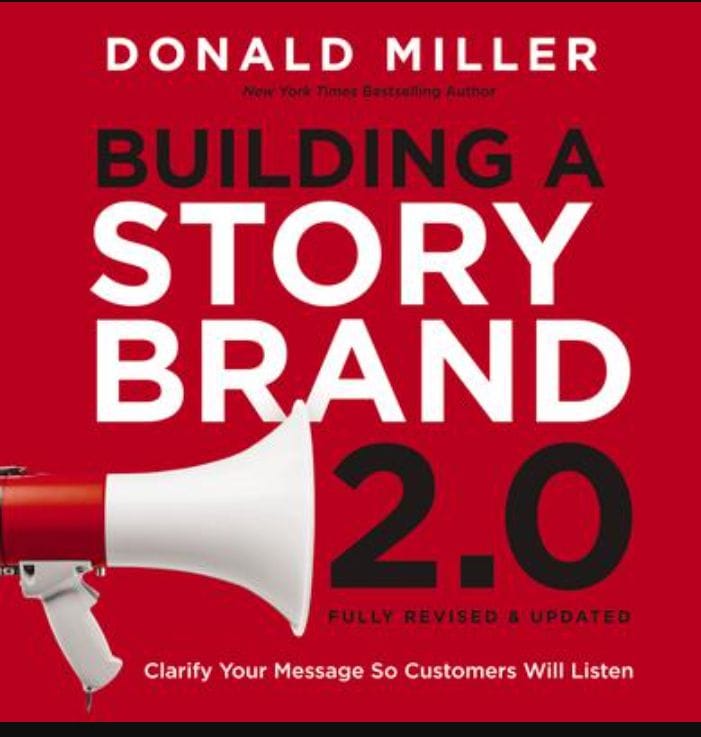
The Big Idea from Building a StoryBrand
Make the customer the hero of your message and position your business as the guide that helps them overcome a problem and reach the outcome they want.
The book’s SB7 framework follows this basic progression:
A Character
↓
Has a Problem
↓
Meets a Guide
↓
Who Gives Them a Plan
↓
Calls Them to Action
↓
Helps Them Avoid Failure
↓
Ends in Success
You are not using StoryBrand to create a dramatic story about your company.
You are using its framework to make your customer’s situation and your role in helping them easy to understand.
What Business Problem Does The StoryBrand Solve?
It takes care of: My offer may be valuable, but customers don’t immediately understand what I do, who it is for or why they should care.
This is a common problem for expertise based business owners. You know too much about your subject. So you communicate everything you know.
The customer receives information instead of clarity. StoryBrand gives you a framework for simplifying that communication. The official StoryBrand framework specifically emphasises clarity and warns that confusing customers causes them to look elsewhere.
Should I Read The StoryBrand Now?
Yes. Read it with one objective to answer:
How can I turn my positioning and differentiation into a message my best-fit customer immediately understands?
Which Parts of The StoryBrand Matter Most for this Step? Focus on these:
Section 1: Why Most Marketing is a Money Pit
Chapter 1: The Key to Being Seen, Heard, and Understood (READ)
Focus on the importance of clear communication.
Your takeaway:
If the customer has to work too hard to understand your offer, your message is failing.
Chapter 2: The Secret Weapon That Will Grow Your Business (READ)
Use this chapter to understand why clarity in communication matters commercially.
Chapter 3: The Simple SB7 Framework (ESSENTIAL)
This is the framework you will use for this step.
Understand the seven elements and how they work together.
Section 2: Build Your StoryBrand
Chapter 4: A Character (ESSENTIAL)
The customer is the character. Connect this to the Best-Fit Customer you created in Step 1.
Ask:
Who is the person this message is actually for?
Chapter 5: Has a Problem (ESSENTIAL)
Bring forward the problem you’ve already identified and validated.
Don’t invent a new problem.
Ask:
What is the customer struggling with, and what is preventing them from getting what they want?
Chapter 6: And Meets a Guide (ESSENTIAL)
This is where your expertise becomes relevant. You are not the hero. You are the guide. Your role is to demonstrate:
Empathy I understand what you’re dealing with.
and:
Authority: I have the knowledge or capability to help.
This is where your positioning and expertise support the customer’s story.
Chapter 7: Who Gives Them a Plan (ESSENTIAL)
Customers need to understand that there is a path forward. Bring forward the offer you developed in Phase 2 and ask:
What is the simple path we give the customer to move from their current situation to their desired outcome?
Don’t explain every operational detail. Give them enough clarity to understand the path.
Chapter 8: And Calls Them to Action (ESSENTIAL)
A customer should know what to do next. Your message should eventually lead to a clear action. For now, identify the primary action you want the customer to take.
Examples:
Book a consultation
Start a trial
Buy the programme
Request an assessment
Schedule a call
Download a resource
Chapter 9: That Helps Them Avoid Failure (READ)
Identify what remains at stake if the customer doesn’t solve the problem. Don’t exaggerate. Use realistic consequences.
The purpose is to make the importance of the problem clearer.
Chapter 10: And Ends in a Success (ESSENTIAL)
Define the transformation the customer wants. This should connect directly to the desired outcome established in Phase 2.
Ask:
What does the customer’s situation look like after successfully using this offer?
Chapter 11: People Want Your Brand to Participate in Their Transformation (READ)
This helps bring the framework together. Focus on the idea that your business participates in the customer’s transformation rather than making the business itself the centre of the story.
Section 3: Implementing Your Storybrand BrandScript
Chapter 12: Building a Better Website (SKIM FOR NOW)
Useful later when you apply the message to your website. But you are not building your website in Step 6.
Chapter 13: Using StoryBrand to Transform Company Culture (SKIP FOR NOW)
This is not necessary for creating the core message of an expertise-based offer.
The StoryBrand Marketing Roadmap (SKIM)
Keep this for later when you begin turning your core message into a broader marketing system.
Listen to Audiobook with Libro|Buy the Book at the Bookshop
What Should I Ignore For Now?
Do not turn Step 6 into:
A website-building exercise
A copywriting course
A social media strategy
A complete branding exercise
A sales funnel
A marketing campaign
Those come later.
Your immediate job is much simpler:
Create the message that all of those future marketing activities can be built around.
Your EVUNN Action
Build Your Core Messaging Blueprint
Bring forward everything you’ve already created in phase 3 (step 1-5). If you are using EVUNN premium, the previous steps will be populated in your toolkit.
From Step 1
Best-Fit Customer
From Step 2
Buying Situation
From Step 3
Alternative Landscape
From Step 4
Positioning Statement
From Step 5
Differentiation Strategy
Now translate those strategic decisions into the customer’s story following these steps:
1. Define Your Customer: The Character
Complete:
We help ____________________.
Be specific. Avoid things like: we help businesses. Instead say: we help newly promoted managers… or we help independent consultants who…
Your message should allow the right person to recognise themselves.
2. Define What They Want
Ask:
What does this customer want to achieve?
Complete:
They want to ____________________.
This should be a meaningful outcome.Not the product or the service or the method.
The customer wants the transformation, not your offer.
Get the rest of the action steps for this step in EVUNN Premium.
EVUNN Action Steps, Doers Community & Execution Toolkits are for paid users.
Get the Action Steps for this step, plus all Stage 1 Action Steps, access to EVUNN Community and EVUNN Execution Toolkits, with 12 months of access.
EVUNN Mindset Checkpoint
Are you making the message complicated because you want to prove your expertise?
This is a common trap especially for experts. You may feel that a simple message makes you look less sophisticated.
So you add:
More credentials
More terminology
More features
More services
More explanations
More claims
The result is a message that says a lot but communicates very little.
Remember:
Your expertise does not need to appear in every sentence.
Your expertise should make your solution valuable.
Your message should make that value easy to understand.
Optional Mindset Reading: This Is Marketing by Seth Godin
Use this only if you are struggling to narrow your message because you want to appeal to everyone.
This is not required reading for Step 6. It is a mindset checkpoint for the resistance: If I narrow my message, I’ll lose customers.
If you don’t feel this resistance, skip this checkpoint.
Your Step 6 Output
By the end of this step, you should have a CORE MESSAGING BLUEPRINT
that contains the following:
Best-Fit Customer
↓
What They Want
↓
Their Problem
↓
Your Role as Guide
↓
Your Plan
↓
Call to Action
↓
What They Want to Avoid
↓
Desired Success
↓
Your Differentiation
↓One-Sentence Core Message (once you are done with step 6).
It’s time to turn what you’ve learnt into a message that connects.
You know who you’re serving, the problem you solve, the result you create, and what makes your offer different.
Now you need to put it into words your customer actually understands and cares about.
🔓 Use the EVUNN Execution Toolkit: Core Messaging Blueprint
Don’t let your positioning get lost in complicated marketing language.
Use the EVUNN Core Messaging Blueprint to translate your customer, problem, desired outcome, positioning and differentiation into one clear message the right customer can immediately understand.
Do this before you start promoting your offer, because you may have a great offer but struggle to explain why your customer should care.
Get the Core Messaging Blueprint + every other Stage 1 Toolkit for 12 months, plus access to the EVUNN Doers Community.
₦5,500 today.
Follow the roadmap. Use the tools. Do the work.
What Should You Do Next?
You entered Step 6 with:
I know who my offer is for, where it fits and why it is different.
You leave knowing:
I can explain my offer in a way that makes the right customer recognise their problem, understand the value of my solution and know what to do next.
Your Phase 3 journey is now:
Best-Fit Customer
↓
Buying Situation
↓
Alternative Landscape
↓
Position
↓
Differentiation
↓
Core Message
Note that even a clear message won’t help if nobody notices it.
Your next challenge is to create language that makes the right customer stop and pay attention.
Next? Step 7: Create Attention Hooks
What can I say that makes the right customer stop and recognise their problem?