customer acquisition channels

Customer Acquisition Channels: How to Choose the Right Marketing Channels

PROBLEM: I understand the problem, but I don't fully understand what it's like to experience it.

To find a profitable problem to solve, you must understand what it is like to experience the problem

STEP 3: DEVELOPING EMPATHY

Step 8 — Choose Where To Reach Them

The Problem We’re Solving

“I know who my offer is for and what I want to say, but I don’t know where to find the right people or which channels I should focus on.”

You now know:

  • Who your Best-Fit Customer is

  • When they become receptive to your offer

  • What alternatives they have

  • How you want to be positioned

  • Why they should choose you

  • What your core message is

  • What hooks can get their attention

But there is still one important question:

Where will I find them?

Your customer may be on LinkedIn, Instagram, YouTube, WhatsApp, Google, professional communities, industry events, email, referrals or somewhere else.

But being where your customer is does not automatically make a channel a good acquisition channel.

A channel is only a hypothesis until you test whether you can actually use it to reach the right people and move them toward becoming customers.

So don’t ask:

“Where is my audience?”

Ask:

“Where is my audience, and where can I realistically reach and convert the right people?”


The EVUNN Mindset Shift

From “My customers are there, so I should use that channel” → “Let’s test where I can actually acquire customers.”

Your customer being present on a platform is only the first filter.

For example:

“My target customers are on LinkedIn.”

That tells you LinkedIn is worth considering.

It does not tell you:

  • Whether they pay attention to people like you

  • Whether they have this problem there

  • Whether they trust experts they discover there

  • Whether you can consistently reach them

  • Whether they will move from attention to conversation

  • Whether conversations will become sales

The channel must therefore be treated as a hypothesis.

Identify → Shortlist → Test → Compare → Focus

That is the EVUNN approach.


📖 Recommended Book

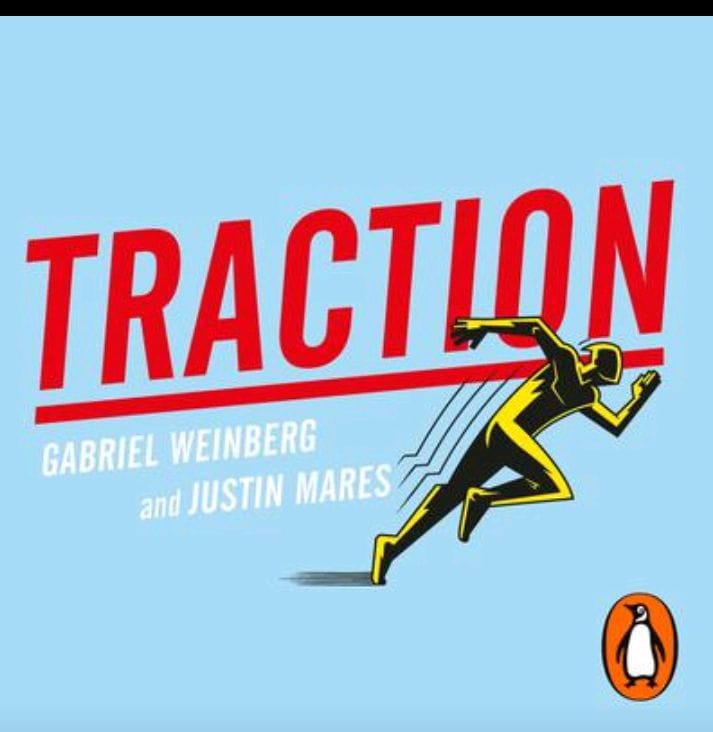
Traction

Authors: Gabriel Weinberg & Justin Mares

Role in Step 8: Supporting Book

Status: Optional / Read Selectively

This is not a required book for completing Step 8.

The purpose of including it is to help you understand how to think systematically about customer-acquisition channels rather than assuming you already know which one will work.

The Big Idea

Don’t assume you know which acquisition channel will work. Identify promising channels, test them systematically and concentrate your effort on the channels that demonstrate traction.

This fits Step 8 because EVUNN is not asking you to become a marketing expert.

You are learning how to make a good channel decision and then test it.

What Business Problem Does This Book Solve?

It helps answer:

“How do I decide which customer-acquisition channels are worth testing instead of spreading myself across every available channel?”

For an expertise-based business, that is particularly useful because you often have limited:

  • Time

  • Money

  • People

  • Content capacity

  • Marketing experience

You don’t need to be everywhere.

You need to find where your effort has the greatest chance of producing the right customers.

Should I Read It Now?

OPTIONAL

You do not need to read the whole book before completing this step.

Your primary objective is to execute the EVUNN channel-selection process.

Read it if you want to understand the thinking behind testing and evaluating acquisition channels more deeply.


Your EVUNN Action

Build Your Customer Acquisition Channel Blueprint

You are not going to choose a channel immediately.

You will first identify your options, shortlist the strongest candidates and then test them.


1. Bring Forward Your Best-Fit Customer

Start with the customer you defined in Step 1.

Ask:

Who exactly are we trying to reach?

Write:

Best-Fit Customer


Then bring forward the Buying Situation from Step 2.

When does this person become actively receptive to solving the problem?


This matters because the same person may behave differently depending on the situation.


2. Identify Where They Go For Answers

When this customer experiences the problem, where do they go?

Consider:

Search

Do they search Google or YouTube?

Social Platforms

Which platforms do they actively use?

Professional Networks

Do they rely on LinkedIn, professional associations or industry networks?

Communities

Do they participate in WhatsApp groups, online communities or professional forums?

Events

Do they attend conferences, workshops, seminars or networking events?

Experts

Which experts, authors or thought leaders do they follow?

Referrals

Do they ask colleagues, friends or professional contacts for recommendations?

Direct Access

Can you identify and contact them directly?

Don’t assume.

Use what you already learned about the customer.


3. Identify Your Potential Channels

Create a longlist of realistic channels.

For example:

Search

  • Google

  • YouTube Search

Social

  • LinkedIn

  • Instagram

  • Facebook

  • TikTok

  • X

Relationship

  • Referrals

  • Partnerships

  • Professional networks

  • Industry associations

Direct

  • Email outreach

  • LinkedIn outreach

  • Direct introductions

Events

  • Workshops

  • Webinars

  • Conferences

  • Speaking

Communities

  • WhatsApp groups

  • Professional communities

  • Industry groups

Owned Channels

  • Website

  • Email list

  • Blog

  • Podcast

  • YouTube

You are creating possibilities.

You are not choosing yet.


4. Evaluate Channel Fit

Now ask whether each channel actually fits your customer and your business.

For each potential channel, evaluate:

Customer Presence

Are your Best-Fit Customers actually there?

Problem Activity

Do they discuss, search for or seek help with the problem there?

Reachability

Can you realistically get their attention?

Trust

Can you establish enough credibility for them to consider your offer?

Buying Relevance

Does the channel influence their buying journey?

Conversion Potential

Can activity on the channel realistically lead to:

Conversation → Opportunity → Sale?

Cost

How much money will it require?

Effort

How much time and work will it require?

Execution Fit

Can you realistically use the channel consistently?


5. Shortlist Your Top Three

Do not test every possible channel.

That creates unnecessary complexity.

Based on your evaluation, select:

Channel 1


Channel 2


Channel 3


These are your most promising acquisition hypotheses.

The fact that your customers are present there is important.

But you still haven’t proved that the channel will work for you.


6. Define Your Channel Hypothesis

For each shortlisted channel, complete:

We believe our Best-Fit Customer can be reached through __________ because __________.

Then:

We believe they will respond to __________.

And:

We expect this channel to produce __________.

For example:

We believe newly promoted managers can be reached through LinkedIn because they actively consume professional leadership content there.

We believe they will respond to practical content about their first 90 days as a manager.

We expect this to generate qualified conversations.

You now have a testable channel hypothesis.


7. Decide What You Will Test

Don’t simply “try LinkedIn.”

Define the actual acquisition mechanism.

For example:

LinkedIn

Customer: Newly promoted managers

Message: First-90-days leadership problems

Activity: Situation-based educational posts

Hook: Problem-based hooks from Step 7

Call to Action: Leadership assessment

Desired behaviour: Qualified conversation


Referrals

Customer: Business owners

Source: Existing professional network

Activity: Structured referral request

Trust mechanism: Previous experience/results

Desired behaviour: Introduction to a qualified prospect


Workshops

Customer: HR professionals / newly promoted managers

Activity: Practical workshop

Trust mechanism: Demonstration of expertise

Desired behaviour: Consultation or programme enquiry

The channel itself isn’t the strategy.

The mechanism is the strategy.


8. Design a Small Channel Experiment

You don’t need to launch a massive marketing campaign.

Design the smallest experiment that can give you useful evidence.

For each shortlisted channel, define:

Channel


Target Customer


Message


Activity


Time Period


Call to Action


Expected Behaviour


Success Signal


9. Test Customer Behaviour

This is where you move beyond assumptions.

Don’t measure only:

  • Followers

  • Likes

  • Views

  • Impressions

Those can indicate attention, but they don’t necessarily indicate customer acquisition.

Look for movement through the customer journey:

Attention

Engagement

Profile / Website Visit

Enquiry

Conversation

Qualified Opportunity

Purchase

The strongest evidence is behaviour that moves the customer closer to buying.

Measure movement toward the customer—not just activity on the platform.


10. Compare The Results

After testing your shortlisted channels, compare the evidence.

Ask:

Which channel reached the right people?

Not simply the most people.

Which channel generated meaningful engagement?

Not just passive views.

Which channel generated conversations?

Which channel generated qualified opportunities?

Which channel generated customers?

How much effort did each channel require?

How much did each channel cost?

This gives you a more useful comparison than simply asking:

“Which channel got the most engagement?”


11. Choose Your Primary Acquisition Channel

Now make the decision.

Choose the channel that shows the strongest combination of:

Customer Fit

  •  

Commercial Potential

  •  

Evidence

  •  

Execution Feasibility

Your primary channel is not necessarily the channel with the largest audience.

It is the channel where you have the strongest evidence that your effort can produce the right customers.


12. Choose A Supporting Channel

Once you have selected your primary channel, choose one supporting channel if appropriate.

Its role is to strengthen the primary channel.

For example:

Primary: LinkedIn
Supporting: Email

or:

Primary: Referrals
Supporting: LinkedIn

or:

Primary: Workshops
Supporting: WhatsApp

Don’t build five channels simply because you can.

One strong channel is better than five neglected channels.


13. Create Your 30-Day Channel Plan

Now turn the decision into execution.

Define:

Primary Channel


Target Customer


Core Message


Main Hook Themes


Customer Acquisition Activity


Call to Action


Weekly Activity


Metric That Matters


30-Day Goal


You now have a practical starting point rather than a vague instruction to “do marketing.”


14. Keep Testing

Choosing your primary channel does not mean you have discovered the perfect channel forever.

Markets change.

Customers change.

Your offer changes.

Your message changes.

Your capabilities change.

So continue to learn.

If the channel produces strong results:

Focus and improve.

If it produces weak results:

Diagnose and adjust.

If the evidence remains poor:

Test another channel.

The goal is not to find a channel once and never change it.

The goal is to develop a repeatable customer-acquisition system.


🧠 EVUNN Mindset Checkpoint

“If I’m not everywhere, I’m missing customers.”

This is a common resistance for entrepreneurs.

You may feel that you need to:

  • Post on every social platform

  • Start a YouTube channel

  • Build an email list

  • Run ads

  • Write a blog

  • Attend events

  • Create a podcast

  • Do everything simultaneously

But more channels do not automatically mean more customers.

They often mean:

More work → less consistency → weaker execution.

Your objective is not to build a presence everywhere.

Your objective is to find a repeatable path to your Best-Fit Customer.

Optional Mindset Reading

Essentialism — Greg McKeown

Use this only if you are struggling to focus because you believe you need to pursue multiple channels simultaneously.

Big Idea

Focus your limited time and energy on the activities that matter most instead of trying to do everything.

This is an optional mindset checkpoint, not required reading for completing Step 8.


🔓 EVUNN Execution Toolkit

Distribution Channel Matrix

Don’t choose your acquisition channel simply because your audience is there.

Use the EVUNN Distribution Channel Matrix to identify potential channels, evaluate how well each fits your customer and buying situation, shortlist the strongest options, compare your test results and select the channel with the greatest potential for reaching and acquiring the right customers.

→ Unlock The Toolkit

One Payment. All Stage 1 Toolkits. Yours For Life.

No monthly subscription. No recurring fees. Just the tools you need to execute.

→ Unlock All Stage 1 Execution Toolkits


Your Step 8 Output

By the end of this step, you should have a:

CUSTOMER ACQUISITION CHANNEL BLUEPRINT

Containing:

Best-Fit Customer

Buying Situation

Potential Channels

Channel Fit Assessment

Top 2–3 Channels

Channel Hypotheses

Channel Experiments

Evidence & Results

Primary Acquisition Channel

Supporting Channel

30-Day Channel Plan


What You Should Now Know

You entered Step 8 thinking:

“I don’t know where to find my customers.”

You leave knowing:

“I know where my Best-Fit Customer is likely to be, which channels are worth testing, what I need to test, what evidence matters and where I should focus my acquisition efforts.”

You have now completed the full Phase 3 journey:

Best-Fit Customer

Buying Situation

Alternative Landscape

Position

Differentiation

Core Message

Attention Hooks

Customer Acquisition Channel

You have moved from:

“I have an offer.”

to:

“I know who it is for, why it is different, what to say to them, how to get their attention and where to find them.”

That gives you your:

Market Positioning Blueprint

But there is still a gap.

Knowing where your customers are does not mean they will automatically become customers.

Now you need to turn attention into:

Conversations → Opportunities → Customers.

NEXT PHASE — GET YOUR FIRST CUSTOMERS

“How do I consistently turn the attention I’m generating into real customers?”

To understand their experience, use Book 3. Title: Practical Empathy

Practical empathy


Author: Indi Young

Time Investment: 5+ hours (Audiobook) 

Listen to Audiobook with Audible free trial |Buy at the Bookshop


The Big Idea from Practical Empathy 

Empathy helps you move beyond assumptions and develop a deeper understanding of how people experience problems, situations, what they do, and what matters to them.

For an expert, this is a critical shift. Your expertise tells you what you think the problem is. Empathy helps you understand the problem from their perspective.


What Does this Book Help you Achieve?

Practical Empathy helps you:

  • Listen without immediately interpreting

  • Understand people’s experiences more deeply

  • Separate what people actually say from your assumptions

  • Make sense of what you hear

  • Identify patterns across people’s experiences

  • Use those insights to improve what you create

The goal isn’t to become better at selling.

It’s to become better at understanding.


Should I Read it Now?

YES.

You’ve already explored:

Step 1: What problems might exist?

Step 2: Why might people want to solve them?

Now you need to understand: What is this experience actually like for the person living through it?


Which Chapters Matter Most for me Now?

Chapter 2: Empathy Brings Balance (Essential)

Understand what empathy actually means and why it matters when making decisions about customers.

Chapter 3: Put Empathy to Work (Essential)

Learn how empathy can become part of how you investigate and understand problems.

Chapter 4: A New Way to Listen (Essential)

This is one of the most important chapters for this stage.

Learn to listen to someone’s experience without immediately jumping to solutions, advice or conclusions.

Chapter 5: Make Sense of What You Heard (Essential)

Find out how to process and deepen your understanding of what people tell you.

Chapter 6: Apply Empathy to What You Create (Essential)

Understand how patterns in people’s experiences can influence what you eventually create.

Chapter 1: Business Is Out of Balance (Read this chapter for context only)

It explains why relying only on numbers and analytical thinking can leave important parts of the customer experience invisible.

Skip Chapters 7–9 for now

They focus more heavily on applying empathy within workplaces and organizations.

Listen to Audiobook with Audible free trial | Buy at the Bookshop


Your Step 3 Outcome

By the end of this step, you should have:

  • A deeper understanding of the experience behind each problem  of  the 3 problems generated in step 1

  • A clearer distinction between what you know and what you’re assuming

  • Initial insight into what people think, feel and do

  • A better understanding of their frustrations and desired outcomes

  • A list of questions you still need to investigate with real people

Notice what hasn’t happened yet:

You haven’t validated the problems yet. That’s intentional.

You’ve developed empathy, but empathy based on your own reflection is still not enough.

The next step takes you deeper.


🔒 Ready to Put Empathy into Practice?

Reading about empathy is not the same as practising it.

The EVUNN Customer Empathy Toolkit gives you a structured way to examine the problem from the customer’s perspective and separate evidence from assumptions.


One Payment. For All EVUNN Stage 1 toolkits.

What Should I Learn Next?

You now have a better understanding of the customer’s experience.

But there’s another question:

What are they actually trying to accomplish?

A customer may describe a problem, but the problem itself isn’t always the real objective.

They may be trying to make progress toward something bigger.

Step 4: Jobs-to-Be-Done

You’ll move from: Understanding their experience to understanding the progress they’re actually trying to make.

Leave a Reply

Your email address will not be published. Required fields are marked *