Competing against luck

Jobs-to-Be-Done: Understand What Customers Really Need | EVUNN

PROBLEM: I understand my customer's experience, but I don't know what they are really trying to accomplish.

To create a solution people want to pay for, you must know what the people with the problen want to accomplish

Step 4: Jobs-To-Be-Done

Customers don’t always describe the real job  or thing they need done.

They may say: I need more clients. But what they may really be trying to accomplish is: I need a reliable way to attract clients without constantly chasing them.

Your job is to look beyond the surface problem and understand the progress they are trying to make.


The EVUNN Mindset Shift


From What They Say → What They’re Trying to Accomplish

Don’t ask: What product or service do they want? Ask: What are they trying to accomplish in their situation?

Your expertise should serve the job they need to get done, not the other way around.


To understand what they are trying to accomplish, use Book 4. Title: Competing Against Luck

Competing against luck


Author: Clayton M. Christensen, Taddy Hall, Karen Dillon & David S. Duncan

Time Investment: 7+ hours (Audiobook) 

Listen to Audiobook on Libro |Buy at the Bookshop


The Big Idea from Competing Against Luck

People don’t simply buy products or services. They hire solutions to help them make progress in a particular situation.

Your customer isn’t necessarily looking for your expertise.

They’re trying to get something done, solve something, or move from one situation to another.

The goal is to uncover the job behind the problem.


What Does This Book Help You Understand?

It helps you identify:

  • The situation that creates the need for the solutiin you plan to provide

  • The struggle the customer is experiencing

  • The progress they want to make

  • The job they are trying to accomplish

  • What they currently use instead

  • Why their current solution may not be enough

  • What successful progress would look like

This is important because the problem is not always the job.


Should I Read it Now?

YES. Right now, you’ve already explored:

Step 1: What problems might exist?

Step 2: Why might someone want to solve them?

Step 3: What is it like to experience them?

Now we go deeper:

“What are they actually trying to accomplish?”


Which Chapters Matter Most for this Stage of my Journey?


Chapter 1: The Milk Shake Dilemma (Essential)

Understand the core Jobs-to-Be-Done idea through the book’s central example.

Chapter 2: Progress, Not Products (Essential)

Learn to focus on the progress customers seek, rather than the product or service they appear to want.

Chapter 3: Jobs in the Wild (Essential)

See how jobs emerge in real-life situations.

Chapter 4: Job Hunting (Essential)

Learn how to identify the job customers are trying to get done.

Chapter 5: How to Hear What Your Customers Don’t Say (Essential)

Discover how to ook beyond surface-level statements to uncover the deeper job.

Optional: Chapter 6: Building Your Résumé ( Read only if you want to go deeper)

Useful for consolidating the Jobs Theory concepts.

Opyional. Chapter 10  Read only if you want to explore the theory further.

Skip for now: Chapters 7–9 focus more on building and managing jobs-focused organizations.

Listen to Audiobook on Libro |Buy at the Bookshop


Your Step 4 Outcome

By the end of this step, you should have:

  • 3 customer job hypotheses

  • The situation triggering each job

  • The struggle behind each

  • The progress the customer wants

  • The underlying job they are trying to accomplish

  • Their current solutions or workarounds

  • Why those alternatives may not be enough

  • A picture of what successful progress looks like

These are still hypotheses, not validated jobs.

You’ve now developed a much clearer picture of what the customer is trying to accomplish.

The next step is to find out whether real people actually experience the problem this way.


🔒 Read to Map The Job?

Understanding the Jobs-to-Be-Done framework is only the beginning.

The EVUNN Jobs-to-Be-Done Canvas helps you work through:

Situation → Struggle → Progress → Job → Alternatives → Obstacles → Desired Outcome


One Payment. For All EVUNN Stage 1 toolkits.

What Should I Learn Next?

You now have hypotheses about:

The problem → the motivation → the experience → the job.

But there’s one major problem:


You are still relying on your own assumptions.

It’s time to talk to real people.


Step 5: Custiner Discovery

The question now changes from: What do I think my customer needs to: what can I learn from real people that proves, or disproves, my assumptions?

That’s where you move from assumption to evidence.


Practical empathy

Customer Empathy: Understand Your Customers Better | EVUNN

PROBLEM: I understand the problem, but I don't fully understand what it's like to experience it.

To find a profitable problem to solve, you must understand what it is like to experience the problem

STEP 3: DEVELOPING EMPATHY

You can identify a problem and understand why someone might want to solve it.

But there’s still a danger:

You may be interpreting their problem through your own expertise.

Before deciding what solution to build, you need to learn how to listen, understand and see the situation from their perspective.


The EVUNN Mindset Shift

From What I Think → What They Experience

Don’t assume you already know what your customer needs.

Instead ask: What can I learn by listening to how they actually experience this problem?

Empathy isn’t guessing what people feel. It’s developing a better understanding of their experience.


To understand their experience, use Book 3. Title: Practical Empathy

Practical empathy


Author: Indi Young

Time Investment: 5+ hours (Audiobook) 

Listen to Audiobook with Audible free trial |Buy at the Bookshop


The Big Idea from Practical Empathy 

Empathy helps you move beyond assumptions and develop a deeper understanding of how people experience problems, situations, what they do, and what matters to them.

For an expert, this is a critical shift. Your expertise tells you what you think the problem is. Empathy helps you understand the problem from their perspective.


What Does this Book Help you Achieve?

Practical Empathy helps you:

  • Listen without immediately interpreting

  • Understand people’s experiences more deeply

  • Separate what people actually say from your assumptions

  • Make sense of what you hear

  • Identify patterns across people’s experiences

  • Use those insights to improve what you create

The goal isn’t to become better at selling.

It’s to become better at understanding.


Should I Read it Now?

YES.

You’ve already explored:

Step 1: What problems might exist?

Step 2: Why might people want to solve them?

Now you need to understand: What is this experience actually like for the person living through it?


Which Chapters Matter Most for me Now?

Chapter 2: Empathy Brings Balance (Essential)

Understand what empathy actually means and why it matters when making decisions about customers.

Chapter 3: Put Empathy to Work (Essential)

Learn how empathy can become part of how you investigate and understand problems.

Chapter 4: A New Way to Listen (Essential)

This is one of the most important chapters for this stage.

Learn to listen to someone’s experience without immediately jumping to solutions, advice or conclusions.

Chapter 5: Make Sense of What You Heard (Essential)

Find out how to process and deepen your understanding of what people tell you.

Chapter 6: Apply Empathy to What You Create (Essential)

Understand how patterns in people’s experiences can influence what you eventually create.

Chapter 1: Business Is Out of Balance (Read this chapter for context only)

It explains why relying only on numbers and analytical thinking can leave important parts of the customer experience invisible.

Skip Chapters 7–9 for now

They focus more heavily on applying empathy within workplaces and organizations.

Listen to Audiobook with Audible free trial | Buy at the Bookshop


Your Step 3 Outcome

By the end of this step, you should have:

  • A deeper understanding of the experience behind each problem  of  the 3 problems generated in step 1

  • A clearer distinction between what you know and what you’re assuming

  • Initial insight into what people think, feel and do

  • A better understanding of their frustrations and desired outcomes

  • A list of questions you still need to investigate with real people

Notice what hasn’t happened yet:

You haven’t validated the problems yet. That’s intentional.

You’ve developed empathy, but empathy based on your own reflection is still not enough.

The next step takes you deeper.


🔒 Ready to Put Empathy into Practice?

Reading about empathy is not the same as practising it.

The EVUNN Customer Empathy Toolkit gives you a structured way to examine the problem from the customer’s perspective and separate evidence from assumptions.


One Payment. For All EVUNN Stage 1 toolkits.

What Should I Learn Next?

You now have a better understanding of the customer’s experience.

But there’s another question:

What are they actually trying to accomplish?

A customer may describe a problem, but the problem itself isn’t always the real objective.

They may be trying to make progress toward something bigger.

Step 4: Jobs-to-Be-Done

You’ll move from: Understanding their experience to understanding the progress they’re actually trying to make.

Demand side sales

How to Understand Customer Needs Before Creating an Offer | EVUNN

PROBLEM: I know my audience has a problem, but I don't know what makes them care enough to pay for a solution

To make people pay you to solve their problem, you must understand customer needs and why they act

STEP 2: Understanding Human Behaviour & Motivation

In Step 1, you identified potential problems your expertise could help solve.

But a problem existing doesn’t automatically make it a business opportunity. People live with problems every day without doing anything about them.

So now we need to understand:

What makes someone want progress badly enough to act?


Your job isn’t to push your expertise onto the customer.

It’s to understand the struggle that creates demand.


The EVUNN Mindset Shift 

From What I Offer → Why They Act

Don’t ask: How can I convince them to buy?

Ask: What is happening in their world that makes them seek a solution?

Understand the struggle before you design the solution.


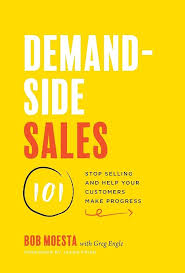
To find the need, use Book 2. Title: Demand Side Sales

Demand side sales


Author: Bob Moesta & Greg Engle 

Buy on Bookshop.org


The Big Idea from the book:

Customers don’t simply buy products or services.

They seek solutions that help them make progress.

You see: I offer consulting.

Your customer sees: I need something to change.

The goal is to understand what is driving that desire for change.


What does this Book Help you Understand?


Demand Side Sales helps you uncover:

  • Why people act, or don’t act
  • What creates urgency
  • What progress they want
  • What they’ve already tried
  • What triggers them to seek a solution

This helps you distinguish between a problem that exists and a problem people are motivated to solve.


Should you Read this book now?

Yes. You identified potential problems in Step 1.

Now look at them from the customer’s side. Right now, your job is simply to become better at seeing valuable problems.

As you read, keep asking:

“Why would this person actually do something about this problem?”

Which Chapters in this Book Matter to you most right Now?


Focus on these chapter only for now:

Chapter 1: Two Perspectives on the World

Essential: Shift from supply-side thinking to demand-side thinking.

Chapter 2: Frameworks for Demand-Side Selling

Essential: Learn how to identify what is happening on the customer’s side.

Chapter 3: Solving the Customer’s Struggle

Essential: Understand the struggle behind the problem.

Chapter 4: Seeing the World Through the Customer’s Eyes

Essential: Prepare to understand the customer’s experience.

Chapter 7: Moving From Pushing Products to Creating Pull for Progress

Recommended: Understand how customer progress creates demand.

Skim or skip these chapters for now

Chapters 5–6, Chapter 10 & 11 if applicable to your edition, and supplementary material. They are less relevant to this stage.

Supporting Book: Influence by Robert Cialdini

Influence

Author:Robert Cialdini

Listen on: Libro.fm | Get Book at the Bookshop

Demand-Side Sales helps you understand why people seek change.

Influence adds another layer:

What influences whether people act, delay, choose or reject a solution?

You are not reading it to learn manipulation or sales tactics.

You’re learning to recognize the forces that can shape behaviour and decisions.


Chapters to focus on

Chapter 3: Social Proof
How other people’s behaviour can influence decisions.

Chapter 4: Authority
How perceived expertise can influence trust.

Chapter 6: Commitment & Consistency
How previous choices can shape future behaviour.

OPTIONAL CHAPTERS FOR THIS STAGE (GO DEEPER IF YOU WANT)

Chapters 1, 2, 5, 7 and 8 provide additional insight into behavioural influences.

Listen on: Libro.fm | Get Book at the Bookshop

YOUR STEP 2 OUTCOME

By the end of this step (going through the chapters + toolkit), you should have:

By the end of this step, you should have:

  • 3 potential problems you could build a profitable business around, worth investigating further
  • Understand the struggle behind each
  • Know the progress the person wants
  • Understand possible triggers for action
  • Know the consequences of the person doing nothing

At this point, you haven’t validated the problems yet.

You’ve simply started understanding what creates demand around them.

🔒 READY TO DO THE WORK?

Knowing the questions is one thing.

Working through them systematically is another.

The EVUNN Customer Motivation Toolkit helps you uncover:

Struggle → Motivation → Desired Progress → Trigger → Consequence → Existing Alternatives

Unlock the toolkit and complete Step 2 →


One subscription. All EVUNN toolkits

That takes us to step 3.

You now understand the struggle behind the problem.

But you’re still looking at the customer from the outside.

The next question is: can I understand this problem from the customer’s perspective, not just my own?

what's your problem

How to monetize your expertise | EVUNN

PROBLEM: I have expertise, but I don't know how to turn it into a business.


First find a profitable idea for your expertise, you need to start by finding a problem worth solving

STEP 1: Finding a Problem Worth Solving

You already know something valuable.

But expertise alone doesn’t tell you what business to build around it.

Don’t start with:

What can I sell?

Start with:

What valuable problem can my expertise help someone solve?

That’s the first step from expertise to business.

The EVUNN Mindset Shift

Before you begin, make three shifts:

1. Expertise → Problems
Your expertise is the raw material, not the product. Ask: What problems am I uniquely equipped to solve?

2. Assumptions → Curiosity
Your ideas about what people need are hypotheses, not facts. Stay curious and don’t fall in love with your first idea.

3. What I Know → What They Need
You know your expertise. They know their problem. Your job is to find where the two intersect.


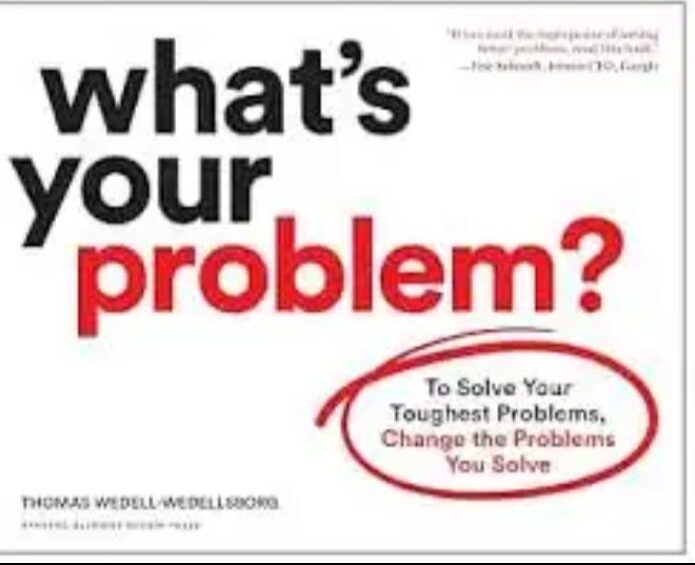
To find the problem, use Book 1. Title: What's Your Problem?

what's your problem


Author: Thomas Wedell-Wedellsborg

Time Investment: 5+ hours (Audiobook) 

Listen on Libro.fm | Buy on Bookshop.org


The Big Idea from the book:

The Big Idea

The way you define a problem determines the solutions you can see.

Professionals often start with the problem exactly as it appears on the surface. But the first problem you hear may not be the real problem.

The point is to learn to look beyond the first description of the problem.

What Business Problem does this book help Solve?

This book helps you avoid one of the most expensive mistakes an expert can make:

Building a solution before understanding the problem people want to pay you to solve for them.

Your expertise may allow you to solve dozens of problems.

But you don’t have the time or resources to build businesses around all of them.

You first need to discover:

  • What problems people actually experience
  • How they currently describe those problems
  • Whether the problem may be a symptom of something deeper
  • How the problem could be framed differently
  • Where your expertise could create meaningful value

This is problem discovery, not offer creation.

Should I Read this book Now?


 YES.

Right now, your job is simply to become better at seeing valuable problems.

As you read, keep asking:

What problems might I be overlooking because I am looking at the world through the lens of my expertise?

Which Chapters in this Book Matter to you most right Now?


You don’t need to consume everything in this book now. Pay particular attention to these chapters.

Your Core Reading: Introduction + Chapters 1–5 + Chapter 8
If You Have More Time: Chapters 6, 7 and 9
Skip for Now: Chapter 11 and the supplementary material

Your objective: Learn to question the first version of a problem, examine it from different angles, and begin seeing it from the perspective of the person experiencing it.


Listen on Libro.fm | Buy on Bookshop.org

YOUR STEP 1 OUTCOME

By the end of this step (going through the chapters + toolkit), you should have:

  • 10 potential problems your expertise could help solve
  • A clear idea of who experiences each problem

  • The situation and outcome behind each problem

  • An initial understanding of why each problem may matter

  • A hypothesis about how your expertise could help

You’ve moved from: I have expertise.

to: I can see potential problems my expertise could help solve.

These are hypotheses, not validated opportunities yet.

Ready to turn your expertise into problem opportunities?

Use the EVUNN Finding Problems Worth Solving Toolkit to work through the questions, organize your ideas, and turn your expertise into a structured list of potential problems.


Lorem ipsum dolor sit amet, consectetur adipiscing elit. Ut elit tellus, luctus nec ullamcorper mattis, pulvinar dapibus leo.

That takes us to step 2.

The question we are now trying to answer is:

What is actually driving the customer’s decision to seek a solution?

Once you understand that, you can begin looking at the problem from the customer’s side, not yours so you can create a solution they want to pay for.