Yes. I understand the structure you want now. Step 1 of Phase 3 should follow the same architecture as the Phase 2 pages, with only the agreed addition of the optional EVUNN Mindset Checkpoint.
So I would rewrite Step 1 like this:
Step 1 — Define Your Best-Fit Customer
The Problem We’re Solving
“I have an offer that can solve a real problem, but I don’t know exactly who I should build and market it for.”
You have already validated the problem and built an offer around it.
But your offer may be useful to several different groups.
You may be thinking:
“My offer is for professionals.”
“My offer is for entrepreneurs.”
“My offer is for coaches.”
“My offer is for small business owners.”
These descriptions are too broad to guide your positioning.
Your job now is to identify the customer who has the strongest combination of need, motivation, value, buying ability and fit with your offer.
You are not trying to decide who you can help.
You are deciding:
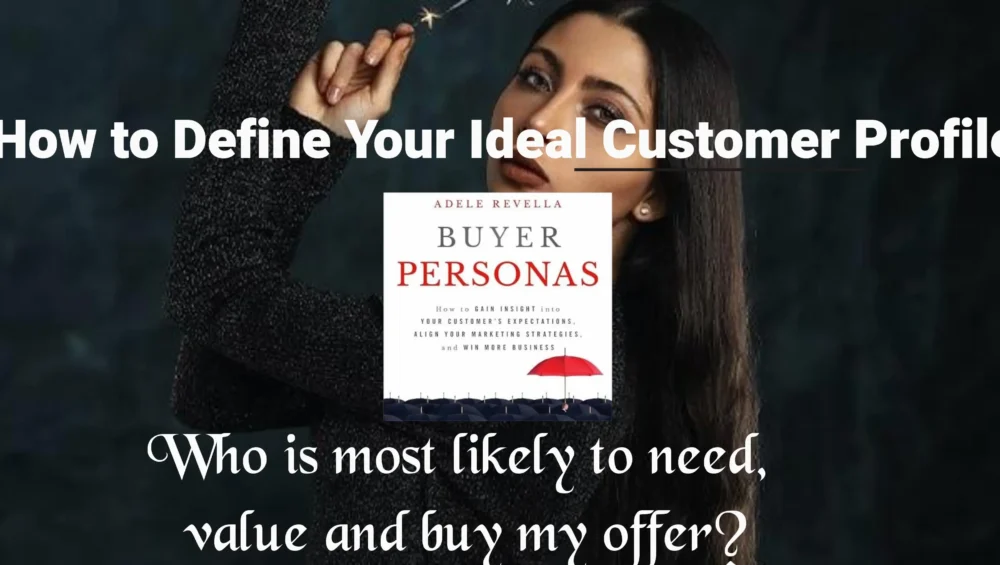
“Who is most likely to need, value and buy this particular offer?”
The EVUNN Mindset Shift
From “Who could use my offer?” → “Who is most likely to buy it?”
Experts often resist narrowing their audience.
They think:
“But I can help many different people.”
That’s true.
You aren’t permanently excluding everyone else.
You’re deciding who gets your primary attention for this offer.
A clear customer makes it easier to:
Position your offer
Explain its value
Create relevant messaging
Identify alternatives
Choose marketing channels
Recognize good prospects
Build a repeatable acquisition system
Clarity creates relevance.
📖 Book — Buyer Persona
Buyer Persona
Author: Adele Revella
The Big Idea
Don’t invent a customer profile. Understand the buying decisions real customers make and the insights that drive those decisions.
Traditional customer personas often focus on demographics, interests and personality.
Revella’s approach focuses much more on understanding how buyers actually make decisions.
For EVUNN, this means you’re not creating a fictional customer avatar.
You’re trying to understand:
Who is most likely to buy this offer, what drives their decision, and what makes them choose one solution over another?
What Business Problem Does This Book Solve?
This book helps solve:
“I know who could benefit from my offer, but I don’t know which customers are most likely to actually buy it.”
This matters because the person who experiences the problem isn’t automatically the person who will buy the solution.
You need to understand:
Who experiences the problem most strongly
Who wants the outcome most
Who has a reason to act
Who can realistically buy
What they value in a solution
What influences their decision
Should I Read It Now?
YES — but read selectively.
Don’t read this book simply to learn how to create a traditional customer avatar.
Read it to learn how to identify buying insights that help you determine your best-fit customer.
As you read, keep asking:
“What does this teach me about identifying the people most likely to buy my offer?”
Which Chapters Matter Most?
You don’t need to read the entire book for this step.
READ FIRST
Chapter 1 — Understand Buying Decisions and the People Who Make Them
Learn why traditional demographics and psychographics aren’t enough to understand buyers.
Focus on the difference between describing a customer and understanding their buying decision.
Chapter 2 — Focus on the Insights That Guide Marketing Decisions
High priority.
Pay particular attention to the 5 Rings of Buying Insight.
These give you a stronger way to think about the information that actually matters when identifying a buyer.
Chapter 3 — Decide How You Will Discover Buyer Persona Insights
Learn how interviews and other research methods can uncover useful buying evidence.
READ SELECTIVELY
Chapter 5 — Conduct Probing Buyer Interviews
Use this if you need additional customer conversations.
Chapter 6 — Mine Your Interviews for Buying Insights
Use this if you have interviews that need to be analysed.
Chapter 7 — Determine How Many Buyer Personas You Need
Use this when you need to determine whether your offer should focus on one customer group or several.
What Should I Skip For Now?
You don’t need to read the entire book before completing this step.
Skip Chapter 4 for now
Unless you need help recruiting people for buyer interviews.
Skip most of Chapters 8–11 for now
These chapters move into:
Those concepts become more useful later.
Your current question is simply:
Who is the best-fit customer for this offer?
Don’t let later marketing questions distract you from answering it.
📖 Supporting Book — This Is Marketing
Author: Seth Godin
The Big Idea
Don’t try to serve everyone. Identify a specific group of people you can serve exceptionally well, understand what they want, and build your offer and message around them.
This book complements Buyer Persona by helping you move from understanding your potential customers to deliberately choosing the audience you want to focus on.
Why This Book Is Here
Buyer Persona helps you understand the people who experience the problem.
This Is Marketing helps you answer the next strategic question:
“Of all the people I could serve, who should I deliberately choose to serve first?”
This is where you begin to narrow your market and identify your smallest viable market.
What To Read
Chapter Four — The Smallest Viable Market
ESSENTIAL
This is the most important chapter for Step 1.
Learn why starting with a specific, focused group can be more powerful than trying to appeal to everyone.
Ask:
Who is the smallest group of people I could serve exceptionally well with this offer?
Chapter Eight — More of the Who: Seeking the Smallest Viable Market
ESSENTIAL
Go deeper into identifying the people you are choosing to serve.
Use this chapter to refine the audience you identified through your Buyer Persona work.
Ask:
Who specifically is most likely to value the transformation my offer provides?
Chapter Nine — People Like Us Do Things Like This
READ
Use this chapter to understand the importance of shared identity, beliefs and behaviour within a market.
Ask:
What does my chosen audience believe, value or identify with?
This can help you move beyond demographic descriptions and understand the worldview of the people you want to serve.
Chapter Fourteen — Treat Different People Differently
READ
This reinforces the importance of not treating an entire market as though everyone has identical needs, motivations or expectations.
Use it to think about whether your current audience definition is still too broad.
Chapter Fifteen — Reaching the Right People
SKIM
This will become more useful later when you work on customer acquisition and distribution.
For Step 1, focus only on the principle of reaching the right audience rather than trying to reach everyone.
What You Can Skip For Now
You do not need to read the entire book for this step.
For now, you can skip or save these sections for later:
Chapters 1–3
Chapters 5–7
Chapters 10–13
Chapters 16–23
They contain valuable marketing ideas, but they are not necessary for completing the Best-Fit Customer and Smallest Viable Audience work in Step 1.
You can return to them when you reach the marketing and customer-acquisition stages.
Your EVUNN Takeaway
After reading the relevant chapters, you should be able to answer:
“Who specifically am I choosing to build this offer for?”
Not:
“Who could possibly use it?”
But:
“Who is most likely to need it, value it and act on it?”
Your goal:
Move from:
Potential Market
→ Best-Fit Customer
→ Smallest Viable Audience
→ Focused Market
This gives you a deliberate audience to carry forward into Step 2: Define the Customer’s Buying Situation.
Your EVUNN Action
Build Your Best-Fit Customer Profile
Return to your Validated Offer Blueprint from Phase 2.
You already know:
The problem
↓
Who experienced it
↓
The situation
↓
The desired outcome
↓
The solution they valued
↓
What you learned during validation
Now use that evidence to identify the strongest customer group.
1. Identify Your Potential Customer Groups
List the different groups that could reasonably benefit from your offer.
Don’t choose yet.
First identify the realistic possibilities.
2. Compare Problem Intensity
Ask:
Who experiences this problem most strongly?
Look for customers for whom the problem is:
Frequent
Costly
Frustrating
Urgent
Consequential
3. Compare Outcome Value
Ask:
Who values the outcome of my offer most?
Identify the group for whom achieving the desired outcome would make the greatest meaningful difference.
4. Compare Buying Motivation
Ask:
Who has the strongest reason to act?
Look for triggers such as:
A new responsibility
A deadline
A major change
A performance problem
Increasing consequences
A new opportunity
Remember:
Having a problem doesn’t automatically make someone a buyer.
5. Compare Buying Ability
Ask:
Who can realistically buy this offer?
Consider:
Who controls the purchasing decision?
Who controls the budget?
Are they already paying for alternatives?
Does solving the problem create enough value to justify the price?
Are there barriers that could prevent them from buying?
6. Compare Solution Fit
Ask:
For whom is my particular offer especially well suited?
Consider:
Their situation
Their needs
Their desired outcome
Their level of expertise
Their resources
Their constraints
7. Compare Reachability
Ask:
Can I realistically reach this customer?
Consider whether they are accessible through:
Professional networks
LinkedIn
Industry associations
Communities
Events
Referrals
Partnerships
Online platforms
You’re not choosing your acquisition channel yet.
You’re simply checking whether this customer is realistically accessible.
Identify Your Buying Insights
Now go beyond simply describing the customer.
Use your existing customer discovery and validation evidence to answer:
What situation were they in?
What triggered their search for a solution?
What outcome were they trying to achieve?
What did they value when evaluating solutions?
What alternatives did they consider?
What concerns could prevent them from buying?
What made your solution attractive to them?
What evidence supports your conclusions?
If you don’t know the answer to an important question:
Don’t invent it.
A gap in evidence is a signal that you may need additional customer research.
Choose Your Best-Fit Customer
Compare your potential customer groups across:
| Factor | Question |
|---|
| Problem Intensity | Who needs the problem solved most urgently? |
| Outcome Value | Who values the desired outcome most? |
| Buying Motivation | Who has the strongest reason to act? |
| Buying Ability | Who can realistically buy? |
| Solution Fit | Who fits the offer best? |
| Reachability | Who can I realistically reach? |
You’re looking for the strongest overall fit, not a mathematically perfect customer.
Write Your Best-Fit Customer Statement
Complete:
My offer is primarily designed for [specific customer] who [specific situation/problem] and want [specific outcome].
Then complete:
They are a strong fit because [evidence/reason].
Your statement should be specific enough that you can recognize whether someone is a strong potential customer or not.
🧠 EVUNN MINDSET CHECKPOINT
Are you resisting narrowing your audience?
You may be thinking:
“But I can help many different people.”
If this is preventing you from making a decision, you may want to read:
Essentialism — Greg McKeown
Focus on the parts that help you understand the value of choosing what matters most and eliminating unnecessary options.
This is optional.
If you are comfortable narrowing your audience, skip this checkpoint and continue.
The mindset checkpoint should never interrupt your execution.
🔓 EVUNN Execution Toolkit
Ideal Customer Profile Builder
Don’t guess who your offer is for.
Use the EVUNN Ideal Customer Profile Builder to compare potential customer groups, capture your existing buying insights, identify your strongest customer fit and create your Best-Fit Customer & Buying Insight Profile.
→ Unlock The Toolkit
One Payment. All Stage 1 Toolkits. Yours For Life.
No monthly subscription. No recurring fees. Just the tools you need to execute.
→ Unlock All Stage 1 Execution Toolkits
Your Step 1 Output
By the end of this step, you should have:
BEST-FIT CUSTOMER & BUYING INSIGHT PROFILE
Containing:
Best-fit customer
↓
Situation
↓
Problem
↓
Desired outcome
↓
Buying motivation
↓
Buying considerations
↓
Solution fit
↓
Supporting evidence
This becomes your customer anchor for the rest of Phase 3.
You’ll use it when you:
What Should I Learn Next?
You now know who your best-fit customer is.
But knowing who they are doesn’t tell you when they become ready to buy.
A person can experience the same problem for years without taking action.
Something usually changes first:
A new responsibility.
A deadline.
A growing consequence.
A major opportunity.
A change in circumstances.
Something makes them think:
“I need to solve this now.”
That moment is the buying situation.
NEXT: STEP 2 — DEFINE THE CUSTOMER’S BUYING SITUATION
What happens that makes my best-fit customer decide it’s time to solve this problem?

 Ready to Put Empathy into Practice?
 Ready to Put Empathy into Practice?