Make Your EVUNN Journey Personal
Not sure which step is right for your business?
This roadmap is part of the EVUNN business-building journey. Tell us what you’re building and where you are right now, and we’ll point you to the roadmap that’s right for your situation – free.
Free |Takes 1 minute
THE PROBLEM: I know who my offer is for and how I want to position it, but I don't know how to turn that into a practical plan for getting my first customer
Without a plan for custoner acquisition in place, you will waste your time on marketing activities that yeild little or no result
Your Stage 1 access includes all the EVUNN Toolkits you’ll need to do the work. Don’t just read. Use them as you move through each step.
Step 1: Build Your First-Customer Acqisition Plan
Sr
Stage 1 Phase 4: Make Your First Sales
You can have a great offer, but your business doesn’t become real until someone pays for it.
EVUNN takes you through 7 steps to move from having an offer to making your first sales as follows:
1. Create Your First Customer Acquisition Plan
⬇️
2. Build Your Prospect List
⬇️
3. Diagnose Sales Opportunities
⬇️
4. Convert Customers
⬇️
5. Close the Sale
⬇️
6. Follow Up With Potential Customers
⬇️
7. Improve Your Sales Process
Don’t skip ahead. Each step builds on the one before it.
We are very close to getting your first sales. If you have been implementing the steps from phase 1 to phase 3, you should now have:
A validated problem
A validated offer direction
A Best-Fit Customer
A Buying Situation
A clear market position
A differentiation strategy
A Core Message
These won’t automatically produce a customer. You now need to turn your market position into a focused path to your first sale.
Many experts make the mistake of trying everything like:
Posting on social media
Sending random DMs
Asking friends for referrals
Running adverts
Joining communities
Creating lead magnets
Attending networking events
They are doing marketing activities, but they don’t have a clear acquisition plan.
The question this step answers is:
What is my deliberate path from the right prospect to my first paying customer?
The EVUNN Mindset Shift
Completing this step takes you from I need to market myself → I need a deliberate path to the right customer.
When experts think about getting customers, they often ask: How do I promote myself?”
That can lead to random activity.
Instead ask:
What path will move the right person from being unaware of me to becoming interested enough to have a conversation and consider my offer?
Your job is not to become visible to everyone. Your job is to become relevant to the right people.
Think of your acquisition path as:
Right Customer
↓
Right Place
↓
Right Message
↓
Right Entry Point
↓
Conversation
↓
Offer
↓
First Sale
You are not building a sophisticated marketing machine yet. You are building a focused first-customer path.
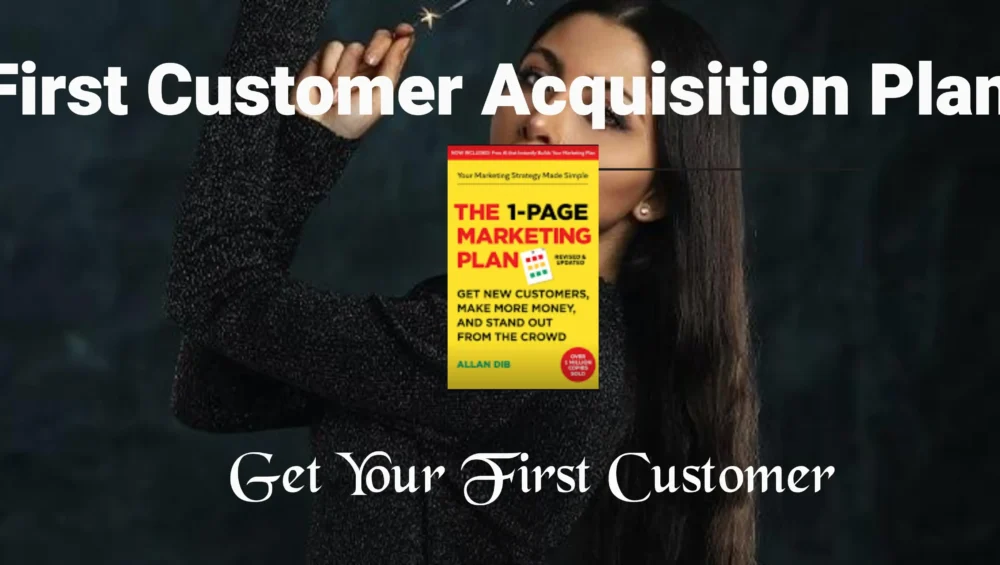
Supporting Book for Step 1 - The 1-Page Marketing Plan
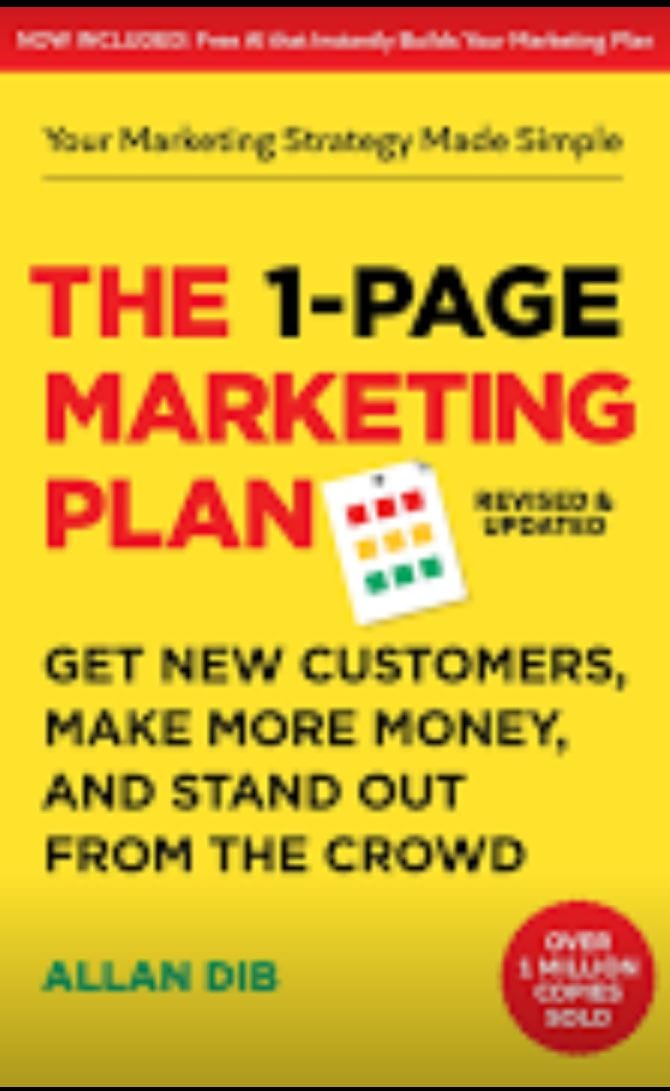
The Big Idea from 1 Page Marketing
A simple, focused marketing plan is more useful than scattered marketing activity.
The book organizes marketing around three phases:
Before → During → After
For this step 1, the most relevant part is the Before Phase, where you think about: Target Market → Message → Reaching Prospects
You already know your target customer and core message from Phase 3. Now you need to think about how those decisions become a practical acquisition process.
What Business Problem Does 1 Page Marketing Solve?
It takes care of: I know who I want to serve, but I don’t have a clear plan for reaching them and moving them toward becoming customers.
The book helps connect:
Target Market
↓
Message
↓
Reach
↓
Lead
↓
Customer
We will use that thinking as a foundation, but simplify it for the immediate objective which is getting the first customer.
You do not need to build an entire marketing department now. You need a practical acquisition plan you can execute and test.
Should I Read 1 Page Marketing Now?
Yes. This is a supporting book because you have already completed much of the strategic customer and positioning work in Phase 3.
So don’t read the book as though you are starting marketing from scratch.
Read it to understand how: Target → Message → Reach becomes the beginning of a customer acquisition system.
Which Parts of 1 Page Marketing Matter Most for this Step? Focus on these
ACT I: THE BEFORE PHASE
Chapter 1: Selecting Your Target Market (ESSENTIAL)
This reinforces the importance of choosing a specific target market rather than trying to reach everyone.
However, do not redo the Best-Fit Customer exercise.
Bring forward the work you already completed in phase 1- 3:
Best-Fit Customer
Buying Situation
Problem
Desired Outcome
Buying Trigger
Your job here is to turn that strategic definition into an acquisition target.
Chapter 2: Crafting Your Message (READ SELECTIVELY)
You already created your Core Message in Phase 3.
You do not need to create another positioning or messaging exercise.
Instead, focus on how your message functions when you are trying to attract the right prospect.
Ask:
What should this person understand about me that makes them want to take the next step?
Your message should connect with the problem and situation you already validated.
Chapter 3: Reaching Prospects With Advertising Media (READ SELECTIVELY)
This chapter is useful for understanding the idea of reaching prospects through appropriate media.
But don’t interpret it as: I need to advertise.
Your first customer may come through:
Direct outreach
LinkedIn
Referrals
Networking
Workshops
Partnerships
Communities
Content
Email
Advertising
The important lesson is:
You need a deliberate way to reach the people you want to serve.
The specific channel will be tested rather than assumed.
ACT II: THE DURING PHASE
Chapter 4: Capturing Leads (SKIM FOR NOW)
This introduces what happens when someone responds to your marketing.
It is useful background, but you do not need to build a sophisticated lead-capture system yet.
Your first customer may simply enter through a:
Conversation
Consultation
Assessment
Referral
Workshop
Direct response
Chapter 5: Nurturing Leads (SKIM FOR NOW)
Some prospects will not buy immediately.
This chapter gives useful context for maintaining the relationship while someone considers a purchase.
But don’t spend your time building elaborate nurture sequences at this stage.
Your immediate objective is: Get the first customer.
Chapter 6: Sales Conversion
SKIM FOR NOW
This is relevant because ultimately the prospect has to become a customer.
But EVUNN will deal with the actual sales conversation, diagnosis, offer presentation, resistance and closing in later Phase 4 steps.
For now, understand the overall journey in this chapter which is: Lead → Customer
What Should I Skip for Now?
ACT III: THE AFTER PHASE
Chapter 7: Delivering A World Class Experience (SKIP FOR NOW)
This becomes important after you have customers.
Chapter 8: Increasing Customer Lifetime Value (SKIP FOR NOW)
This is more relevant once you have an existing customer base.
Chapter 9: Orchestrating And Stimulating Referrals (SKIP FOR NOW)
Referrals will eventually become an important acquisition mechanism, but they are not the starting point for getting your first customer.
You can return to these concepts later.
YOUR EVUNN ACTION
BUILD YOUR FIRST-CUSTOMER ACQUISITION PLAN
Now turn your Phase 3 work into a practical plan.
Don’t start from a blank page.
Your previous work should feed directly into this step.
If you are using EVUNN Premium, the previous outputs you got would be populated automatically in this steps’ toolkit so you don’t need to do manual input
Follow these steps ti start executing this step:
1. Define Your Acquisition Target
Bring forward your Best-Fit Customer from phase 3
Who are you trying to reach?
What situation are they in?
What problem are they experiencing?
What outcome do they want?
When are they most likely to seek help?
This becomes your Customer Acquisition Target.
2. Define Who is Not a Fit
Not everyone who could theoretically use your expertise should become your prospect.
Ask and Identify: Who should I NOT spend time trying to acquire?
Consider people who:
Don’t experience the problem
Don’t have the relevant situation
Don’t value the desired outcome
Aren’t ready to act
Fall outside the scope of your offer
This protects you from wasting your limited time.
Get the rest of the action steps for this step in EVUNN Premium.
EVUNN Action Steps, Doers Community & Execution Toolkits are for paid users.
Get the Action Steps for this step, plus all Stage 1 Action Steps, access to EVUNN Community and EVUNN Execution Toolkits, with 12 months of access.
EVUNN Mindset Checkpoint
Are you avoiding customer acquisition because selling feels uncomfortable?
You may be comfortable with:
Teaching
Advising
Creating
Researching
Solving problems
But uncomfortable with:
Approaching people
Starting commercial conversations
Following up
Making an offer
Asking someone to buy
If this feels uncomfortable, don’t immediately conclude: I’m not good at sales.
You may simply be experiencing the transition from: Expert → Business Owner
Your expertise creates value, but a business only exists when that value reaches customers.
Optional Mindset Reading: Read To Sell Is Human by Daniel H. Pink only if you are struggling with the belief that selling is somehow incompatible with being a helpful expert.
It is not required reading for Step 1.
↓
Weekly Acquisition Activity
↓
Initial Acquisition Metrics
↓
First Acquisition Experiment
This is not yet a proven acquisition system. It is your starting hypothesis for getting your first customer.
It’s time to stop hoping customers will find you.
Knowing where your customers are is only the beginning. You need a clear plan for getting your offer in front of the right people and moving them from awareness to action.
🔓 Use the EVUNN EXECUTION TOOLKIT – First-Customer Acquisition Planner
Don’t randomly post, message people or try every marketing channel.
The EVUNN Customer Acquisition Planner helps you decide who you’re going after, where you’ll reach them, how you’ll get their attention, and what you’ll do to turn that attention into real customer conversations and sales.
Don’t waste your time doing marketing activities that produce little or no result.
Get the Customer Acquisition Planner + every other Stage 1 Toolkit for 12 months, plus access to the EVUNN Doers Community.
₦5,500 today.
Follow the roadmap. Use the tools. Do the work.
What Should I Do Next?
You entered this step with: I know who my customer is and what I offer.
You leave knowing:
I have a focused plan for finding the right prospects, reaching them, giving them a reason to engage and moving them toward a first conversation.
Now, you need a list of real people to approach.
Knowing where your customers are is not the same as knowing who you are going to contact.
That is the next step.
Next? Step 2: Build Your Prospect List
Who exactly should I approach first?