Problem Validation: How to Test a Business Problem Before Building | EVUNN
Make Your EVUNN Journey Personal
PROBLEM: I've identified and framed a problem, but I don't know if it's worth building a business around.
To build a solution people will gladly pay for, you must validate the problem with real people with the problem
Step 9: Problem Validation
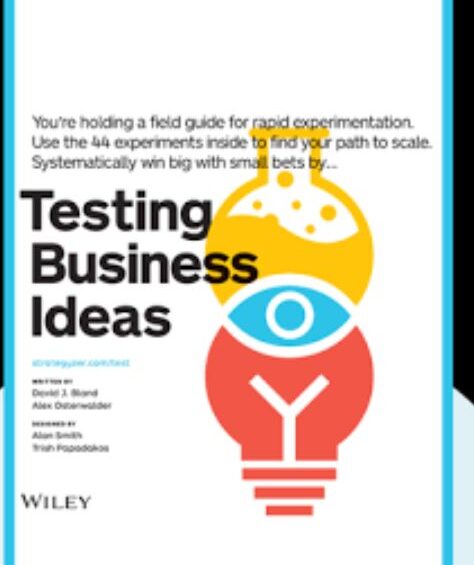
Recommended Book for this Step: Testing Business Ideas
The Big Idea from Testing Business Ideas
Test your most important assumptions before investing time and miney in your business idea.
The book is often associated with startups, but its underlying method works equally well for coaches, consultants and professionals.
Why? Because an expertise-based business also rests on assumptions like:
- People have this problem,
- It’s important enough for them to act,
- They want a better solution,
- They will choose my approach.
- They are willing to invest in solving it.
You don’t need to build a startup to test these assumptions. You need to design small experiments that produce useful evidence.
How this Applies To Coaches And Professionals
A coach doesn’t necessarily need to build an app. A consultant doesn’t need to develop a complicated MVP.
A lawyer doesn’t also need to create a technology platform.
Your experiment could be:
A paid pilot
A workshop
A consultation
A landing page
A waitlist
A pre-sale
A prototype service
A structured offer test
A customer commitment
A small real-world experiment
The principle is:
Find the cheapest and fastest way to test the assumption that matters most to the survival of that business idea.
Which Parts of Testing Business Ideas Should You Focus on?
You do not need to read the entire book. Focus on the sections that help you design and run useful experiments as follows:
Section 1: Design
Shape The Idea – p. 15 (Essential)
Use this to clarify what you’re actually trying to test. You don’t want to test a vague business idea.
Section 2: Test
Hypothesize – p. 27 (Essential)
Turn your assumptions into explicit hypotheses.
Ask: What must be true for this problem and business opportunity to work?
Experiment – p. 41 (Essential)
Learn how to design a test that can generate evidence.
Learn – p. 49 (Essential)
The purpose of an experiment isn’t simply to get a positive result.
It’s to learn something that changes your decision.
Decide – p. 59 (Essential)
Determine what you will do with the evidence.
Should you Continue?Change direction? Investigate further? Or Stop?
Section 3: Experiments
Select An Experiment – p. 91 (Essential)
This is particularly useful for EVUNN toolkit users.
You need to choose the simplest appropriate experiment for the assumption you’re testing.
Discovery – p. 101 (Recommended)
Use this to understand experiments designed to discover whether your assumptions are actually true.
You have already conducted customer discovery in Step 5, so focus on the parts that add new evidence rather than repeating that work.
Validation – p. 231 (Essential)
This is the core of Step 9.
Focus on experiments that can provide stronger evidence that the problem and opportunity are worth pursuing.
Section 4: Mindset
Avoid Experiment Pitfalls – p. 313 (Recommended)
Useful for avoiding false confidence and poorly designed experiments.
What You Can Skip For Now
You can skim or skip:
Design The Team – p. 3
Manage – p. 65
Lead Through Experimentation – p. 317
Organize For Experiments – p. 323
These become more relevant as the business grows and involves teams.
Buy the book at the Bookshop
Your Step 9 Outcome
By the end of this step, (after using the book and Evunn toolkits, you should have:
A clearly defined problem hypothesis
The key assumptions behind it
The riskiest assumption identified
An experiment designed to test it
A clear measure of what would count as evidence
Results from your experiment
A decision based on what you learned
Your possible outcome isn’t necessarily validated, let’s build.
It could be:
Proceed → The evidence is strong enough to continue.
Refine → The problem needs to be reframed or narrowed.
Investigate further → The evidence is insufficient.
Stop → The problem isn’t strong enough to pursue.
That’s what good validation looks like. You aren’t trying to prove yourself right.
You’re trying to avoid building the wrong business.
 Ready To Validate the Problem?
 Ready To Validate the Problem?
All you have all these while are pure assumptions until you test them on real people. It’s time to test the problem in the real world.
The EVUNN Problem Validation Toolkit helps you turn your problem into testable assumptions, identify the riskiest unknowns, choose an appropriate experiment, define what evidence matters and make a decision based on what you learn.
Don’t spend months building an offer around an untested problem.
Stop learning. Start building