customer conversations

Customer Conversations: How to Talk to Potential Customers | EVUNN

PROBLEM: I understand the problem, but I don't fully understand what it's like to experience it.

To find a profitable problem to solve, you must understand what it is like to experience the problem

STEP 3: DEVELOPING EMPATHY

STEP 3 — START CUSTOMER CONVERSATIONS

The Problem We’re Solving

“I have identified the right prospects, but I don’t know how to approach them and start a conversation that leads to something useful.”

In Step 2, you built your First Prospect List.

You identified:

Your Best-Fit Customer

Your prospect qualification criteria

Problem signals

Buying-situation signals

Real prospects

Your highest-priority prospects

You now know who you want to approach.

But knowing who to contact is not the same as knowing how to start a conversation.

You may have 25–50 qualified prospects sitting on your list and still find yourself asking:

What should I say?

How do I approach them without sounding like I’m selling?

How do I get them to respond?

What questions should I ask?

How do I keep the conversation natural?

When should I introduce what I do?

How do I know whether the conversation is worth continuing?

This is where customer conversations begin.

Your goal is not to contact as many people as possible.

Your goal is to start genuine conversations with the right prospects and learn enough about their situation to determine whether there is a real opportunity worth pursuing.


THE EVUNN MINDSET SHIFT

From “I need to sell them” → “I need to understand them.”

When experts approach potential customers, they often feel pressure to prove their expertise.

So they immediately:

Explain what they do

Describe their service

Talk about their credentials

Present their solution

Send their offer

Tell the prospect why they need it

Ask whether they would buy

But this creates a problem.

You are having a conversation based on your assumptions rather than the prospect’s reality.

A better approach is to become curious.

You already have a hypothesis about the problem you solve.

Now you need to find out what is actually happening in the prospect’s world.

The better question is not:

“How do I convince this person to buy?”

It is:

“What can I learn from this person that will help me understand whether there is a problem worth solving?”

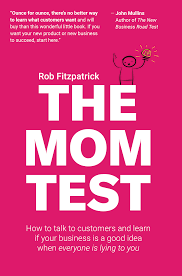
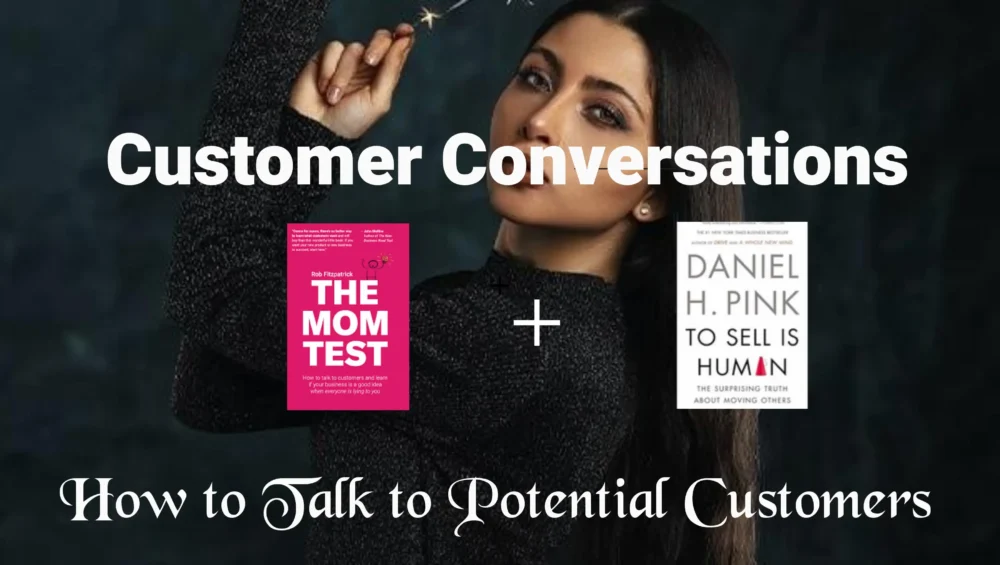
This is the principle behind The Mom Test.

A customer conversation is not an opportunity to collect compliments about your idea.

It is an opportunity to collect evidence.


📖 RECOMMENDED BOOK

The Mom Test

Author: Rob Fitzpatrick

The Big Idea

People can give you positive feedback about your business idea without ever becoming customers.

They may say:

“That sounds great.”

“I would definitely use that.”

“I know someone who needs this.”

“That is a really good idea.”

But these statements are not strong evidence.

The Mom Test teaches you how to have conversations that reveal real problems, real behaviour and real commitment instead of relying on opinions, compliments and hypothetical promises.

That makes it highly relevant to Step 3.

You are not reading it to become a better salesperson.

You are learning how to have better conversations with potential customers.


What Business Problem Does This Book Solve?

“I am talking to prospects, but I don’t know whether the information I’m getting is actually useful.”

A conversation can feel successful while giving you very little useful information.

A prospect may be polite.

They may agree with everything you say.

They may like your idea.

They may say they would buy.

But what matters is what they actually experience and do.

The Mom Test teaches you to look for evidence in:

Their current situation

Their past behaviour

Problems they have already experienced

Solutions they have already tried

What the problem has cost them

What they are doing about it now

What they are willing to do next

This helps you move from:

“They said they like my idea.”

to:

“I have evidence that this problem exists and matters to them.”


SHOULD I READ IT NOW?

YES — but selectively.

You do not need to read the entire book before completing this step.

Your objective is:

“Learn how to start and conduct customer conversations that reveal real problems, behaviour and buying signals rather than opinions and polite interest.”

The most important parts for this step are:


WHICH PARTS MATTER MOST?

INTRODUCTION — THE MOM TEST

ESSENTIAL

Start here.

Understand the central problem the book is trying to solve:

How do you talk to people about your idea without accidentally getting misleading feedback?

The key lesson for EVUNN is simple:

Don’t ask people to predict what they will do. Learn what they have already done.

This principle should guide your conversations throughout this step.


AVOIDING BAD DATA

ESSENTIAL

This is one of the most important sections for the EVUNN learner.

Learn to recognise the difference between:

Compliments

Opinions

Hypothetical statements

Real evidence

For example:

“I think that’s a great service.”

is an opinion.

“I paid a consultant ₦200,000 last month because I couldn’t solve this problem myself.”

is evidence of behaviour.

The first may be encouraging.

The second tells you much more.

As you conduct conversations, become suspicious of information that costs the prospect nothing to give you.

Look for what they have actually experienced, tried, spent, changed or committed to.


ASKING IMPORTANT QUESTIONS

ESSENTIAL

This section helps you move from vague conversation to useful discovery.

Your questions should uncover:

What they are trying to accomplish

What is preventing them from doing it

What they have already tried

How they currently handle the problem

How often it occurs

What happens when it is not solved

What the problem costs them

How important solving it is

The goal is not to ask every question on a script.

The goal is to learn how to ask questions that lead to specific stories and real examples.


KEEPING IT CASUAL

ESSENTIAL

Customer conversations do not need to feel like formal research interviews.

The more natural the conversation, the more likely the prospect is to talk openly about what is actually happening.

Don’t turn the conversation into:

Question.

Answer.

Question.

Answer.

Question.

Answer.

Listen.

Follow interesting details.

Ask for examples.

Ask what happened next.

Let the conversation develop naturally.

You are trying to understand the prospect, not complete a questionnaire.


COMMITMENT AND ADVANCEMENT

ESSENTIAL

Not every interested prospect is a serious prospect.

Someone saying:

“Keep me posted.”

is different from someone who:

Introduces you to the person responsible

Agrees to another conversation

Shares relevant information

Provides access to their process

Agrees to review a potential solution

Commits time to exploring the problem

The lesson is:

Interest is not commitment.

As conversations develop, pay attention to what prospects are willing to do, not simply what they are willing to say.


FINDING CONVERSATIONS

IMPORTANT

You already created your prospect list in Step 2.

Now use this section to think about how you will actually create opportunities to talk to those people.

Depending on your acquisition channel, this could involve:

LinkedIn messages

Email

Phone calls

Referrals

Professional networks

Communities

Events

Existing relationships

Introductions

The objective is not to send a generic sales message to everyone.

It is to create a reason for the right person to engage.


CHOOSING YOUR CUSTOMERS

IMPORTANT

Not every conversation should become a customer relationship.

Use what you learn from conversations to become more selective.

You may discover that some prospects:

Are not experiencing the problem

Have a different problem

Do not consider the problem important

Have already solved it another way

Are not ready to act

Are not a good fit for your offer

That’s useful information.

A conversation can be successful even when it tells you:

“This person is not my customer.”


RUNNING THE PROCESS

IMPORTANT

Customer conversations should become a process rather than isolated events.

Track:

Who you contacted

Who responded

Who you spoke with

What you learned

What problems appeared repeatedly

What assumptions were challenged

Who showed genuine interest

What next step was agreed

This will allow you to identify patterns across multiple conversations.


WHAT SHOULD I READ LATER?

You do not need to read every part of The Mom Test before moving forward.

The immediate objective is to become capable of having useful conversations.

Return later to sections that become more relevant as you refine your customer acquisition process.

The important thing is to apply the principles now rather than postpone action until you have finished the book.


📖 SUPPORTING BOOK

To Sell Is Human

Author: Daniel Pink

Why is this supporting rather than primary?

To Sell Is Human provides an excellent mindset for this stage, but it is not as directly focused on customer discovery conversations as The Mom Test.

Use it to develop the human side of selling.

You are not trying to manipulate prospects.

You are trying to understand them, communicate clearly and help them move toward a useful outcome.


WHAT PARTS MATTER MOST?

Chapter 1 — We’re All in Sales Now

ESSENTIAL

Understand the broader idea that selling is not simply a transactional activity.

When you run an expert-based business, you are constantly helping people understand:

A problem

An opportunity

A possible solution

A reason to act

This helps remove the idea that selling is something you should feel uncomfortable about.


Chapter 4 — Attunement

ESSENTIAL

This is particularly relevant to customer conversations.

You need to understand the situation from the prospect’s perspective.

Don’t approach the conversation thinking:

“What do I want to tell them?”

Think:

“What is happening from their point of view?”

This reinforces the EVUNN shift from expert-centred thinking to customer-centred thinking.


Chapter 6 — Clarity

IMPORTANT

Your job is not simply to collect information.

Sometimes people know they are struggling but cannot clearly explain what is happening.

Good conversations can help them articulate:

What they want

What is stopping them

Why it matters

What they have tried

What they need to change

This becomes increasingly valuable when you move into opportunity diagnosis.


Chapter 9 — Serve

IMPORTANT

Use this chapter to reinforce the principle that selling should ultimately be about creating value.

If you discover that your offer is not appropriate for the prospect, you do not need to force the sale.

The objective is to help the right people move toward the right solution.


What Should I Skip for Now?

Chapters 2–3

SKIM

Useful context for understanding the changing nature of selling, but not necessary for completing this execution step.

Chapter 5 — Buoyancy

SKIM

Useful when dealing with rejection and maintaining outreach activity.

You can return to it as you begin doing more prospecting.

Chapters 7–8 — Pitch & Improvise

SAVE FOR LATER

These become more relevant when you are ready to present and communicate your offer.

That belongs primarily in the later selling stages of the roadmap.


YOUR EVUNN ACTION

START YOUR FIRST CUSTOMER CONVERSATIONS

Now take the prospects you identified in Step 2 and turn them into real conversations.

This is where prospecting becomes customer acquisition.

Your objective is not to get everyone to buy.

Your objective is to:

Approach → Engage → Listen → Learn → Identify Evidence → Decide What Happens Next


1. SELECT YOUR FIRST PROSPECT BATCH

Go back to your First Prospect List.

Start with your:

A — High Priority Prospects

Select an initial group of 10 prospects.

Don’t start with your entire 25–50 prospect list.

You are testing your approach.

Choose people who have:

Strong customer fit

A relevant problem signal

A relevant buying-situation signal

A realistic way for you to reach them


2. PREPARE YOUR REASON FOR CONTACTING THEM

Before contacting each prospect, answer:

Why am I contacting this person?

What makes them relevant to the problem I am investigating?

What do I already know?

What do I still need to learn?

Your reason for contact should be based on their situation, not simply:

“I want to sell my service.”

You need a genuine reason for starting the conversation.


3. CREATE A SIMPLE CONVERSATION OPENER

Your first message or approach should make it easy for the prospect to engage.

Keep it:

Relevant

Specific

Brief

Natural

Human

Avoid immediately sending:

A long explanation of your business

Your entire offer

A brochure

A sales presentation

A list of credentials

A generic promotional message

The first objective is simply:

Start the conversation.


4. START THE CONVERSATION

Contact your first 10 prospects.

Depending on your acquisition channel, this might be through:

LinkedIn

Email

WhatsApp

Phone

Referral

Networking

In-person conversation

Do not wait until your message is perfect.

You are testing your approach.

Track:

Who you contacted

When you contacted them

Channel used

Whether they responded

Whether a conversation started


5. MOVE FROM THE OPENING TO CURIOSITY

Once the prospect engages, don’t immediately switch into presentation mode.

Become curious.

Explore their situation.

Ask questions such as:

“What are you currently trying to accomplish?”

“How are you handling that now?”

“What have you tried so far?”

“What happened when you tried it?”

“What makes this difficult?”

“When did this become a problem?”

“What happens when you don’t solve it?”

“How important is solving this right now?”

The exact questions will vary.

The principle remains the same:

Ask about their reality, not your hypothetical solution.


6. ASK FOR STORIES AND EXAMPLES

When a prospect gives you a general answer, go deeper.

If they say:

“It’s difficult to get customers.”

Don’t immediately record:

“Customer acquisition is a problem.”

Ask:

“Can you tell me about the last time that happened?”

If they say:

“I’ve tried several things.”

Ask:

“What did you try?”

If they say:

“It’s costing me a lot.”

Ask:

“What is it costing you?”

Specific experiences are more valuable than general opinions.


7. DO NOT PITCH TOO EARLY

You may discover something that sounds like a perfect opportunity.

Resist the urge to immediately explain your solution.

You still need to understand:

What is happening now?

Why is it happening?

What have they tried?

What is the impact?

How important is it?

What are they doing about it?

What would they like to change?

This prevents you from jumping from:

“I heard a problem.”

to:

“I know the solution.”

before you actually understand the opportunity.


8. LOOK FOR EVIDENCE

After each conversation, record evidence rather than impressions.

Look for:

Problem Evidence

Did they describe a real problem?

Behaviour Evidence

Have they actually experienced or acted on it?

Existing Solution Evidence

Have they tried to solve it?

Cost Evidence

Has the problem cost them something meaningful?

Urgency Evidence

Is solving it important now?

Commitment Evidence

Are they willing to take another step?

These signals will become the raw material for Step 4.


9. RECORD THE CONVERSATION

For every conversation, capture:

Prospect

Date

Channel

Situation

Problem described

Specific example

What they have tried

Current solution

Consequences

Importance / urgency

What surprised you

What assumptions were challenged

Potential opportunity

Next step

Keep the notes factual.

Write:

“They spent ₦150,000 on a consultant three months ago.”

Not:

“They really need my service.”

The first is evidence.

The second is your interpretation.


10. IDENTIFY THE NEXT STEP

Not every conversation should end with an offer.

Depending on what you learn, the next step may be:

Continue the conversation

Ask another question

Schedule a deeper conversation

Request additional information

Speak with another person involved

Invite them to review something

Move them into opportunity diagnosis

Or conclude that they are not a fit

The objective is to advance the right conversations, not force every conversation toward a sale.


11. REPEAT THE PROCESS

Complete at least:

5–10 customer conversations

before drawing strong conclusions.

One conversation can be interesting.

Several conversations allow you to see patterns.

Compare what you heard across prospects.

Ask:

What problems appeared repeatedly?

What surprised me?

Which assumptions were wrong?

Which signals appeared consistently?

Which prospects showed genuine urgency?

Which prospects were not actually a fit?

What do I need to investigate further?

This is where customer discovery becomes a learning process rather than a collection of random conversations.


🧠 EVUNN MINDSET CHECKPOINT

Are you trying to prove your idea instead of testing it?

This is one of the biggest dangers when speaking to potential customers.

You have spent time developing your expertise.

You have identified a problem.

You have created an offer.

You naturally want people to confirm that you are right.

But your customer conversations are not designed to make you feel right.

They are designed to help you find out what is true.

If a prospect tells you:

“I don’t have this problem.”

That is useful.

If they tell you:

“I have the problem, but it isn’t important enough to solve.”

That is useful.

If they tell you:

“I already pay someone to solve it.”

That is useful.

If they tell you:

“This is a major problem and I’ve tried three different solutions.”

That is useful.

Your job is not to make the evidence fit your idea.

Your job is to follow the evidence.

Remember:

A conversation that disproves your assumption can be more valuable than a conversation that confirms it.


Optional Mindset Reading

To Sell Is Human — Daniel Pink

If you need help becoming more comfortable with the human side of selling, return to:

Chapter 4 — Attunement

Chapter 5 — Buoyancy

Chapter 9 — Serve

This is optional.

You do not need to complete additional reading before starting your conversations.

The most important thing now is to talk to real people.


🔓 EVUNN EXECUTION TOOLKIT

Customer Conversation & Evidence Tracker

Don’t approach prospects with a generic pitch and hope someone responds.

Use the EVUNN Customer Conversation & Evidence Tracker to plan your first conversations, record what prospects actually say and do, capture problem and buying signals, identify recurring patterns and determine which conversations deserve further investigation.

Open Toolkit

| Go Back to Roadmap

ONE PAYMENT. ALL STAGE 1 TOOLKITS. YOURS FOR LIFE.

No monthly subscription. No recurring fees. Just the tools you need to execute.

Unlock All Stage 1 Execution Toolkits


YOUR STEP 3 OUTPUT

By the end of this step, you should have:

FIRST CUSTOMER CONVERSATIONS

Your process should now look like:

First Prospect List

10 High-Priority Prospects

Conversation Openers

Real Customer Conversations

Customer Evidence

Problem & Behaviour Patterns

Buying & Commitment Signals

Next-Step Decisions

Your objective is not to close 10 customers.

Your objective is to have 5–10 meaningful conversations that give you evidence about the problem, the prospect’s current situation and whether there is a reason to continue the conversation.



WHAT YOU SHOULD NOW KNOW

You entered this step with:

“I know who I want to approach.”

You leave knowing:

“I have spoken to real prospects, I understand more about what is happening in their world, and I know which conversations deserve deeper investigation.”

You have now moved from assumption to evidence.

But there is still a critical question.

You have heard problems.

You have collected stories.

You have identified patterns.

You may have found prospects who appear interested.

But:

Is there actually a valuable sales opportunity here?

A prospect having a problem does not automatically mean they have a problem worth paying to solve.

Now you need to understand the gap between where they are and where they want to be, how significant that gap is, what is causing it, and why solving it matters.

NEXT: STEP 4 — DIAGNOSE THE OPPORTUNITY

“Is this a real opportunity—or just a problem that someone happens to have?”

To understand their experience, use Book 3. Title: Practical Empathy

Practical empathy


Author: Indi Young

Time Investment: 5+ hours (Audiobook) 

Listen to Audiobook with Audible free trial |Buy at the Bookshop


The Big Idea from Practical Empathy 

Empathy helps you move beyond assumptions and develop a deeper understanding of how people experience problems, situations, what they do, and what matters to them.

For an expert, this is a critical shift. Your expertise tells you what you think the problem is. Empathy helps you understand the problem from their perspective.


What Does this Book Help you Achieve?

Practical Empathy helps you:

  • Listen without immediately interpreting

  • Understand people’s experiences more deeply

  • Separate what people actually say from your assumptions

  • Make sense of what you hear

  • Identify patterns across people’s experiences

  • Use those insights to improve what you create

The goal isn’t to become better at selling.

It’s to become better at understanding.


Should I Read it Now?

YES.

You’ve already explored:

Step 1: What problems might exist?

Step 2: Why might people want to solve them?

Now you need to understand: What is this experience actually like for the person living through it?


Which Chapters Matter Most for me Now?

Chapter 2: Empathy Brings Balance (Essential)

Understand what empathy actually means and why it matters when making decisions about customers.

Chapter 3: Put Empathy to Work (Essential)

Learn how empathy can become part of how you investigate and understand problems.

Chapter 4: A New Way to Listen (Essential)

This is one of the most important chapters for this stage.

Learn to listen to someone’s experience without immediately jumping to solutions, advice or conclusions.

Chapter 5: Make Sense of What You Heard (Essential)

Find out how to process and deepen your understanding of what people tell you.

Chapter 6: Apply Empathy to What You Create (Essential)

Understand how patterns in people’s experiences can influence what you eventually create.

Chapter 1: Business Is Out of Balance (Read this chapter for context only)

It explains why relying only on numbers and analytical thinking can leave important parts of the customer experience invisible.

Skip Chapters 7–9 for now

They focus more heavily on applying empathy within workplaces and organizations.

Listen to Audiobook with Audible free trial | Buy at the Bookshop


Your Step 3 Outcome

By the end of this step, you should have:

  • A deeper understanding of the experience behind each problem  of  the 3 problems generated in step 1

  • A clearer distinction between what you know and what you’re assuming

  • Initial insight into what people think, feel and do

  • A better understanding of their frustrations and desired outcomes

  • A list of questions you still need to investigate with real people

Notice what hasn’t happened yet:

You haven’t validated the problems yet. That’s intentional.

You’ve developed empathy, but empathy based on your own reflection is still not enough.

The next step takes you deeper.


🔒 Ready to Put Empathy into Practice?

Reading about empathy is not the same as practising it.

The EVUNN Customer Empathy Toolkit gives you a structured way to examine the problem from the customer’s perspective and separate evidence from assumptions.


One Payment. For All EVUNN Stage 1 toolkits.

What Should I Learn Next?

You now have a better understanding of the customer’s experience.

But there’s another question:

What are they actually trying to accomplish?

A customer may describe a problem, but the problem itself isn’t always the real objective.

They may be trying to make progress toward something bigger.

Step 4: Jobs-to-Be-Done

You’ll move from: Understanding their experience to understanding the progress they’re actually trying to make.

Leave a Reply

Your email address will not be published. Required fields are marked *